Our Top Picks
The TWR Supercat is a masterclass in re-engineering a legacy icon. It transforms the soft-edged grand tourer into a widebody weapon with a 660-HP supercharged V12 and the mechanical purity of a six-speed manual. For those seeking visceral, analog driving without the multi-million dollar hypercar price tag, this is the definitive Jaguar XJ-S restomod.
The TWR Supercat represents a raw, analogue bridge between 1980s racing glory and modern engineering. Based on the Jaguar XJ-S platform, this V12 beast delivers 660 horsepower through a six-speed manual transmission. Born from the legacy of Tom Walkinshaw Racing, only 88 units of this supercharged widebody grand tourer will ever exist, making it one of the most exclusive restomods in the world.
The Legend Reborn: TWR’s Le Mans Heritage
Standing in the presence of the TWR Supercat, you aren't just looking at a modified Jaguar. You are looking at a concentrated dose of British touring car history filtered through twenty-first-century carbon fiber. The name Tom Walkinshaw Racing carries a heavy weight in the world of endurance racing, particularly for the Jag-faithful who remember the V12-powered XJS dominating the European Touring Car Championship. This project, led by Fergus Walkinshaw and a team of engineers with backgrounds at McLaren and Ferrari, isn't about nostalgia for the sake of it—it is about realizing the ultimate potential of the Jaguar XJ-S platform.
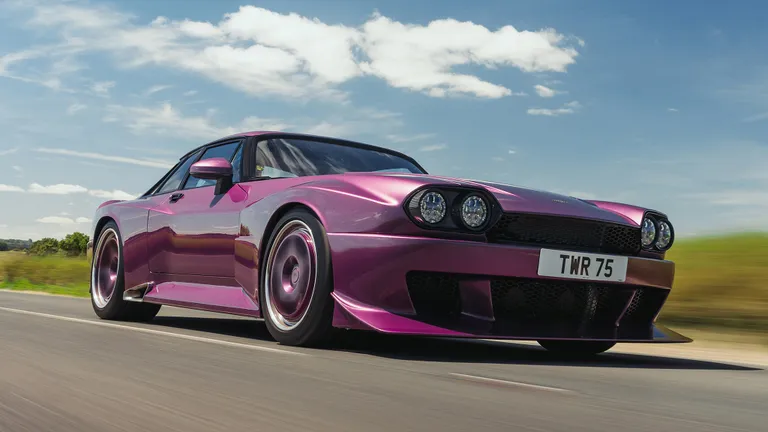
The production volume is no coincidence. TWR is limiting this run to a limited run of 88 units globally to commemorate the brand's 1988 victory at the 24 Hours of Le Mans. It is a calculated nod to the Silk Cut-liveried XJR-9 that screamed down the Mulsanne Straight. Where the original factory XJS was often viewed as a "tweedy" cruiser for the country club set, the Supercat adopts a supervillain persona. It is low, incredibly wide, and visually suggests that it has spent the last thirty years training in a high-tech gym. This boutique restomod engineering approach ensures that while the silhouette is recognizable, every structural component has been re-evaluated for modern performance.
Heart of the Beast: The 660-HP Supercharged V12
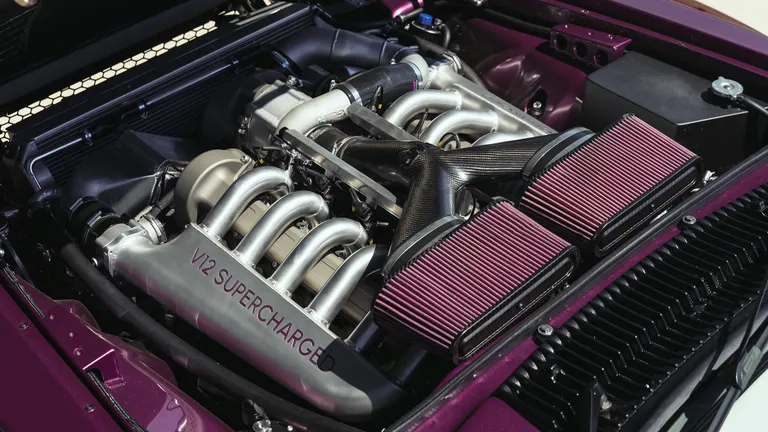
The core of the Supercat experience is found under that long, vented hood. While most modern manufacturers are downsizing or digitizing their powertrains, TWR has gone the opposite route. They have taken the legendary Jaguar V12 and performed a heart transplant of epic proportions. The result is an in-house developed 5.6-liter supercharged V12 engine that produces 660 brake horsepower and 730 Newton-meters of torque.
From the driver’s seat, the integration of the Rotrex supercharger creates a power delivery that is both immense and immediate. There is no turbo lag here, just a linear, relentless surge of thrust that feels like it could pull the horizon toward you. The twr supercat v12 doesn’t just move the car; it defines its character. The engine note is a serrated, high-frequency howl that reminds me more of an 80s-era Formula 1 car than a road-going GT. The technical twr supercat engine specs reveal an obsession with thermal management and rotational mass, ensuring that the 660 brake horsepower remains accessible even under the duress of hard performance testing. This isn't a dyno queen; it’s an engine designed to be thrashed.
Widebody Design and Motorsport Aerodynamics
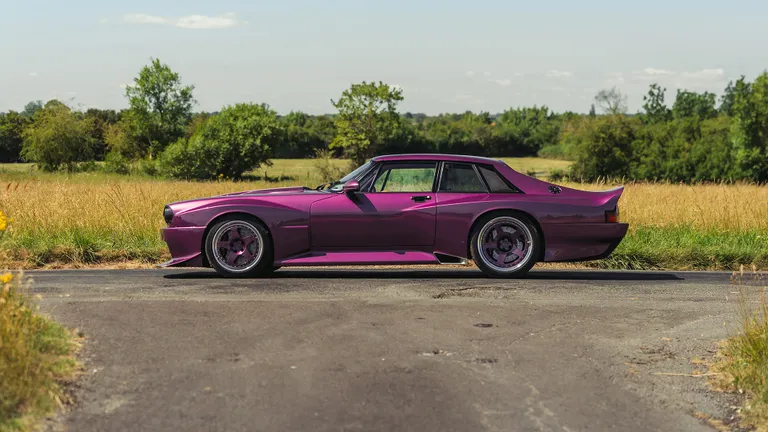
The visual transformation of the twr supercat is the work of a unique collaboration between digital artist Kyzyl Saleem and automotive enthusiast Magnus Walker. The result is a widebody conversion that stretches the original XJS dimensions by a staggering seven inches. It gives the car a stance that the original designers could only dream of. The carbon fiber bodywork isn't just for show; it is a critical component in the car's weight loss program. The Supercat hits the scales at 1,605 kilograms, representing a 9.3% weight reduction compared to the original Jaguar XJS.
Every vent, scoop, and spoiler has been subjected to CFD-validated aerodynamics. The integrated rear spoiler and the aggressive front splitter work together to provide actual downforce, grounding the car at triple-digit speeds where the original XJS would have started to feel light and floaty. This motorsport-inspired aerodynamics package gives the Supercat a functional aesthetic—what TWR calls modernized British muscle. You can see the weave of the carbon fiber bodywork in the deeper recesses of the aero channels, a constant reminder that this is a lightweight athlete in a heavyweight’s suit.
Analogue Control: The 6-Speed Manual and Chassis Tuning
In an era of lightning-fast dual-clutch transmissions, TWR made the deliberate, enthusiast-driven choice to equip the Supercat with a six-speed manual gearbox. The twr supercat manual gearbox performance is what separates this from almost every other modern high-performance grand tourer. The shift action is heavy and mechanical, requiring a deliberate hand. It forces you to engage with the car, to time your rev-matches, and to respect the 538 lb-ft of torque flowing through your right hand.
Managing that power required a complete overhaul of the chassis. The team developed a new front subframe and reinforced the central structure to handle the increased torsional loads. The suspension features adaptive TracTive dampers, which allow the driver to toggle between a compliant road setting and a stiffened track mode. When you lean into a corner, the body control is impeccable. To bring this 1,605-kilogram beast to a stop, TWR has fitted massive carbon-ceramic brakes, offering the kind of stopping power and fade resistance that would have been unimaginable in 1988. It is a pure, analog driving experience that communicates through the palms of your hands and the seat of your pants.
Modernizing the Cabin: TWR Supercat Interior & Practicality
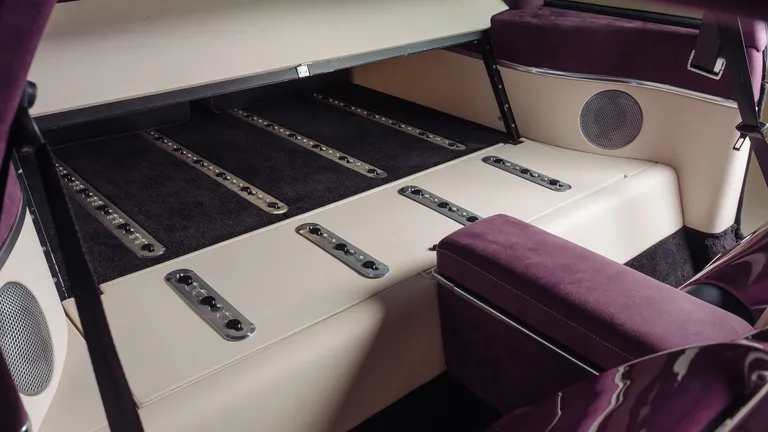
Inside, the twr supercat interior has been completely reimagined to support its mission as a high-performance grand tourer. TWR didn't just re-skin the existing dashboard; they re-engineered the space for better ergonomics and daily driveability. One of the most significant engineering fixes was the fuel tank relocation. By moving the tank, the engineers created a pass-through bulkhead, allowing for a flat luggage area behind the front seats. The original, cramped rear seats are gone, replaced by a beautifully finished storage shelf wrapped in Bridge of Weir leather.
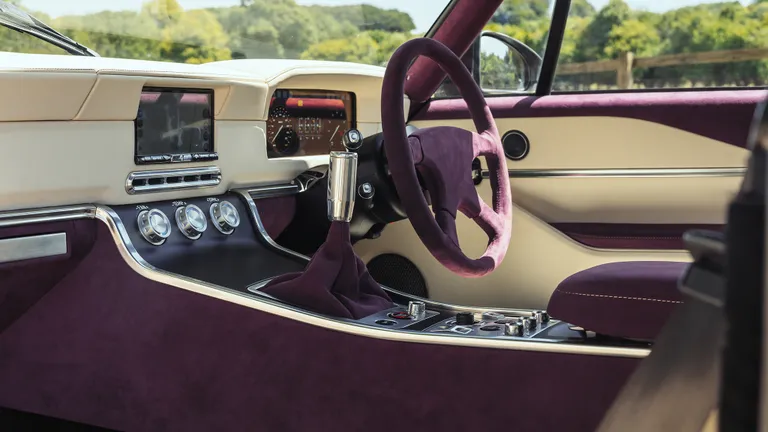
The retro-modern aesthetic is consistent throughout the cabin. You have high-resolution digital displays that mimic the original Smiths gauges, sitting alongside tactile toggle switches that feel like they were lifted from a competition cockpit. TWR offers extensive twr supercat interior customization options, allowing owners to choose everything from the stitching patterns to the specific grade of carbon fiber trim. It feels intimate, purposeful, and surprisingly spacious for a car that looks so compact from the outside.
Ownership Reality: Price and Production
Entering the world of TWR ownership requires both a significant investment and a suitable donor car. The twr supercat price starts at approximately $300,000 (£250,000 for UK customers), but that is before you factor in the cost of the Jaguar XJ-S donor car requirements and the inevitable list of personal customizations. Given the twr supercat production numbers are capped at just 88 units, this is a vehicle for collectors who value rarity and engineering over mass-market convenience.
Technical Specs Comparison
| Feature | Original Jaguar XJS (V12) | TWR Supercat |
|---|---|---|
| Engine | 5.3L Naturally Aspirated V12 | 5.6L Supercharged V12 |
| Horsepower | ~295 HP | 660 HP |
| Torque | ~330 lb-ft | 538 lb-ft / 730 Nm |
| Transmission | 3-Speed Auto / 5-Speed Manual | 6-Speed Manual |
| Body Material | Steel | Carbon Fiber |
| Curb Weight | ~1,770 kg | 1,605 kg |
| Production | Mass Produced | 88 Units |
FAQ
How much is the TWR Supercat?
The starting price for the conversion begins at approximately £250,000 or $300,000, depending on exchange rates and local taxes. This figure does not include the cost of the donor Jaguar XJ-S, which must be provided by the customer or sourced separately.
How many TWR supercats are there?
There are currently only 88 build slots allocated for the Supercat globally. This limited production run ensures that the vehicle remains an ultra-rare collector's item and pays homage to TWR's historic motor racing achievements.
What engine is in the TWR Supercat?
The car is powered by a heavily modified, in-house developed 5.6-liter V12 engine equipped with a Rotrex supercharger. This setup produces 660 horsepower and features a bespoke exhaust system for a unique auditory profile.
How much does a TWR Supercat cost?
Fully realized builds, including the price of the donor car and high-end interior customizations, can easily exceed $350,000. Each build is treated as a bespoke project, meaning the final cost is dictated by the owner's specific requirements.
How many TWR supercats were made?
Total global production is strictly limited to 88 units. This number was chosen specifically to celebrate the 1988 Le Mans victory where the TWR-prepared Jaguar XJR-9 ended Porsche's long winning streak.
The TWR Supercat is a visceral reminder of what happens when engineering talent is allowed to run wild on a classic silhouette. It isn't just a faster XJ-S; it is a fundamental reimagining of the British grand tourer. In a world of silent electric supercars, the shrieking, supercharged V12 and the mechanical involvement of a six-speed manual make the Supercat one of the most compelling driving experiences I’ve had the pleasure of testing. If you have the means and the passion for the Jaguar XJ-S platform, this is the final word in its evolution.