Quick Facts
- Dimensions Baseline: The 2026 Volkswagen Golf maintains a length of approximately 4282mm and a width of 1789mm, serving as a benchmark for urban efficiency.
- Vehicle Bloat: New cars in Europe are widening at an average rate of 1 cm every two years, leading to "carspreading" in modern cities.
- Parking Crisis: By 2040, projections show a potential loss of 8.5% to 14% of on-street parking capacity due to increasing vehicle sizes.
- Proposed Regulation: The environmental group Transport & Environment suggests taxing vehicles based on dimensions, using the Golf’s 4.25-meter length as a standard.
- Safety Concerns: Larger vehicle profiles, specifically increased hood height and width, are linked to decreased visibility and higher risks for pedestrians.
- Urban Compatibility: Roughly 52% of the top 100 models sold in 2023 were already too wide for standard 180 cm on-street parking spaces.
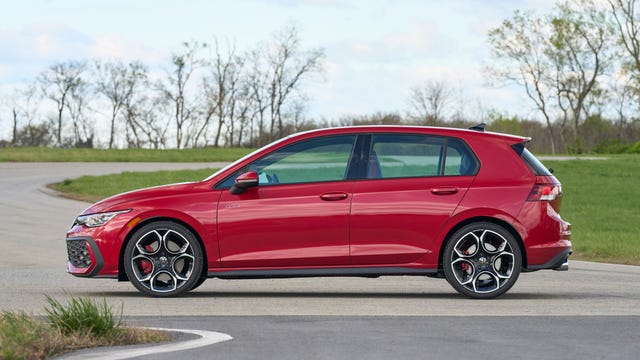
When conducting a car dimensions comparison, the 2026 Volkswagen Golf stands out as a right-sized solution for modern urban mobility. With a length of approximately 4282mm to 4296mm and a height of 1467mm, it offers a compact footprint that maximizes street parking capacity while enhancing pedestrian safety compared to oversized SUVs.
The Battle of the Footprint: Golf vs. Compact SUVs
As a buyer, you are often faced with a choice between the traditional hatchback and the increasingly popular compact SUV. While SUVs offer a higher seating position, they often come at the cost of urban maneuverability. A car size comparison side by side reveals that while the interior space of an SUV is appealing, the external dimensions can make daily city life significantly more difficult.
The 2026 VW Golf features a wheelbase of 2630mm, which provides stable handling without the excessive length that makes parallel parking a chore. In contrast, many compact SUVs have expanded their footprints to accommodate larger wheels and increased ground clearance. When you use a car dimensions comparison chart to look at the numbers, the Golf's tight turning circle of approximately 11 meters to 12 meters becomes a decisive advantage in narrow streets where SUVs struggle.
The following car dimensions comparison chart highlights the differences between the 2026 Golf and two of its most common SUV competitors.
| Specification | 2026 VW Golf | Hyundai Tucson | Honda CR-V |
|---|---|---|---|
| Length | 4282mm | 4630mm | 4706mm |
| Width (No Mirrors) | 1789mm | 1864mm | 1864mm |
| Height | 1464mm | 1664mm | 1681mm |
| Wheelbase | 2630mm | 2756mm | 2700mm |
| Cargo (Behind 2nd Row) | 13.4 cu.ft. | 38.7 cu.ft. | 39.2 cu.ft. |
| Typical Turning Circle | 10.9m | 11.8m | 11.4m |
This vw golf vs compact suv dimensions breakdown shows that while the CR-V offers nearly triple the cargo space, it is almost 424mm longer and 75mm wider. For someone living in a city like London or Paris, that extra width is the difference between fitting into a standard spot and having to drive around the block for twenty minutes. When you are looking at car comparison dimensions, you must decide if that extra cargo room is worth the daily stress of navigating "carspreading" in tight garages.
Understanding Model Bloat: Why Cars are Growing
It is not your imagination—cars are getting bigger every year. This phenomenon, known as model bloat, is driven by a combination of factors including consumer demand for more interior technology, stricter safety regulations, and the shift towards electrification. Even high-performance icons are not immune; the latest BMW M5, for example, has seen a weight increase of nearly 2000 lbs compared to its earlier iterations.
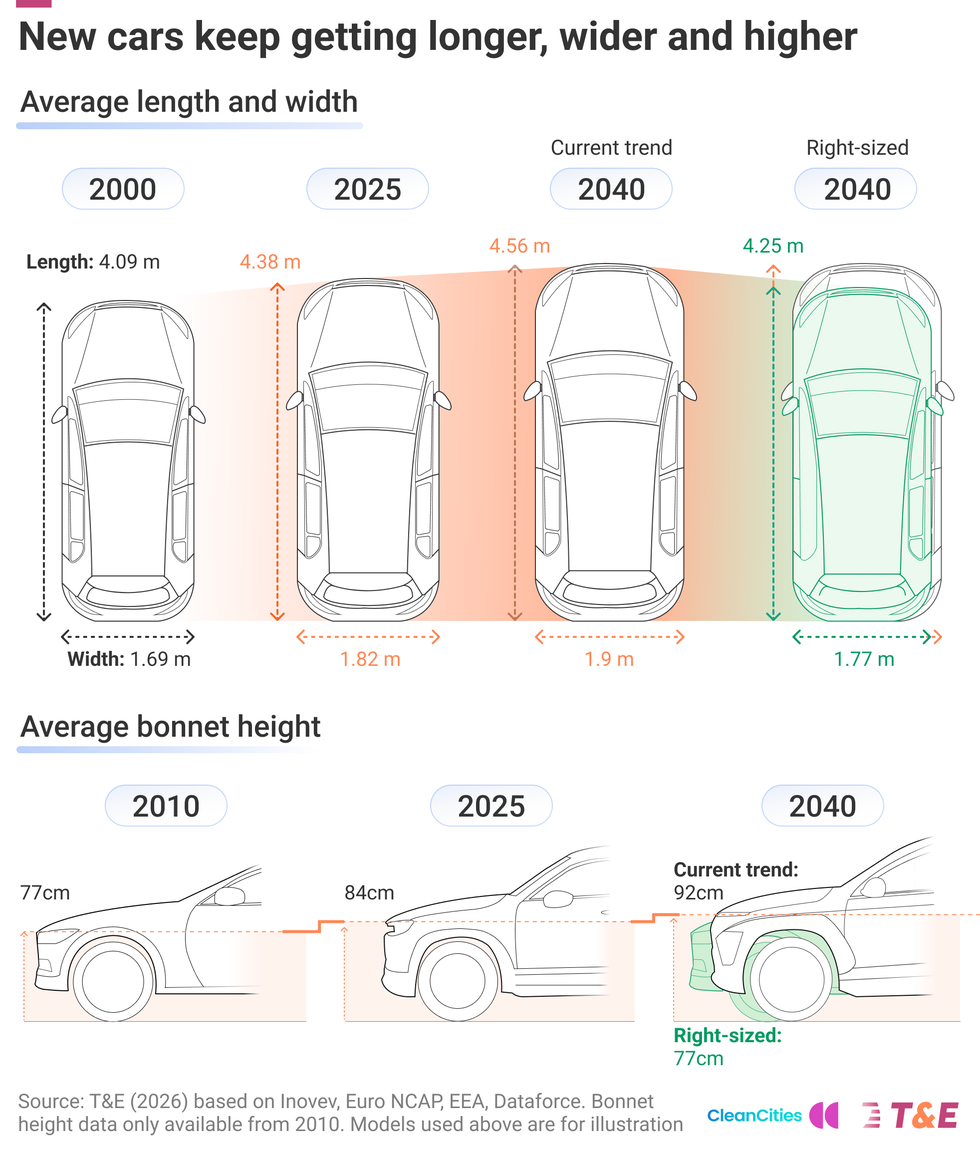
Manufacturers are forced to increase vehicle width to accommodate massive dual 43-inch screens and complex side-impact protection systems. This impacts the curb weight and overall footprint. When you consult a car dimensions database, you can see that the average car width has increased by roughly 0.5 inches every few years. As cars swell, the infrastructure they occupy remains static.

Beyond the physical space, this car comparison dimensions shift affects automotive engineering. Heavier, wider cars require more energy to move, whether they are powered by gasoline or electricity. This is why many urban planners are advocating for a return to the compact hatchback or small sedan format.
The Real-World Impact: Parking Loss and the SUV Tax
The consequences of model bloat extend far beyond individual preference. A study by the advocacy group Transport & Environment has raised the alarm regarding the space cars consume. They suggest that the Volkswagen Golf's approximate dimensions, including its 4.25-meter length and 1.7-meter width (historical baseline), should serve as the benchmark for a proposed dimension-based vehicle tax.
The goal is simple: discourage the purchase of oversized SUVs that "spread" into neighboring spaces and pedestrian zones. In London alone, if growth continues at current rates, the city could lose 100,000 spaces by 2040. This is why choosing car size for city parking has become a political and economic decision rather than just a personal one.
The proposed impact of vehicle dimensions on car tax targets two specific metrics: hood height and width. Higher hoods are statistically more dangerous for pedestrians, particularly children, as they create a larger blind spot and lead to more severe upper-body injuries during a collision. By taxing vehicles that exceed the Golf’s profile, regulators hope to reclaim urban space and improve safety.

Practical Guide: Fitting Your 2026 Vehicle in Modern Spaces
Before you commit to a purchase, you need to know exactly how a car will fit into your life. Using a car dimensions comparison chart is the first step, but you must understand the difference between gross width and functional width.
For the 2026 VW Golf, the base width is 1789mm. However, with the side mirrors unfolded, that width increases significantly. When you are comparing car length and width for garage fit, always look for the "mirrors extended" figure, which is often not included in simple marketing materials. If your garage was built in the mid-20th century, a modern SUV that is 1860mm wide might leave you with only an inch of clearance on either side—hardly enough to open a door and exit the vehicle.
Here is a checklist for using a car dimensions database effectively:
- Measure your garage entrance: Subtract 200mm from the total width to account for mirror clearance.
- Check the wheelbase: A longer wheelbase often means a larger turning circle, making it harder to pull into tight driveways.
- Assess hood height: A lower hood height on cars like the Golf makes it easier to see objects or curbs immediately in front of the car.
- Parking spot standard: Most standard on-street parking spots are 1.8 meters wide. If your car is wider than this, you are technically carspreading and could be at risk for side-swipe damage.
By focusing on the 2026 vw golf dimensions vs competitors, you can see that the hatchback remains the most efficient use of metal and glass for the modern driver.
FAQ
How do I compare car sizes side by side?
To compare car sizes side by side, start by gathering the manufacturer's technical specifications for length, width (both excluding and including mirrors), height, and wheelbase. Use a dedicated online car dimensions database that allows you to overlay the footprints of two different models. Pay close attention to the overhangs—the distance from the wheels to the ends of the bumpers—as this dictates how easily a car can navigate steep driveways or tight corners.
How can I tell if a car will fit in my garage?
You can determine if a car will fit by measuring the width and length of your garage and comparing it to the vehicle's "mirrors extended" width and total length. Don't forget to account for the door mechanism; some overhead garage doors sit lower when open, which can interfere with the hatch of a tall SUV. Always leave at least 60cm to 90cm of space on the driver’s side to ensure you can comfortably exit the vehicle once it is parked.
Are larger cars generally safer than smaller ones?
While larger cars often have a mass advantage in multi-vehicle collisions, this is a double-edged sword. Their increased mass and higher hood height pose a significantly higher risk to pedestrians and cyclists. Furthermore, larger vehicles often have longer braking distances and are more prone to rollovers due to a higher center of gravity. Modern compact cars like the 2026 Golf use high-strength steel and advanced crumple zones to achieve safety ratings that often match or exceed those of much larger SUVs.
What is the difference between wheelbase and overall length?
The wheelbase is the distance between the center of the front wheels and the center of the rear wheels. It primarily affects interior room and ride stability. Overall length includes the bodywork that extends beyond the wheels, known as the front and rear overhangs. A car with a long wheelbase but short overhangs—like many modern EVs—is often easier to park and more spacious inside than a car of the same length with a short wheelbase and long overhangs.
Does a car's height impact its fuel efficiency?
Yes, a car's height has a direct impact on its aerodynamic drag, which in turn affects fuel efficiency or electric range. Taller vehicles like SUVs have a larger frontal area, meaning they must push more air out of the way to move forward. This is especially noticeable at highway speeds, where aerodynamic resistance becomes the primary factor in energy consumption. Hatchbacks like the Golf sit lower to the ground, allowing them to achieve better MPG or miles-per-kWh than their taller counterparts.