Our Top Picks
The JC9 stands as a definitive benchmark among modern coachbuilt cars, seamlessly blending the raw racing spirit of the 1970s with the sophisticated engineering of the 21st century. By utilizing a Carrera GT donor chassis, Jason Castriota and Miller Motorcars have created the ultimate analog hypercar that honors history without being trapped by it. If you seek a vehicle that offers a pure connection between driver and machine, the JC9 represents the absolute peak of bespoke automotive design.
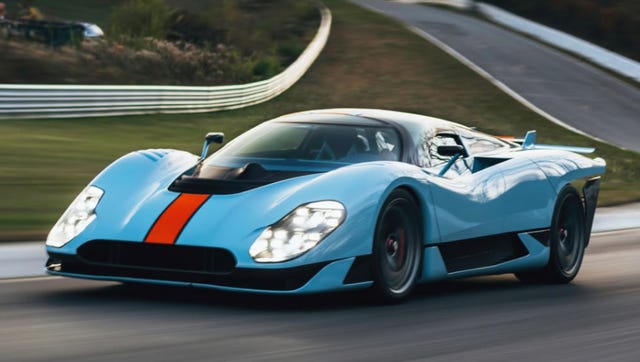
The JC9 is a bespoke, one-off hypercar designed by Jason Castriota in collaboration with Miller Motorcars. Inspired by the legendary Porsche 917K Le Mans racer, this project represents the pinnacle of modern coachbuilt cars. Featuring a full carbon fiber body and the analog V10 heart of a Porsche Carrera GT, the JC9 merges prototype racing heritage with elite modern craftsmanship to redefine what is possible in the world of high-end automotive commissions.
The Visionary Architect: Jason Castriota and the 917 Heritage
When discussing the upper echelons of vehicle design, few names carry as much weight as Jason Castriota. Known for his work at Pininfarina and his hand in creating the legendary P4/5, Castriota has built a career out of transforming existing world-class supercars into unique pieces of functional art. As one of the most famous coach builders working today, Castriota focuses on heritage-led manufacturing, a philosophy that prioritizes the visceral experience of the past while utilizing the technology of the future.
The JC9 is deeply rooted in the Le Mans heritage of the early 1970s. Specifically, it draws its visual DNA from the Porsche 917K, the short-tail endurance racer that secured overall victories for Porsche in 1970 and 1971. The design process for modern coachbuilt cars often begins with a specific emotion or historical moment. For the JC9, the goal was to capture the low-slung, aerodynamic aggression of the 917 while making it road-legal and structurally sound for modern use.
Famous independent car coachbuilders today like Castriota are moving away from simple aesthetic modifications. Instead, they are engaging in complex structural reimagining. The JC9 project, a collaboration with Miller Motorcars, showcases how a private collector can commission a vehicle that feels like a forgotten factory prototype from the golden era of racing.
Timeline of Jason Castriota’s Iconic Builds
- 2006: Ferrari P4/5 by Pininfarina – Reimagining the Enzo as a 1960s racer.
- 2009: Bertone Mantide – A radical aerodynamic take on the Corvette ZR1.
- 2011: Saab PhoeniX – A conceptual look at future-proofing a classic brand.
- 2020: SSC Tuatara – Pushing the boundaries of hypercar top speeds.
- 2024: The JC9 – A Carrera GT-based homage to the Porsche 917K.
The Mechanical Heart: Why a Carrera GT Chassis?
Choosing a donor car for coachbuilding is perhaps the most critical decision in the entire build. The mechanical foundation dictates the driving dynamics, the sound, and the ultimate value of the project. For the JC9, there was only one logical choice: the Porsche Carrera GT.
The JC9 is a bespoke, one-off coachbuilt supercar designed by Jason Castriota in partnership with Miller Motorcars, featuring a body fully constructed from carbon fiber. Underneath its custom exterior, the JC9 retains the naturally aspirated 5.7-liter V10 engine and iconic six-speed manual gearbox with a beechwood shifter from the Porsche Carrera GT donor chassis. This specific engine is a masterpiece of motorsport engineering, originally destined for a Le Mans prototype before finding its way into the Carrera GT.
Technical synergy is key here. The Carrera GT provides an analog driving experience that is nearly impossible to replicate with modern dual-clutch, turbocharged powertrains. By using the CGT tub, the JC9 preserves the legendary pressurized gas chassis and the high-revving V10, ensuring that the car feels as mechanical and raw as the 917K it mimics. Maintaining value in bespoke coachbuilt cars often depends on the prestige of the donor, and there is no donor more prestigious than an ultra-rare Porsche V10.
| Feature | 1970 Porsche 917K | The JC9 Hypercar |
|---|---|---|
| Engine Type | 4.5L - 5.0L Flat-12 | 5.7L Naturally Aspirated V10 |
| Transmission | 5-Speed Manual | 6-Speed Manual (Beechwood Shifter) |
| Chassis | Aluminum Spaceframe (47kg) | Carbon Fiber Monocoque (CGT Tub) |
| Body Material | Fiberglass | Full Carbon Fiber |
| Road Legal? | No | Yes |
Crafting the Masterpiece: Carbon Fiber vs. Traditional Coachbuilding
The modern coachbuilt cars design process has evolved significantly from the days of hand-beating aluminum panels over wooden bucks. While traditional coachbuilding is an honorable craft, the JC9 utilizes carbon fiber coachbuilding vs traditional methods to achieve a level of structural rigidity and weight savings that 1970s engineers could only dream of.
Constructing the JC9 involved stripping a Carrera GT down to its central carbon fiber tub. Every exterior panel was then replaced with custom carbon fiber bodywork. This approach allowed the design team to stay true to the 917-inspired JC9 silhouette while integrating modern cooling ducts and aerodynamic features. The design of the JC9 is a modern interpretation of the Porsche 917K, the racing car that achieved overall victories at the 24 Hours of Le Mans in 1970 and 1971.
Inside the cockpit, the tactile continuity is maintained through deliberate design choices. The iconic balsa wood shifter—a direct nod to the weight-saving knob found in the original 917—remains the centerpiece. The gauge cluster, though housed in a new carbon fiber dash, retains the mechanical honesty of the Carrera GT. This blend of prototype racing styling and elite modern materials creates a functional piece of automotive art that can be driven at speed on a circuit or displayed at a Concours d’Elegance.
The New Era of Customization: Market Growth and Collector Value
We are entering a new golden age for coachbuilt cars. High-end collectors are increasingly moving away from mass-produced limited editions and toward one-off hypercar builds that represent their personal tastes. The market for these vehicles is shifting toward experience-led buying, where the process of collaborating with the designer is as valuable as the car itself.
Comparing the JC9 to projects from legendary houses like coachbuild rolls-royce highlights a broader industry trend: the democratization of bespoke manufacturing for those with the means. While a coachbuild rolls-royce typically focuses on luxury and grand touring, the JC9 prioritizes track pedigree and mechanical purity.
If you are wondering how to commission a coachbuilt car, it typically starts with a relationship between a high-end dealership like Miller Motorcars and an independent designer. The growth of this niche market is driven by a desire for rarity. In a world where even a "limited" run of 500 cars can feel commonplace at a car show, the JC9 offers the ultimate status symbol: a car that is truly unique in the world. As the market for bespoke coachbuilt cars grows, the link between track pedigree and collector value becomes stronger.
FAQ
What does "coachbuilt car" mean?
A coachbuilt car refers to a vehicle where a custom body is designed and constructed over an existing mechanical chassis and engine. Historically, this meant an external company (the coachbuilder) would build the body for a chassis provided by a manufacturer like Rolls-Royce or Bugatti. Today, it involves creating a bespoke one-off body for a modern hypercar chassis.
Which cars are still hand-built?
While most modern cars are assembled on automated lines, several boutique manufacturers and coachbuilders still hand-build their vehicles. This includes brands like Morgan, certain high-end Aston Martins, Pagani, and Koenigsegg. Bespoke projects like the JC9 are entirely hand-fitted and finished using carbon fiber and artisan materials.
What car is called the poor man's Ferrari?
Historically, cars like the Toyota MR2, Fiat 124 Spider, or the Pontiac Fiero were nicknamed the poor man's Ferrari due to their mid-engine layouts or Italian-inspired styling at a fraction of the price. However, in the world of modern coachbuilt cars and hypercars, these distinctions disappear, as every build is focused on high-level performance and exclusivity.
What is the $3000 rule for cars?
The $3000 rule is an old automotive enthusiast adage suggesting that if you buy a cheap used car, you should always keep $3,000 set aside for immediate repairs and maintenance to make it reliable. In the context of hypercars like the JC9, maintenance rules involve much higher figures, often requiring specialized technicians and bespoke parts to keep the V10 heart in peak condition.