Quick Facts
- Official Production: Exactly 266 road cars
- Top Speed: 217 mph (Nardo Record)
- Workshop Authority: Don Law Racing (Official Service Center)
- Engine: 3.5L Twin-Turbo V6 (JV6)
- Power Output: 542 horsepower
- Key Vulnerability: Fuel systems and braking components
- Current Status: Highly sought-after collector items
The jaguar xj220 remains one of the most misunderstood supercars in history, but at a specialized workshop in Staffordshire, its legacy is being perfected. The jaguar xj220 is a mid-engine supercar powered by a 3.5-liter twin-turbo V6 engine, producing 542 horsepower. While originally proposed with a V12 and all-wheel drive, the production model features rear-wheel drive and a five-speed manual transmission. It reached a top speed of 217 mph and held the Nürburgring Nordschleife record for eight years. Don Law Racing serves as the official custodian for these 266 production road cars.
The Legacy of the Jaguar XJ220: From Controversy to Icon
To understand why the jaguar xj220 requires such specialized care today, we must look at its complicated birth. Born from the visionary "Saturday Club"—a group of Jaguar engineers working in their spare time—the original concept was a V12-powered, all-wheel-drive monster. When the reality of the early 1990s global recession hit, the project was handed to Tom Walkinshaw Racing (TWR) for production.
The transition from a heavy V12 to a compact Twin-turbo V6 engine was a masterstroke of automotive engineering, though it courted immense controversy at the time. Many buyers, who had placed deposits for a V12, felt slighted. However, the resulting car was lighter, faster, and more agile than the concept ever could have been. Jaguar produced exactly 266 production road cars between 1992 and 1994, missing the original 350-unit target. At launch, the jaguar xj220 price was approximately £440,000, a staggering sum that contributed to many buyers attempting to legally exit their contracts.
Despite the market friction, the performance benchmarks were undeniable. With a top speed of 217 mph and an eight-year tenure as the Nürburgring Nordschleife record holder for production cars, it comfortably traded blows with icons like the Ferrari F40 and Porsche 959. Today, the jaguar xj220 specifications represent a high-water mark for 90s analog supercars.
Don Law Racing: The World’s Official XJ220 Custodians
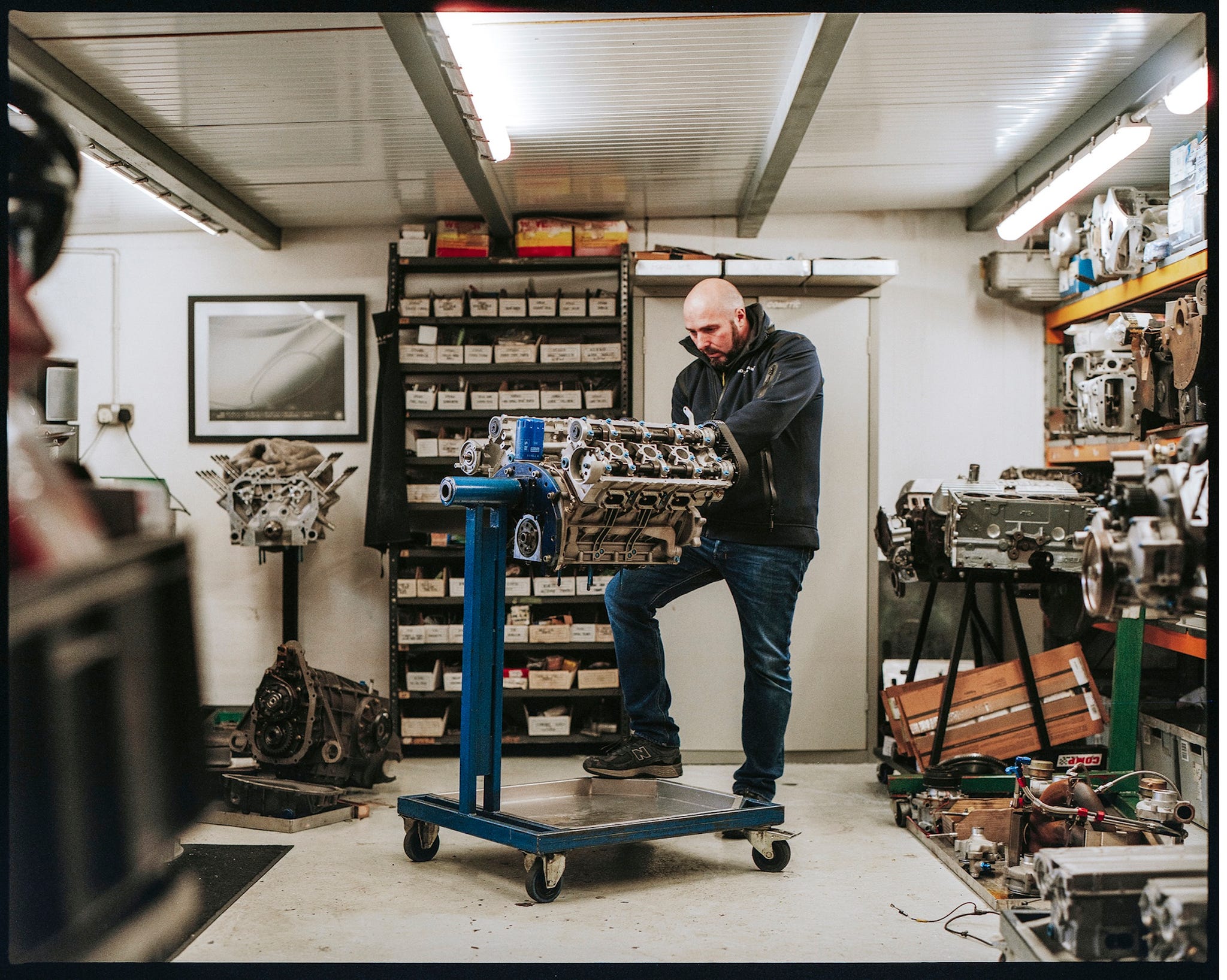
In the world of ultra-rare supercars, it is rare to find a single workshop that holds the keys to an entire production run. Don Law Racing in Staffordshire is that rare exception. What began as a passionate family business led by Don Law and his son Justin has evolved into the officially approved center of excellence for the jaguar xj220.
The turning point for the workshop—and the car's survival—came in 2007. Following the end of Jaguar’s ten-year parts supply obligation, Don Law Racing acquired the entire XJ220 business, including all remaining parts inventory, original factory records, blueprints, and specialized tooling. This move effectively saved the model from technical extinction.

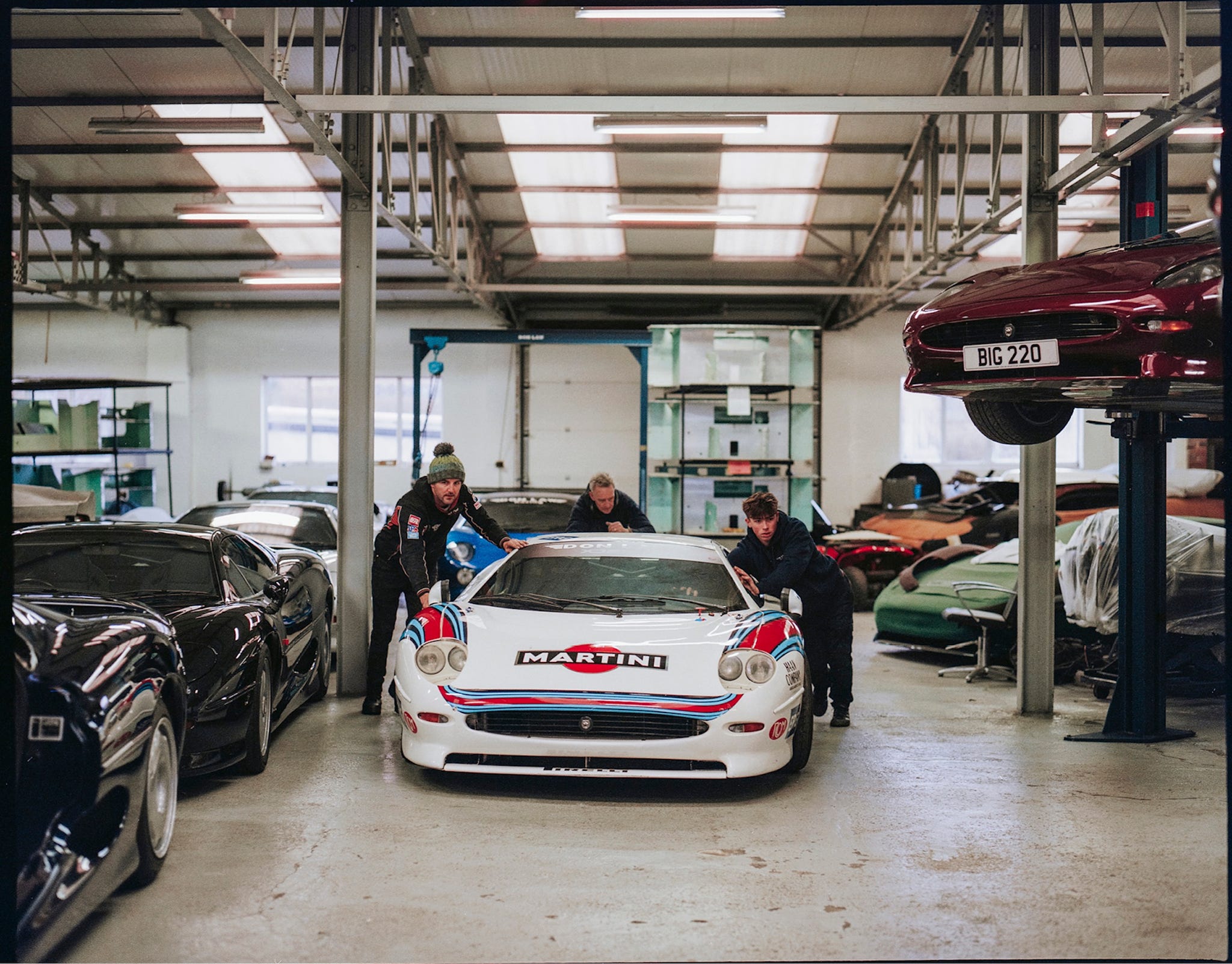
Today, the Staffordshire workshop is the world's primary inventory of factory spare parts and original TWR components. Their authority is so absolute that Don Law Racing has either directly worked on, rebuilt subassemblies for, or supplied parts to every one of the 266 road cars ever built. When you are restoring a jaguar xj220 with don law racing, you aren't just getting a service; you are tapping into the car's original DNA.
Maintaining a Masterpiece: Fuel Systems and Technical Challenges
From my perspective as a maintenance editor, the greatest threat to a jaguar xj220 isn't high mileage—it's the "neglected investor car" syndrome. Many of these vehicles spent decades in climate-controlled bubbles, covering fewer than 1,000 miles. While this preserves the jaguar xj220 price at auction, it is catastrophic for the mechanical systems.
The primary maintenance hurdle is the fuel system. The XJ220 utilizes a specialized bag-tank fuel cell, a piece of racing technology that has a strictly defined shelf life. These cells degrade over time, regardless of mileage, and can collapse or contaminate the fuel lines. A comprehensive jaguar xj220 fuel system service is a non-negotiable requirement every few years to prevent catastrophic engine lean-out.
Other critical jaguar xj220 maintenance and service tips include:
- Braking Systems: The original brakes were often criticized for lack of feel; the workshop offers upgrades that maintain originality while improving safety.
- Steering Integrity: Specific steering ball joint adjustments are required to maintain the precision of the rack.
- Tire Obsolescence: For years, the XJ220 was nearly undrivable because the original Bridgestone tires were out of production. Don Law worked with Bridgestone and Pirelli to develop modern rubber specifically for this car's unique dimensions.
The jaguar xj220 engine itself—the 3.5-liter JV6—is remarkably robust, having been derived from the Group C racing engines. However, the complexity of the twin-turbocharging system and the tight engine bay packaging means that even "simple" tasks often require significant labor. Expert technicians focus on preventative measures, ensuring that gaskets and cooling hoses are replaced before they fail and cause secondary damage to the rare engine components.
Restoration Tiers: From Recommissioning to Nut-and-Bolt Rebuilds
Owners bringing their vehicles to Staffordshire generally fall into two categories: those looking to recommission a long-dormant car and those seeking a full Nut-and-bolt restoration.
For investor-grade cars, the focus is on "sympathetic recommissioning." This involves replacing all perishable items—fluids, belts, tires, and the fuel cell—while preserving the original patina of the interior and the factory paint. The goal here is to ensure the car is mechanically sound for occasional use without erasing its history.
On the other end of the spectrum is the full Nut-and-bolt restoration. In these cases, the car is completely stripped to the bare aluminum chassis. Every component is inspected, tested, and either refurbished to factory standards or replaced with genuine jaguar xj220 spare parts. Often, these restorations result in a car that is technically superior to how it left the factory in the 1990s, thanks to modern advancements in sealants and protective coatings.
One of the most practical upgrades offered during these builds is a custom modification that increases the vehicle's luggage capacity by 260%. By redesigning the boot area without altering the car's exterior lines, Don Law Racing has made the XJ220 a surprisingly capable grand tourer for those brave enough to take their supercars on long-distance trips.
| Feature | Factory Specification | Don Law Racing Potential |
|---|---|---|
| Engine | 3.5L Twin-Turbo V6 | Enhanced Cooling & Reliability |
| Horsepower | 542 hp | Optimized Tuning |
| Luggage Space | Minimal | 260% Increase via Modification |
| Tires | Bridgestone (Discontinued) | Modern Bridgestone/Pirelli Compounds |
| Fuel System | Original Rubber Bladder | Modern High-Durability Cells |
The level of detail is obsessive. Because they own the original tooling, the workshop can recreate body panels and trim pieces that are simply unavailable anywhere else in the world. This vertical integration is what ensures the jaguar xj220 will still be on the road fifty years from now.
FAQ
How much is a Jaguar XJ220 worth now?
The current market value varies significantly based on mileage and service history. While the original jaguar xj220 price was £440,000, modern auction results typically range from £400,000 to over £600,000 for exceptional, low-mileage examples with documented Don Law Racing history.
How many Jaguar XJ220 are left?
Of the 266 production road cars originally built, the vast majority are still in existence. Because of their high value and rarity, very few have been lost to accidents or neglect. The community of owners is tight-knit, and most cars are tracked through the official registry.
Why was the Jaguar XJ220 so controversial?
The controversy stemmed from a perceived "bait and switch." The concept featured a V12 engine and all-wheel drive, while the production car utilized a Twin-turbo V6 engine and rear-wheel drive. Additionally, the price increased significantly during development, occurring just as a global recession hit.
Is the Jaguar XJ220 rare?
Yes, it is exceptionally rare. With only 266 units produced, it is far rarer than many of its contemporaries. For comparison, Ferrari produced over 1,300 F40s. Its rarity, combined with its record-breaking performance, makes it a cornerstone of any serious supercar collection.
If you are fortunate enough to own or are looking to acquire one of these British legends, remember that preservation is a proactive task. The specialized engineering of the jaguar xj220 demands a level of expertise that only a few people on the planet possess. By following a strict maintenance schedule and utilizing the resources in Staffordshire, you ensure that this 217 mph icon remains a functional masterpiece rather than a stationary museum piece.