The roar of engines returning to the legendary Rockingham Speedway is one of the most anticipated storylines of the 2025-2026 NASCAR transition, but Mother Nature had other plans for the initial testing window. In a sport where timing is everything—from pit stop precision to the millisecond gap at the start-finish line—NASCAR officials have been forced into a high-stakes "weather scramble." The result? A condensed, high-intensity testing schedule that shifts the focus of the industry to a single, pivotal day.
The Rockingham Reschedule: A Single-Day Sprint
For teams in the NASCAR O'Reilly Auto Parts Series and the NASCAR Craftsman Truck Series, the original itinerary for early February has been completely overhauled. Initially slated as a comprehensive two-day session on February 3rd and 4th, the NASCAR Rockingham test has been rescheduled to a single-day session on Friday, February 6th.
This shift wasn't a choice made in a vacuum. It was the direct result of a logistical domino effect triggered by winter weather delays that plagued "The Cookout Clash" at Bowman Gray Stadium. When the season-opening exhibition was pushed back, it created a ripple effect that threatened to collide with the biggest weekend in American sports: the Super Bowl.
By consolidating the test into Friday, NASCAR avoids a direct conflict with the "TV juggernaut" of Super Bowl weekend, ensuring that media coverage and team focus remain sharp. However, this comes at a cost of time. The Rockingham test duration has been modified from a 48-hour window into a condensed one-day session—a 50% reduction in on-track testing time that puts immense pressure on crew chiefs to get their data right the first time.
The Weather Scramble: From Bowman Gray to The Rock
The postponement of the Bowman Gray event didn't just frustrate fans; it threw a wrench into the meticulously planned "organizational testing" calendar. Teams were forced to pivot their hauler schedules and crew rotations overnight. The "winter weather scramble" is a term now echoing through the garages in Charlotte, as officials and teams navigate freezing temperatures and precipitation that made the original Tuesday-Wednesday window impossible for safe, high-speed testing.
This 50% reduction in testing duration means that every lap on Friday will be treated with the urgency of a qualifying run. In a standard two-day test, teams often spend the first morning "shaking down" the cars and the second day focusing on long-run simulations. At Rockingham, they will have to merge those objectives.
Editor’s Note: "The reduction to a single day effectively turns this into a 'survival of the prepared.' Organizations with the best pre-test simulation data will have a massive advantage, as there simply won't be time to make major mechanical changes in the garage between sessions." — Alex Morgan
What to Expect at the Rockingham Test
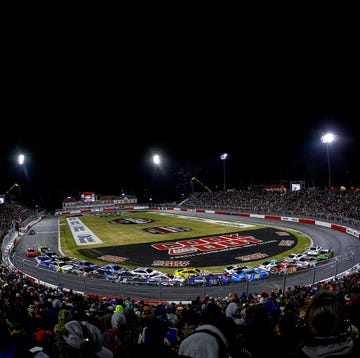
Despite the shortened window, the activity at "The Rock" will be frantic. Over 50 teams across two national series are expected to converge on the high-banked 1.017-mile oval.
- Participating Series: The session features the newly rebranded NASCAR O'Reilly Auto Parts Series (formerly Xfinity) and the NASCAR Craftsman Truck Series.
- Testing Focus: This is an "organizational test," meaning teams are not just testing for speed, but for the fundamental "feel" of the new tire compounds and aerodynamic tweaks specifically designed for Rockingham’s abrasive surface.
- The Venue: Known for its "sandpaper" track surface, Rockingham eats tires for breakfast. This makes the Friday test crucial for Goodyear to finalize the tire codes for the actual race weekend.
For fans hoping to catch a glimpse of the action, local venue protocols suggest limited spectator access to the grandstands, though parking and specific viewing areas are being managed by the track staff to ensure that the "closed-door" nature of technical testing is maintained while still acknowledging the massive local interest in the track’s return.
2026 Technical Deep Dive: Horsepower and Aero Updates
While the immediate focus is on Friday’s schedule, the Rockingham test also serves as a backdrop for NASCAR’s broader 2026 technical roadmap. NASCAR has recently issued key updates that will redefine how cars behave on short tracks and intermediate ovals.
The headline news is the 750 Horsepower Target. NASCAR has confirmed that for the 2026 season, all tracks measuring 1.5 miles or less will utilize a high-horsepower package combined with the 2024 short-track aerodynamic rules. This is a direct response to driver feedback requesting more "throttle control" and less reliance on "momentum racing."
Aerodynamic Comparison: 2024 vs. 2026 Targets
| Feature | 2024 Short Track Package | 2026 Update (Target) |
|---|---|---|
| Horsepower | 670 HP | 750 HP |
| Spoiler Height | 4-inch | 4-inch (with increased wicker) |
| Underbody | Standard Diffuser | Modified Strakes for low-drag |
| Target Tracks | Bristol, Martinsville, Richmond | All tracks ≤ 1.5 miles |
Beyond the engine, safety remains the priority. The A-Post Flap Mandate is a new requirement designed to prevent lift during high-speed spins. These flaps must now be painted "bright orange" to ensure visibility for officials during inspection, ensuring that every car on the grid is meeting the aero-deflection standards. This update will be mandatory for high-intensity tracks including Bristol, Darlington, Dover, Nashville, and World Wide Technology Raceway.
Series Rebranding and Manufacturer News
The 2026 season marks more than just technical changes; it’s a total brand evolution. The transition from the Xfinity Series to the NASCAR O'Reilly Auto Parts Series is now in full swing. This rebranding reflects a shifting commercial landscape in motorsports, where traditional automotive retailers are taking a more central role in series title sponsorships.
On the manufacturer front, the buzz surrounds the re-entry of RAM in 2026. NASCAR has established strict parameters for new Original Equipment Manufacturers (OEMs) to ensure a level playing field:
- Testing Limitations: New manufacturers are restricted to a maximum of three sanctioned tests.
- Vehicle Limits: Organizations associated with a new OEM are limited to two vehicles per session.
- Technical Compliance: All new engines must meet the 2026 750hp baseline before being approved for competition.
This controlled entry prevents a "spending war" while allowing brands like RAM to integrate their technology into the Truck and O'Reilly series effectively.
Looking Ahead: The 2026 Calendar and Beyond
The logistical shuffle at Rockingham is a preview of the complexities awaiting NASCAR in 2026. The schedule is undergoing its most radical transformation in decades.
- The Return of the Finale: After years at Phoenix, Homestead-Miami Speedway returns as the season finale, a move celebrated by fans who prefer the multi-groove racing of the Florida oval.
- Naval Base Coronado: One of the most unique additions is the exhibition race at Naval Base Coronado, showcasing NASCAR’s ability to build "pop-up" tracks in high-impact locations.
- Broadcast Shifts: Fans will need to update their viewing habits. The Truck Series will find a permanent home on Fox/FS1, while the O'Reilly Series moves to The CW in a landmark deal aimed at reaching a younger, cord-cutting demographic.
As the haulers pull into Rockingham this Friday, they aren't just testing cars for a single race. They are laying the groundwork for a new era of NASCAR—one that is faster, louder, and more technologically sophisticated than ever before.
FAQ
Q: Can fans attend the rescheduled Rockingham test on Friday? A: While organizational tests are primarily for teams, Rockingham Speedway typically allows fans to view from designated areas or the parking lot. It is recommended to check the speedway’s official social media channels for last-minute updates on spectator access.
Q: Why is NASCAR increasing horsepower to 750 HP? A: The increase to 750 HP for tracks 1.5 miles or less is intended to improve the "racing product" on short tracks. More horsepower makes the cars harder to drive, requiring more skill from the driver to manage tire wear and corner exit, which often leads to more passing opportunities.
Q: How does the "A-Post Flap" improve safety? A: The A-Post flaps are designed to deploy when a car is sideways or backward at high speeds. They disrupt the airflow over the roof, creating "downforce" or air pressure that keeps the car on the ground rather than allowing it to lift and flip.