In the shifting landscape of global automotive commerce, history rarely repeats itself, but it often rhymes with a calculated industrial irony. Sixteen years ago, Ford Motor Company finalized the $1.8 billion sale of Volvo to a then-rising Chinese automaker, Geely. At the time, the deal was viewed as a strategic retreat for an American giant struggling under the weight of the Great Recession. Fast forward to the mid-2020s, and the tables have turned in a fascinating way. As we look toward 2026, Ford and Geely are back at the negotiating table, but this time they aren’t discussing a divorce—they are architecting a marriage of convenience designed to navigate the most turbulent trade environment the industry has seen in decades.
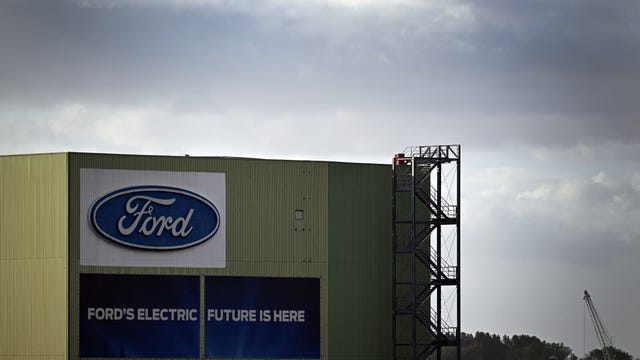
The Ford and Geely strategic alliance represents more than just a joint venture; it is a fundamental reshaping of European manufacturing. At its core, the partnership focuses on utilizing Ford's underleveraged European factory space, specifically the Valencia plant in Spain, to manufacture Geely-developed vehicles. This move allows Geely to effectively bypass punitive EU tariffs on Chinese-made electric vehicles (EVs), which currently range from 17.4% up to 37.6%, while providing Ford with a much-needed solution to optimize its facility capacity. Beyond the physical assembly lines, the deal explores a shared framework for vehicle technologies, specifically the joint development and integration of next-generation automated driving systems.
The Valencia Deal: Circumventing EU Tariffs
For Geely, the road to European expansion has recently become a gauntlet of protectionist policies. The European Commission’s decision to impose heavy duties on Chinese-manufactured EVs has threatened the price competitiveness of brands like Zeekr and Lynk & Co. However, the Ford Geely partnership 2026 strategy provides a "local" solution. By producing cars within the EU’s borders at Ford's Valencia facility, Geely can classify these vehicles as European-made, effectively neutralizing the import duty threat.
For Ford, the benefit is equally pragmatic. The transition to a pure EV lineup has been slower than anticipated, leaving many legacy plants operating well below their break-even points. By leasing space and labor to Geely, Ford transforms an idle asset into a revenue-generating hub. This is not merely a tenant-landlord relationship; it is a shared bet on European manufacturing technology.
| Production Metric | Chinese Import (Non-Partnered) | Localized Production (Ford-Geely Alliance) |
|---|---|---|
| EU Import Duty | 17.4% – 37.6% | 0% (Intra-EU Trade) |
| Logistics Cost | High (Trans-continental shipping) | Low (Regional distribution) |
| Labor Efficiency | High (Low-cost base) | Optimized (Shared legacy infrastructure) |
| Market Perception | Foreign/Imported | Locally Manufactured |
Beyond Factories: The Technology Sharing Framework
While the headlines focus on factory floor space, the true long-term value of this European manufacturing technology alliance lies in the "digital chassis." Geely has emerged as a powerhouse in rapid EV software development, while Ford retains century-old expertise in safety engineering and global platform scaling. The 2026 negotiations highlight a pivot toward a collaborative development of vehicle analytics platforms and connected software systems.
Key areas of technical integration include:
- Automated Driving Technology Sharing: Integrating Geely’s advanced sensing suites with Ford’s rigorous safety testing protocols to create a localized ADAS (Advanced Driver Assistance System) framework for European roads.
- Shared EV Architecture: Potential collaboration on "software-defined vehicle" (SDV) platforms that allow for over-the-air (OTA) updates to battery management and infotainment, reducing R&D costs for both parties.
- Supply Chain Localization: Leveraging Ford’s established European supplier network to source components for Geely-designed vehicles, further insulating both brands from global trade shocks.
This collaboration marks a significant shift from the proprietary "silo" mentality of the past. In an era where software accounts for a growing percentage of a vehicle’s value, sharing the cost of development is no longer optional—it is a survival mechanism.
Why 2026 Matters: The Pivot to Hybrids and Local Production
The timing of this alliance is not coincidental. 2026 is widely seen as an inflection point for the European automotive market. The initial "gold rush" for battery electric vehicles (BEVs) has cooled, replaced by a more nuanced "Hybrid Decade." Consumers are demanding a mix of powertrain options, and the Ford-Geely deal is positioned to address this flexibility.
The industry is currently facing a "gravity shift" where Chinese OEMs are becoming the center of global competition. Legacy manufacturers like Ford must choose between competing head-to-head on cost—a battle that is difficult to win—or integrating their competitors into their own ecosystems. By opening the Valencia plant, Ford is effectively embracing the latter. This allows them to maintain an industrial footprint in Europe while mitigating the risks associated with solo EV development in a volatile market.
Geopolitical Hurdles: The US vs. EU Regulatory Landscape
The strategic alliance must also navigate a complex web of geopolitical tensions. While the EU is increasingly focused on manufacturing localization and "fair competition," the United States has taken a more aggressive stance, particularly regarding national security concerns over Chinese-linked software.
"The challenge for global alliances in 2026 is no longer just about engineering; it’s about navigating the 'split' in global standards. What is acceptable in Valencia might be banned in Virginia."
The U.S. Department of Commerce has recently scrutinized connected vehicle software from "countries of concern," creating a potential rift in Ford’s global strategy. Ford must ensure that the software integrated into Geely-produced cars in Spain remains decoupled from its North American fleet to avoid regulatory blowback. This necessitates a "dual-track" IP strategy that protects Ford’s domestic interests while allowing it to remain competitive in the European theatre.
The Future of Global Auto Alliances
The Ford and Geely partnership signals a possible future where Europe evolves into a "neutral manufacturing hub." We are seeing a shift from traditional rivalries to hybrid cooperative models. Just as Geely has partnered with Renault for internal combustion engine (ICE) development (the "Horse" project), this new alignment with Ford suggests that the future of the industry isn't about who builds the car, but whose technology and infrastructure are utilized to bring it to market.
This alliance is a clear signal that the "lone wolf" era of automotive manufacturing is over. To compete with global EV leaders and overcome regional trade restrictions, the giants of the West and the rising stars of the East must find common ground—even if it's on the factory floor of a plant that was once destined for closure.
FAQ
Q: Will Geely cars built at the Ford Valencia plant be branded as Fords? A: No. The current framework suggests that Geely will use the facility to produce its own brands (like Zeekr or Lynk & Co), leveraging Ford’s manufacturing expertise and labor without rebranding the vehicles.
Q: How does this deal affect Ford’s own EV lineup? A: It provides Ford with financial stability by filling idle capacity, allowing the company to fund its own electric transitions more effectively while learning from Geely’s rapid software development cycles.
Q: Are there risks of Geely accessing Ford’s proprietary technology? A: Alliances of this scale involve strict IP firewalls. The focus is on shared development of new frameworks rather than handing over existing legacy blueprints, though the risk of technological "cross-pollination" is a constant factor in such negotiations.