Quick Facts
- The 90% Rule: Complete nearly all prep work in your home kitchen to ensure campsite success.
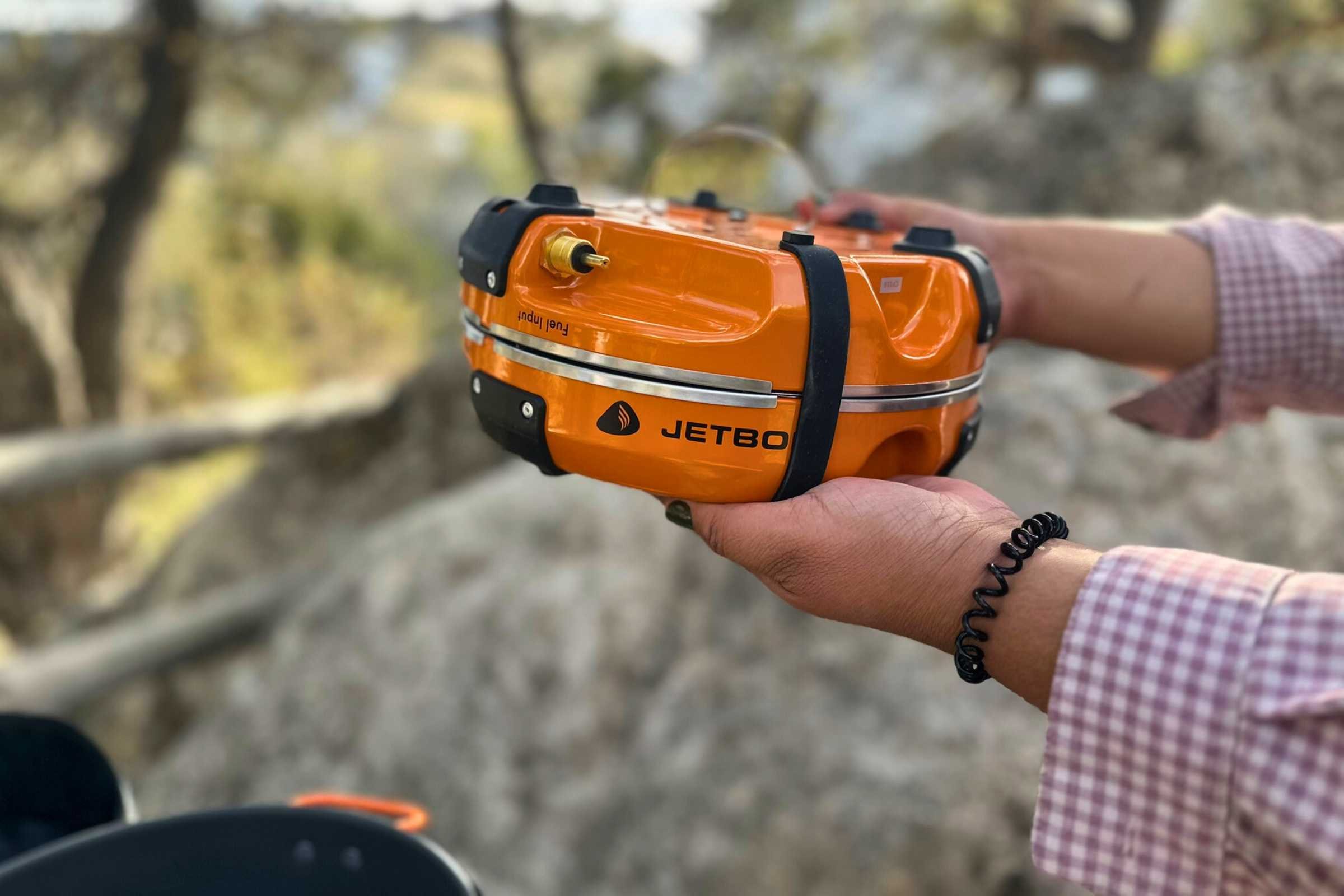
- Top-Tier Stove: Jetboil Genesis Basecamp (10,000 BTU) for group versatility.
- Critical Hack: Use pre-cooked rice and quart containers for organization.
- Food Safety: Use powered refrigeration like Dometic CFX series for multi-day trips.
- Growth Trend: A 12.8% increase in Black American outdoor participation was recorded in 2024.
- Cookbook Resource: Chef Rashad Frazier’s book features over 60 recipes optimized for outdoor environments.
Elevating your outdoor experience starts with better food. Chef Rashad Frazier of Camp Yoshi shares his expert advice on camp cooking, focusing on preparation and the right camp cooking equipment to transform your wilderness meals. To elevate camp cooking, professional chef Rashad Frazier suggests completing roughly 90% of food preparation at home. This mise en place strategy involves pre-chopping ingredients, marinating meats, and cooking complex sauces or stews in advance. By handling the technical labor in a residential kitchen, you can focus on final assembly and flavor while enjoying more leisure time at the campsite.
The Professional Edge: The 90% Prep Rule
In the world of overlanding, we often focus on suspension travel and recovery gear, but the quality of your base camp gastronomy often dictates the success of a trip. Rashad Frazier, the founder of Camp Yoshi, has revolutionized how we think about wilderness dining. His core philosophy centers on the 90% prep rule. The goal is to maximize your time in the outdoors by minimizing the time spent hunched over a folding table with a dull knife.
Mise en place, the culinary term for having everything in its place, is far easier to achieve in a climate-controlled kitchen with limitless hot water than it is on a windy ridge. By handling the heavy lifting at home—chopping onions, blending marinades, and portioning proteins—you eliminate the variables that often lead to camp cooking frustration. When you arrive at your destination, you aren't "cooking" in the traditional sense; you are assembling. This approach is particularly effective when dealing with fire bans or extreme weather, as it reduces the active time your stove needs to be running.
Beyond just efficiency, advanced meal prep tips ensure that flavors have time to develop. Marinating a skirt steak two days before you hit the trail allows the acidity and spices to penetrate the muscle fibers more deeply than a last-minute rub at the trailhead. This strategy is how to elevate camp meals from basic survival fuel to a legitimate culinary experience.
Choosing the Ultimate Camp Cooking Stove
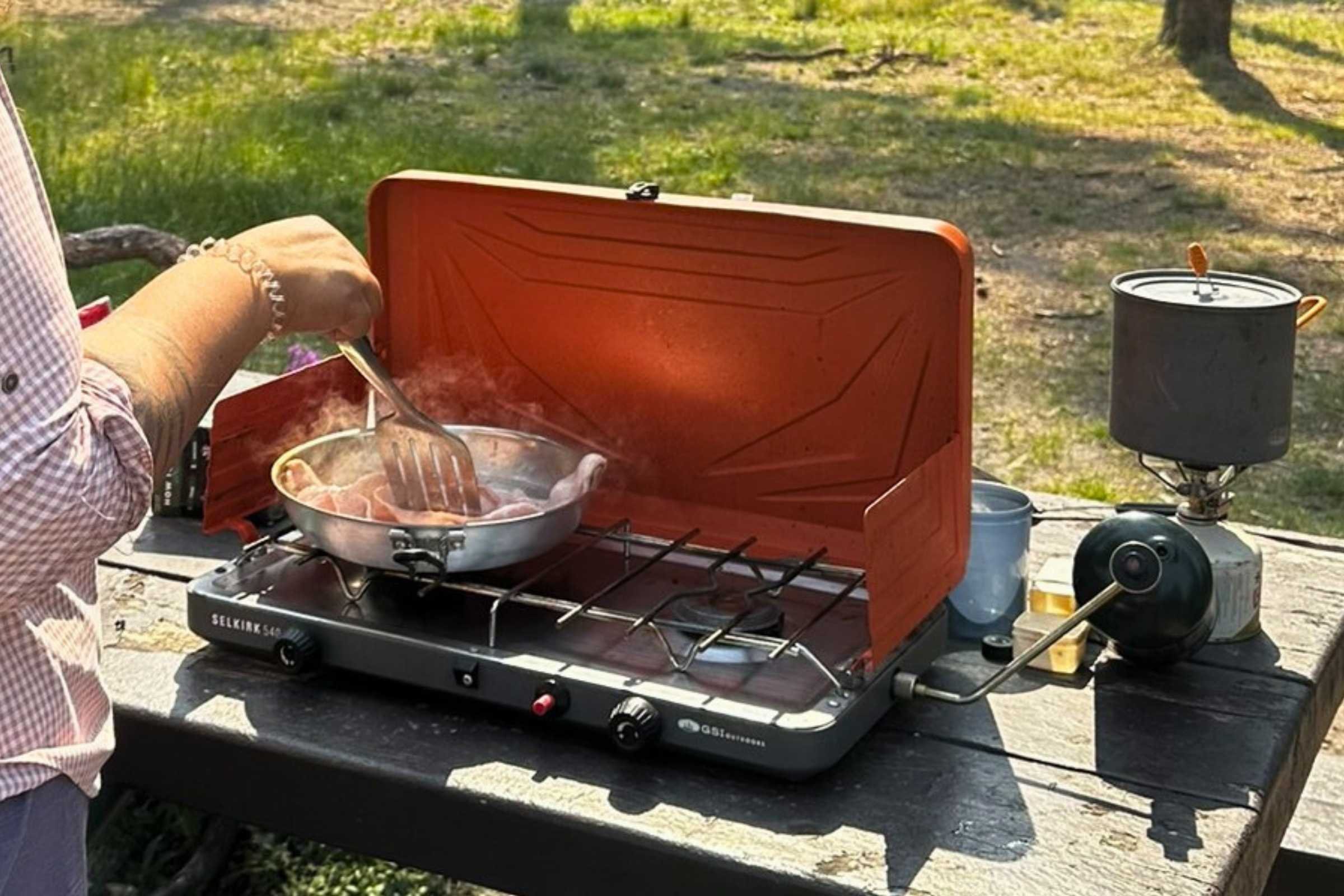
Selecting the right camp cooking stove is a technical decision that requires understanding fuel thermodynamics. Most adventure-focused drivers lean toward either propane or butane. Propane is the workhorse of the backcountry, with a boiling point of -44°F, meaning it maintains pressure in freezing temperatures. Butane, while cleaner-burning and often found in compact stoves, has a boiling point of approximately 31°F to 34°F, making it less reliable in high-altitude or cold-weather scenarios.
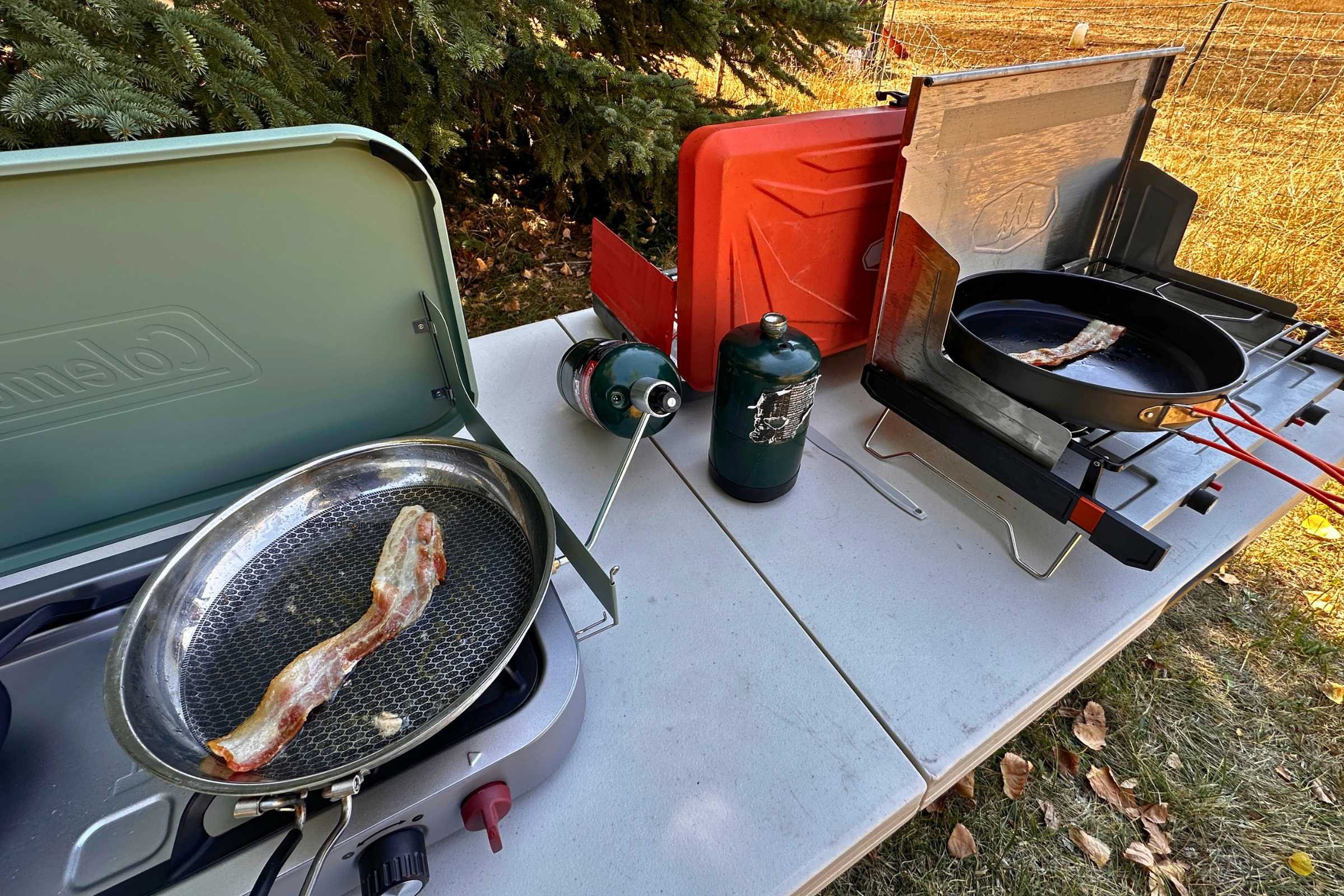
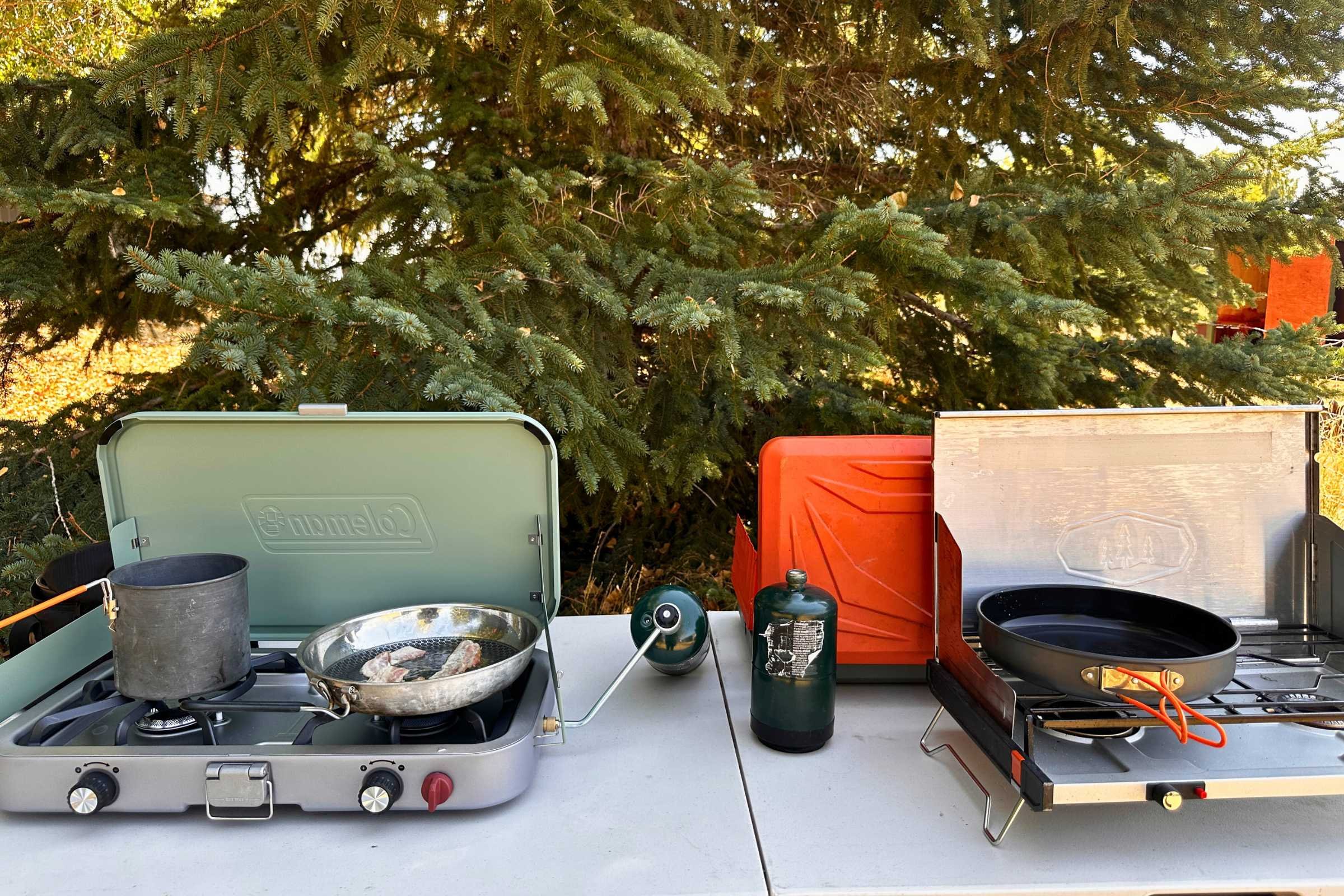
When providing best camp cooking stove reviews, I look for two specific performance metrics: BTU output and simmer control. High BTUs are great for boiling water quickly, but the real test of a professional-grade stove is the Soft Scrambled Egg Test. A high-quality stove, like the Jetboil Genesis Basecamp, offers a 10,000 BTU output but can also be dialed down to a whisper-thin flame that won't scorched delicate proteins. This level of control is essential for complex camp cooking recipes that require subtle temperature adjustments.
| Stove Model | Primary Fuel | BTU Rating | Best Application |
|---|---|---|---|
| Jetboil Genesis Basecamp | Propane | 10,000 | Group cooking and low-simmer tasks |
| Snow Peak Home & Camp | Butane | 8,200 | Minimalist setups and table-top aesthetics |
| Typical 2-Burner Green Stove | Propane | 10,000+ | Large cast iron pans and heavy duty heat |
For those looking for portability without sacrificing performance, the Snow Peak Home & Camp Burner is a favorite for its sleek design, though its butane fuel source requires warmer ambient temperatures. On the other hand, the Jetboil Genesis system uses a clamshell design that protects the burners from 40-mph winds, a frequent challenge in desert or coastal overlanding environments. It is worth noting that California is moving toward a ban on single-use propane canisters by 2028, so investing in a refillable 5-pound or 10-pound tank is a smart move for long-term fuel management.
Gourmet Camp Cooking Recipes and Master Pantry
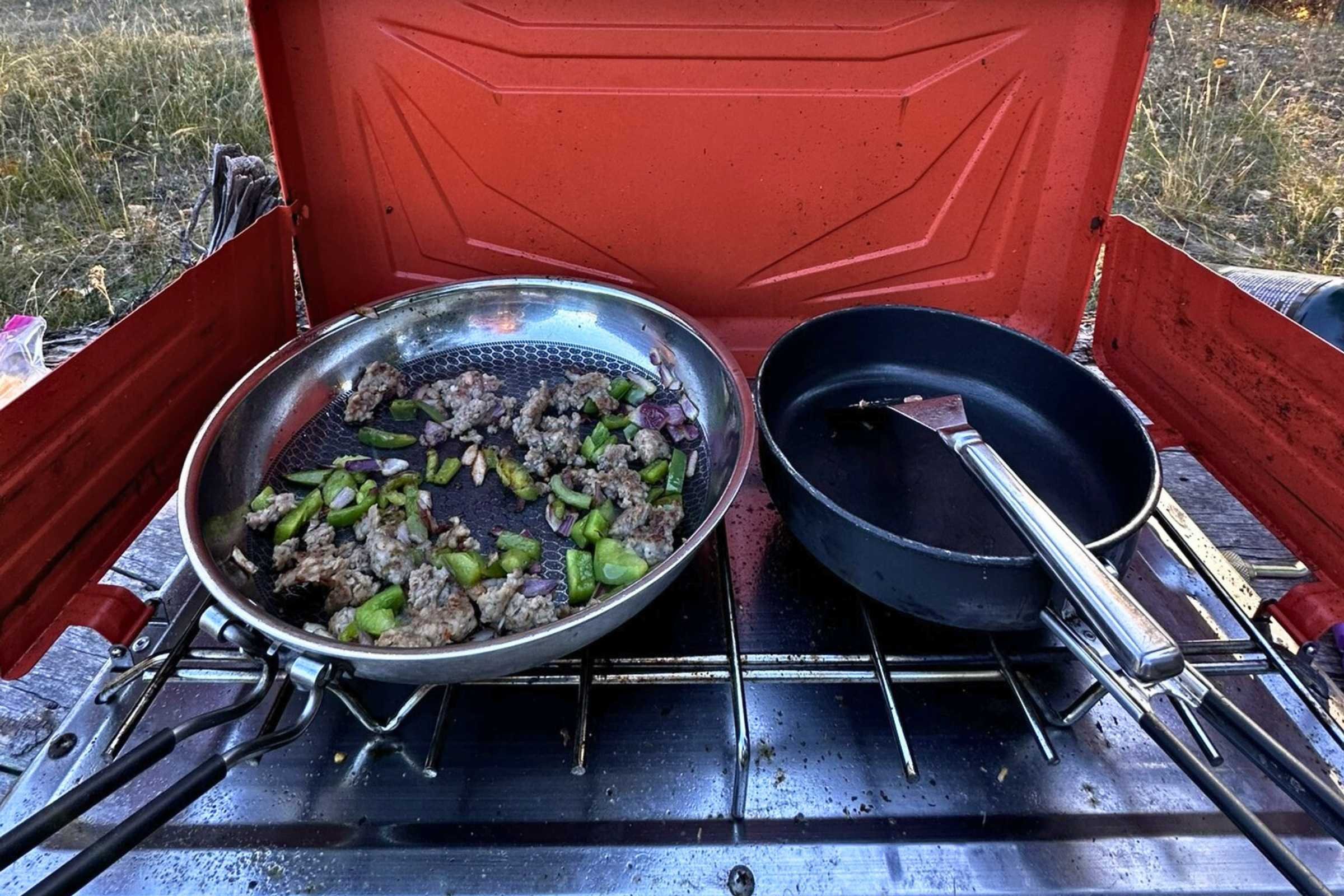
The hallmark of a great camp chef is the ability to adapt global flavor profiles to a nomadic setting. Chef Frazier emphasizes the use of high-heat mobility, often utilizing a wok or a cast iron skillet to achieve a perfect sear. One of his most effective camp cooking hacks is the use of pre-cooked rice from Asian food markets. Cooking rice from scratch in the wild is notoriously difficult due to inconsistent heat and pressure levels; pre-cooked packets only require heating and provide a reliable base for stir-fries or grain bowls.
An essential camp cooking pantry list should prioritize versatility. Frazier’s outdoor cookbook, Cook Out, features over 60 recipes that bridge the gap between home-cooked comfort and open fire camp cooking techniques. Consider these three foundational meal ideas:
- Breakfast Tacos: Use pre-chopped spring onions, cilantro, and radishes. The quick-cook time of eggs makes this a low-fuel-impact meal that satisfies everyone.
- Braised Short Ribs: This is the ultimate 90% rule dish. Braise the ribs at home, vacuum seal them with the liquid, and simply reheat them at camp. Serve over heirloom grits for a signature dish feel.
- King Salmon Burgers: A light, high-protein option that cooks quickly on a flat-top griddle and pairs perfectly with a lemon-herb aioli prepared beforehand.
The success of these outdoor culinary experiences is reflected in the numbers. Approximately 60% of participants who attend expeditions with Chef Rashad Frazier's company, Camp Yoshi, choose to rebook. Furthermore, the Outdoor Industry Association reports that Black American participation in outdoor activities grew by 12.8% in 2024, a demographic Frazier is actively engaging through high-end al fresco dining.
Campsite Logistics: Hygiene and Maintenance
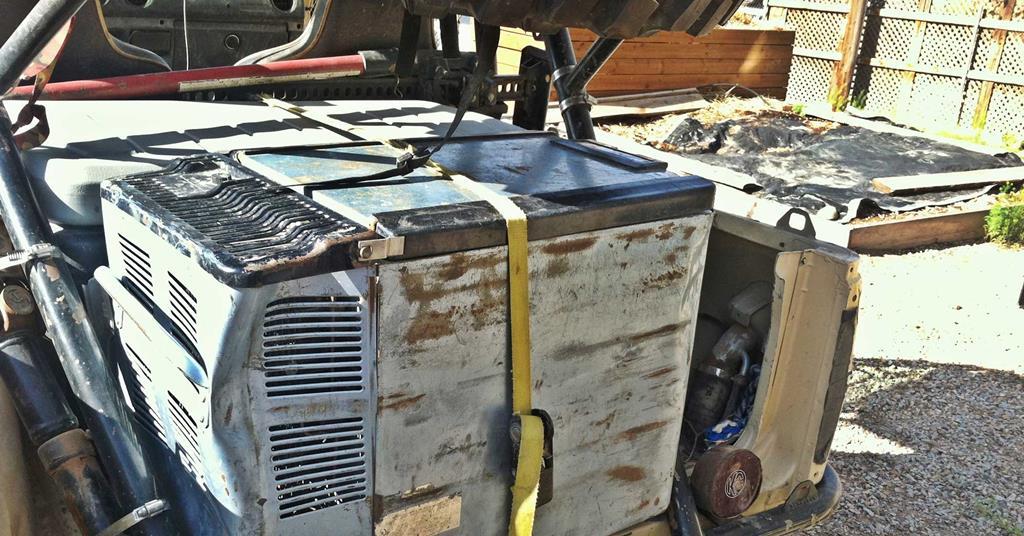
A gourmet kitchen is only as good as its organization and sanitation. For multi-day trips, portable refrigeration is a non-negotiable piece of camp cooking equipment. Moving away from ice-filled coolers to a powered unit like the Dometic CFX series ensures that your perishables remain at a consistent 38°F, preventing spoilage and cross-contamination.
Maintaining camp kitchen hygiene starts with a dedicated hand-wash station. A simple five-gallon water jug with a spigot and biodegradable soap encourages constant cleaning, which is vital when handling raw meats. For food storage, professional-grade plastic quart containers are the industry standard for a reason. They stack efficiently, are leak-proof, and allow you to see exactly what you have left in the fridge.
Finally, proper cast iron maintenance is crucial after using open flame heat. Never use harsh detergents; instead, use a chainmail scrubber and hot water, then dry the pan immediately over the stove flame to prevent rust. Apply a thin layer of grapeseed oil to maintain the non-stick seasoning, ensuring your gear is ready for the next adventure.
FAQ
What are the essential tools for camp cooking?
The foundation of a good camp kitchen includes a high-output stove like the Jetboil Genesis, a well-seasoned cast iron skillet, professional-grade quart containers for organization, and a reliable powered refrigerator. You should also carry a high-quality chef's knife and a dedicated hand-wash station to ensure food safety.
What are the best easy meals for camping?
The best meals are those that require minimal assembly onsite. Breakfast tacos are highly versatile for different diets, while pre-made sloppy joes or braised short ribs only require reheating. Using pre-cooked rice packets also saves time and fuel compared to cooking grains from scratch.
How do you store food to prevent attracting wildlife while camping?
Proper food preservation includes using air-tight containers and keeping all perishables inside a locked vehicle or a bear-rated cooler if you are in high-activity areas. Never leave food scraps or trash outside overnight, and ensure your cooking area is wiped down completely after every meal.
How do you clean dishes while camping without a sink?
Utilize a two-bin system: one bin with warm water and biodegradable soap for scrubbing, and a second bin with clean water for rinsing. For cast iron, use a chainmail scrubber and heat the pan on the stove to evaporate all moisture before storing.
What are the most common camp cooking mistakes to avoid?
The most frequent errors include failing to prep ingredients at home, which leads to long cook times in the dark, and using poor-quality fuel that fails in cold weather. Another mistake is ignoring simmer control; using a stove that only has "high" heat will result in burnt food and frustrated guests.