For years, the off-grid community has played a relentless game of Tetris. Whether you are outfitting a Toyota Tacoma for a cross-continental trek or squeezing a power system into a custom Sprinter van, space is the ultimate currency. We’ve seen the transition from bulky lead-acid batteries to the revolution of Lithium Iron Phosphate (LFP), but even then, the standard "Group 31" box shape often forces compromises in interior design. Enter the Renogy 12.8V 104Ah Super Slim Solid State Battery, a product that doesn't just iterate on existing technology—it reshapes it entirely.
The Renogy Super Slim Solid State Battery is a 104Ah energy storage solution measuring only 2.4 inches (61mm) thick, designed specifically for mounting in tight spaces like behind or under seats in RVs and 4x4s. By moving away from traditional liquid electrolytes toward a semi-solid-state architecture, Renogy has managed to create a power source that is thinner, safer, and more resilient than almost anything else on the market today.
Technical Deep Dive: What is a Semi-Solid State Battery?
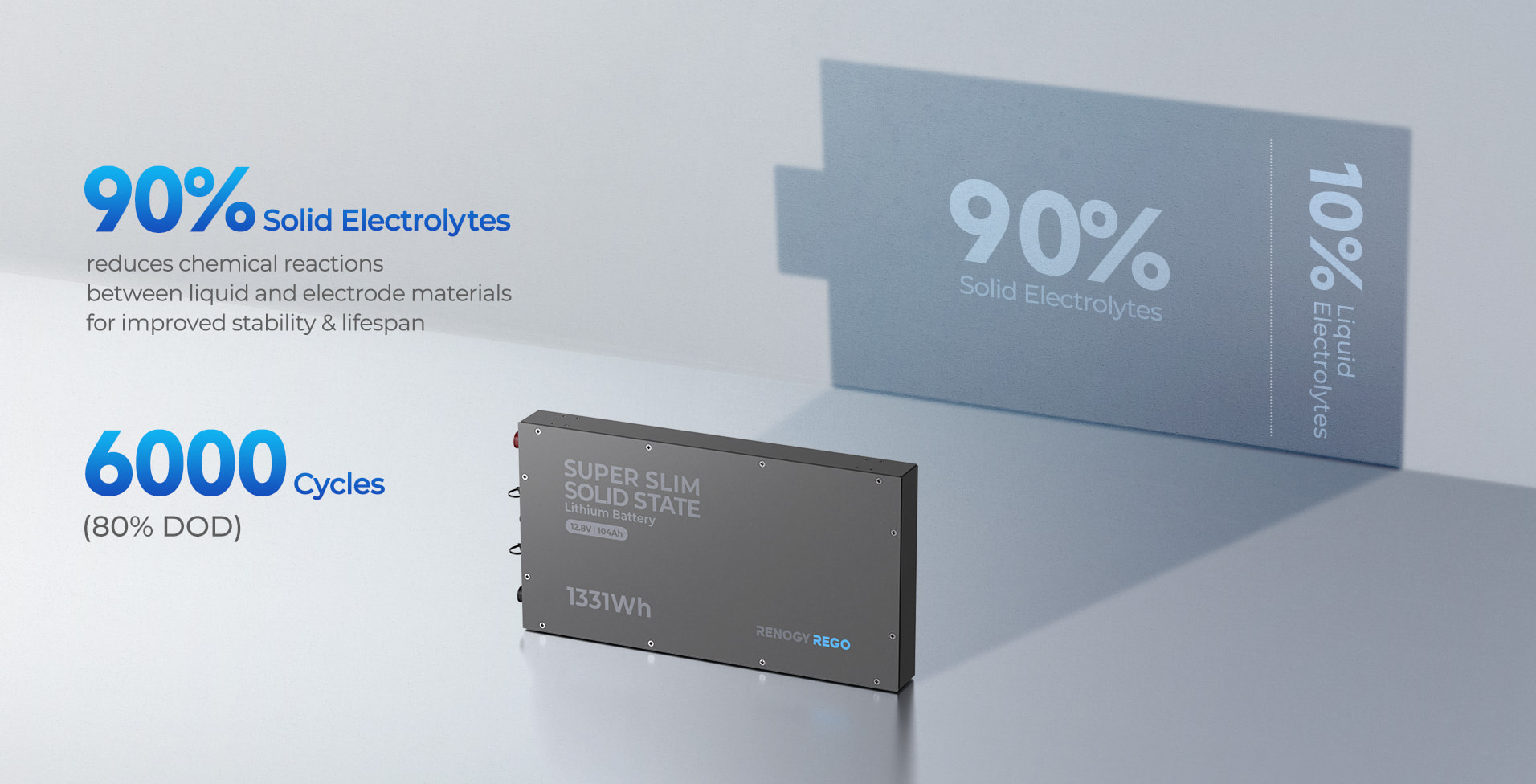
To understand why this battery is making waves, we have to look inside the cell. Most LFP batteries use a liquid electrolyte to facilitate the movement of ions between the anode and cathode. While effective, liquid electrolytes are flammable and sensitive to extreme temperature shifts. Renogy’s "Solid State" designation refers to a semi-solid-state chemistry, typically utilizing a hybrid approach—roughly 90% solid electrolyte and 10% liquid.
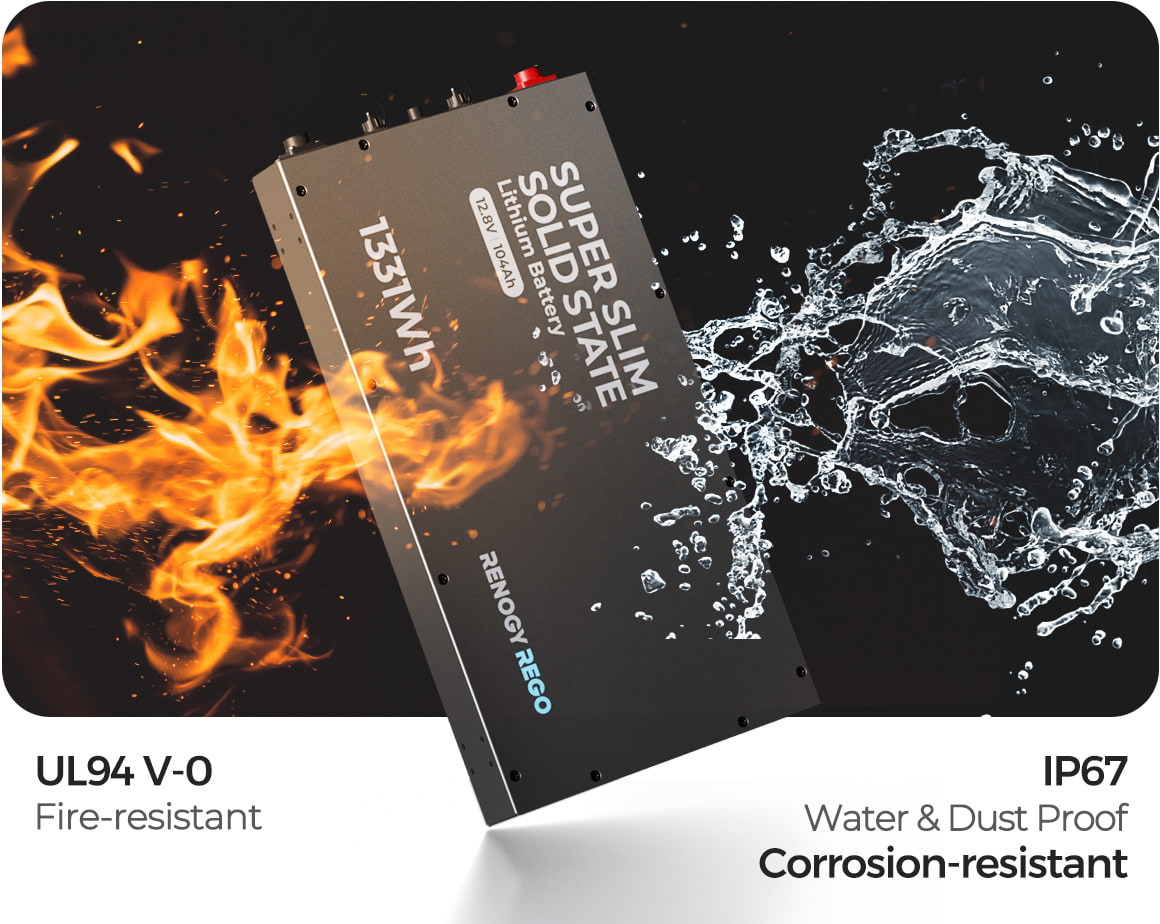
This hybrid structure provides the best of both worlds: the high conductivity of liquids with the structural stability of solids. Using advanced semi-solid-state chemistry, this battery heats up nine times slower than traditional lithium batteries and can withstand extreme temperatures, including charging capabilities down to -14°F in field tests. This is a massive leap forward for safety, as it virtually eliminates the risk of thermal runaway, even under physical puncture or extreme electrical stress.
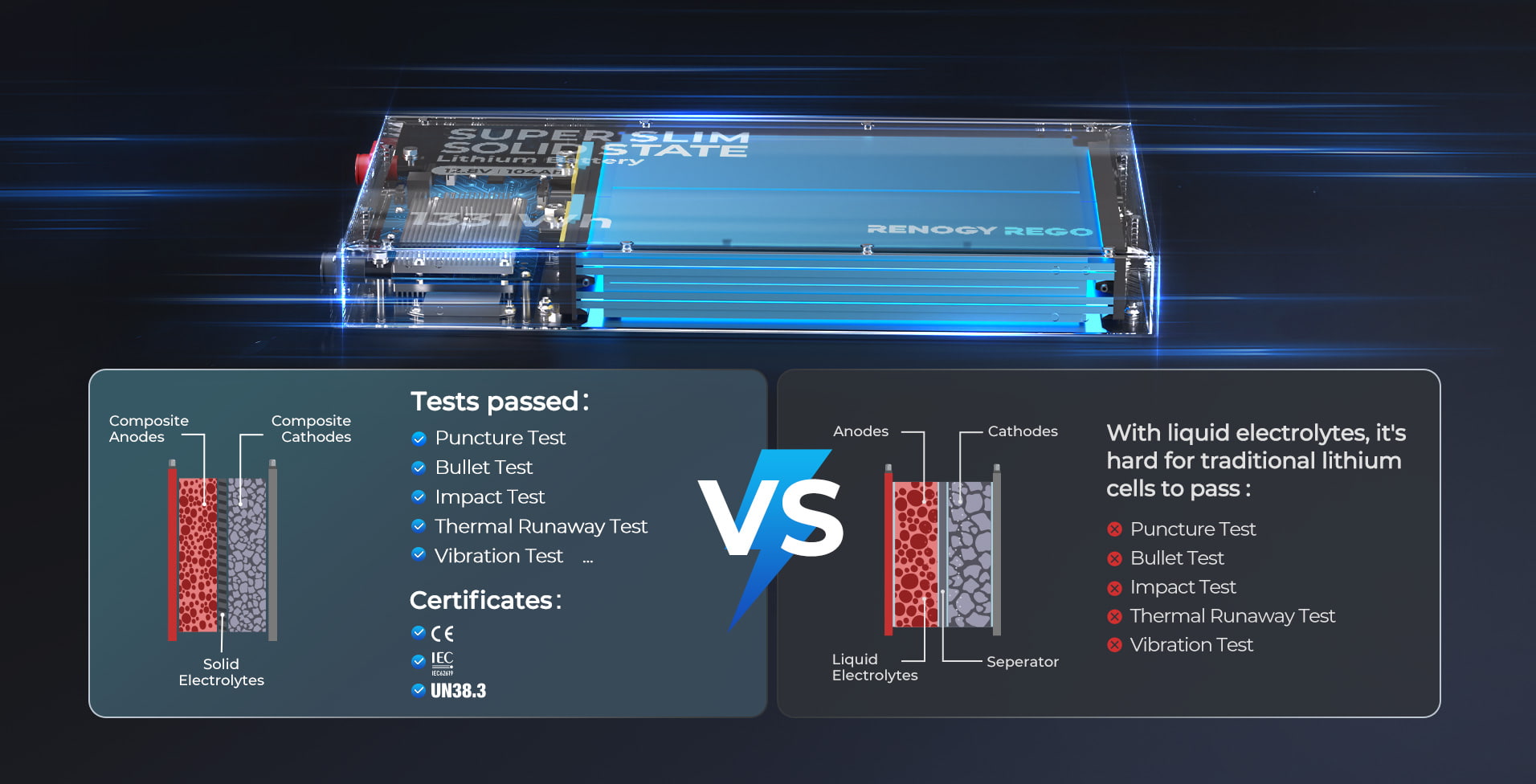
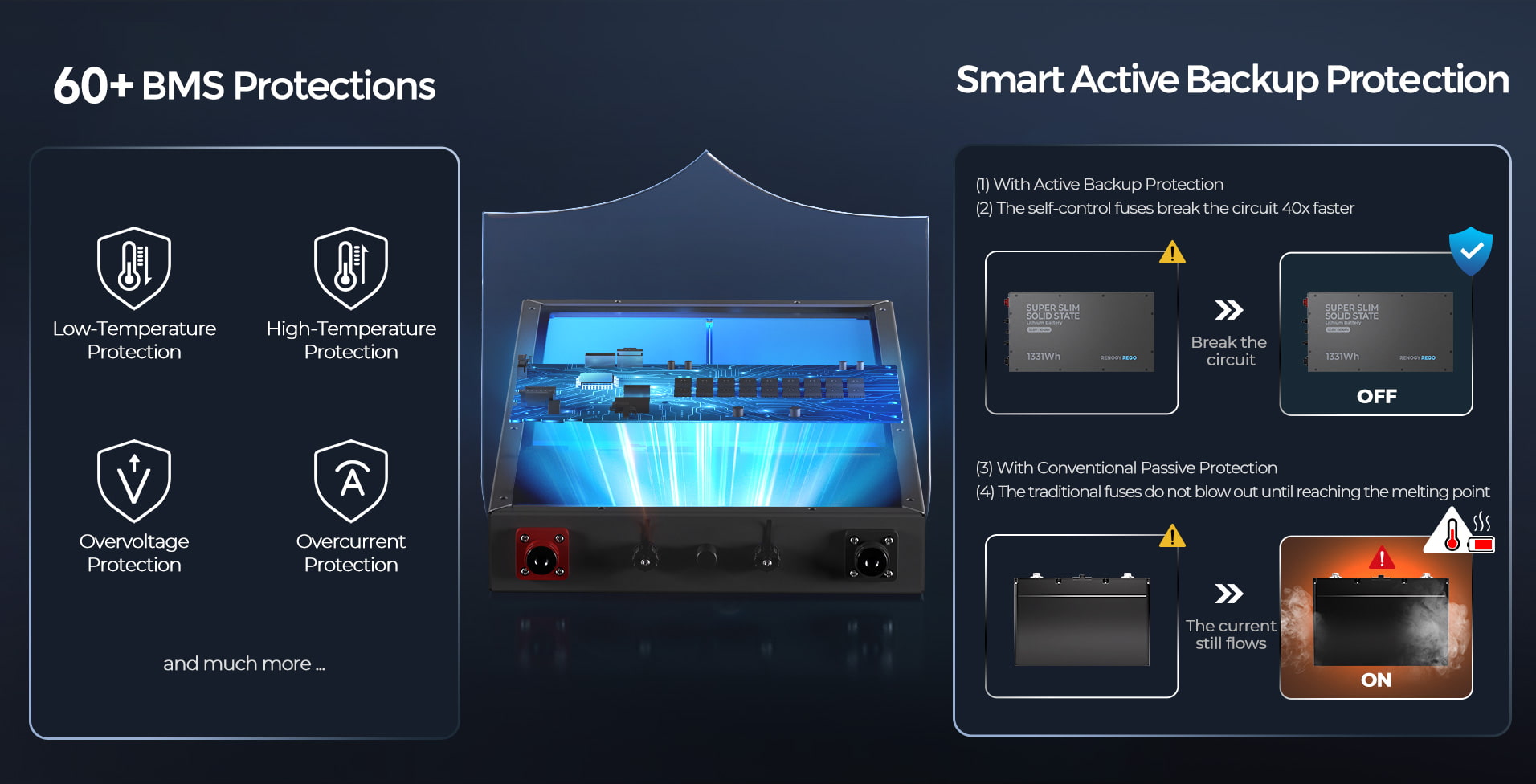
The "Nine Times Slower" metric is perhaps the most significant safety statistic we’ve seen in years. In a traditional lithium-ion battery, a short circuit can lead to a rapid temperature spike, often reaching hundreds of degrees in seconds. Because the semi-solid electrolyte in the Renogy unit is significantly more stable, the rate of temperature rise is drastically throttled. This gives the Battery Management System (BMS) ample time to intervene and provides users with an unprecedented level of peace of mind when sleeping just inches away from their power bank.
Physical Design and Mounting Versatility
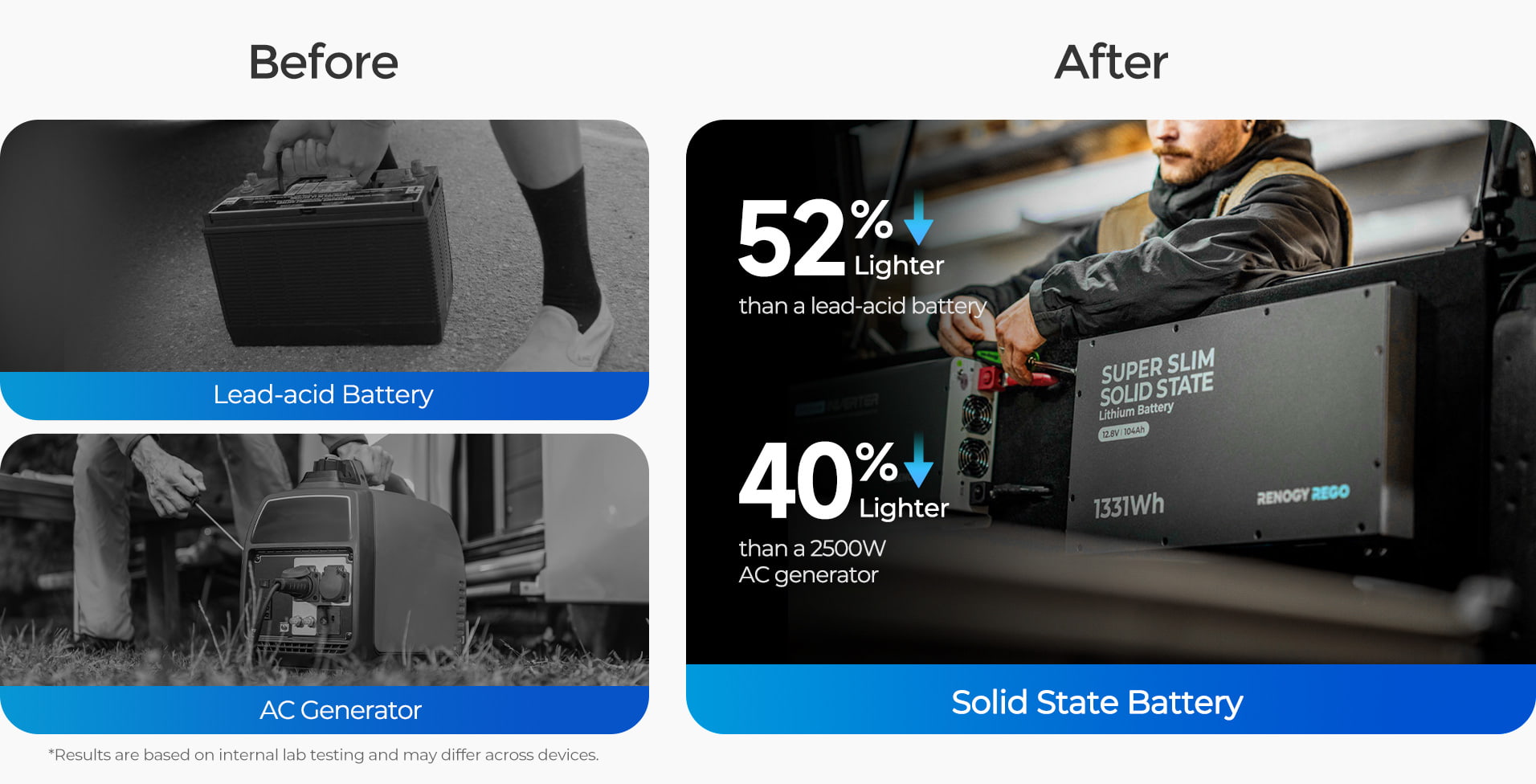
The standout feature of the Renogy Super Slim is, unsurprisingly, its profile. At just 2.4 inches (61mm) thick, it is roughly the width of a standard deck of cards. Compare this to a standard Group 31 LFP battery, which usually stands about 9 to 10 inches tall, and you begin to see the design possibilities.
Comparison: Super Slim vs. Standard Group 31
| Feature | Renogy Super Slim (104Ah) | Standard Group 31 LFP (100Ah) |
|---|---|---|
| Thickness/Height | 2.4 inches (61mm) | 9.5 inches (241mm) |
| Enclosure Material | Die-cast Aluminum / Steel | ABS Plastic |
| Mounting Orientation | Any (360 degrees) | Usually Upright or Side |
| Ingress Protection | IP67 (Waterproof) | IP65 (Water Resistant) |
| Safety Tech | Semi-Solid State (9x Slower Heat) | Liquid Electrolyte |
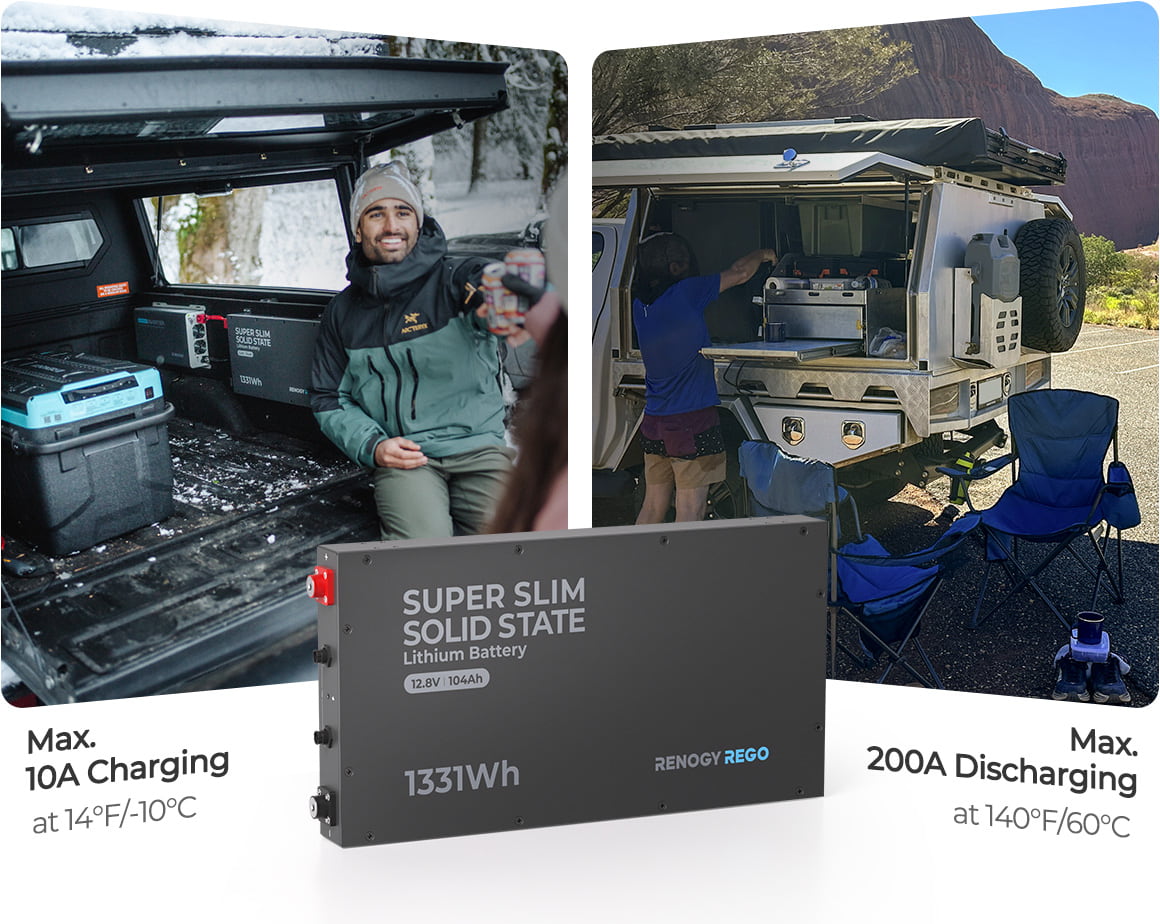
Beyond the dimensions, Renogy has opted for a ruggedized metal enclosure. Unlike the plastic shells found on entry-level batteries, this unit feels like a piece of industrial hardware. It is designed to handle the high-vibration environments of corrugated "washboard" roads common in overlanding. Furthermore, the IP67 rating means this battery is completely dust-tight and can survive temporary immersion in water. This opens up mounting locations that were previously off-limits, such as external canopy side-walls, under-chassis boxes, or even in the bed of a truck exposed to the elements.
Real-World Performance Metrics
Technical specs are one thing, but how does the Super Slim perform when you’re deep in the backcountry? One of the common criticisms of slim batteries is that they often sacrifice discharge rates for their form factor. Renogy has bucked that trend here.
The battery supports a 100A continuous discharge rate, but its peak performance is where it shines. A single unit can handle a 200A surge for up to 30 seconds. In our testing, this was sufficient to power a 2000W inverter for short bursts, allowing you to run a coffee maker or a small microwave without the battery's BMS tripping—a feat usually requiring two standard batteries in parallel.
Cold Weather Champion
One of the biggest hurdles for lithium batteries is charging in sub-freezing temperatures. Standard LFP batteries usually require internal heaters to bring the cells above 32°F before they can accept a charge.
Field Test Result: During independent testing in alpine conditions, the Renogy Super Slim Solid State Battery demonstrated a remarkable ability to accept a 10A charge at temperatures as low as -14°F (-25°C) without the immediate need for a heating cycle, thanks to the inherent stability of the semi-solid electrolyte.
The battery is rated for 6,000 cycles at 80% Depth of Discharge (DOD) and includes an 8-year prorated warranty, providing long-term reliability for off-grid applications. To put that in perspective, if you cycled this battery every single day, it would last over 16 years before its capacity dropped to 80% of its original rating.
Smart Connectivity and System Expansion
Renogy has positioned the Super Slim as a cornerstone of their REGO and ONE Core ecosystems. The battery features built-in Bluetooth, which connects seamlessly to the Renogy DC Home App. This allows you to monitor:
- State of Charge (SOC)
- Real-time voltage and current
- Individual cell temperatures
- Historical cycle data
For those building larger systems, the battery supports a maximum of 4 units in parallel and 4 in series (4P4S). This allows you to scale up to a massive 1,664Ah bank (at 12V) or configure a 24V or 48V system for high-efficiency power needs. The inclusion of RJ45 communication ports means the batteries can "talk" to each other, ensuring balanced charging and discharging across the entire bank.
Final Verdict: Is the Super Slim Solid State Worth the Premium?
There is no denying that the Renogy Super Slim Solid State Battery carries a higher price tag than a standard LFP battery of the same capacity. However, you aren't just paying for the amp-hours; you are paying for the engineering freedom that the form factor provides.
The Pros:
- Unrivaled Form Factor: Fits behind truck seats, under false floors, and in narrow cabinets.
- Extreme Safety: Semi-solid-state chemistry is objectively safer and more heat-stable.
- Weatherproof: IP67 rating and incredible low-temperature performance.
- Ecosystem Integration: Works flawlessly with the Renogy REGO and ONE Core monitoring systems.
The Cons:
- Price: Higher entry cost per Ah compared to standard-sized LFP.
- Specific Mounting: Requires Renogy’s proprietary brackets for the cleanest installation.
Who is this for? If you have a large motorhome with a dedicated battery bay, you might be better served by standard LFP blocks. However, if you are a 4x4 owner, a truck camper enthusiast, or a van builder working with every square inch of available space, this battery is a game-changer. It allows you to move your power system out of your living space and into the "dead space" of your vehicle, all while upgrading to the safest battery chemistry currently available to consumers.
FAQ
1. Can I mix this solid-state battery with my existing Renogy LFP batteries? No. It is never recommended to mix different battery chemistries (even if they are both 12.8V) or batteries of different ages/capacities in the same bank. For optimal performance and safety, your battery bank should consist of identical units.
2. Does this battery require a special charger? The Renogy Super Slim is compatible with most standard LiFePO4 chargers and DC-to-DC chargers. However, to take full advantage of the communication features, using it with Renogy REGO chargers or the Renogy ONE Core system is highly recommended.
3. Is "Semi-Solid State" the same as "Solid State"? Technically, no. A "True" solid-state battery has 0% liquid electrolyte. The industry currently uses "Solid State" for semi-solid designs (which are ~90%+ solid) because they offer nearly all the safety and density benefits of full solid-state while being mass-producible today.