Quick Facts
- CEO Vision: Return of non-SUV shapes confirmed within the next five years.
- EV Advantage: Lower profiles provide superior aerodynamic efficiency for better battery range.
- 2026 Lineup: V60 Cross Country ($53,495) and V90 Cross Country ($68,095) remain the core estates.
- Discontinued Models: S60 and S90 sedans officially retired in the US for the 2026 model year.
- Tech Standard: 11.2-inch touchscreen and 12.3-inch digital cluster standard across all 2026 wagons.
- Cargo King: V90 offers up to 69 cu-ft of flat-floor loading space.
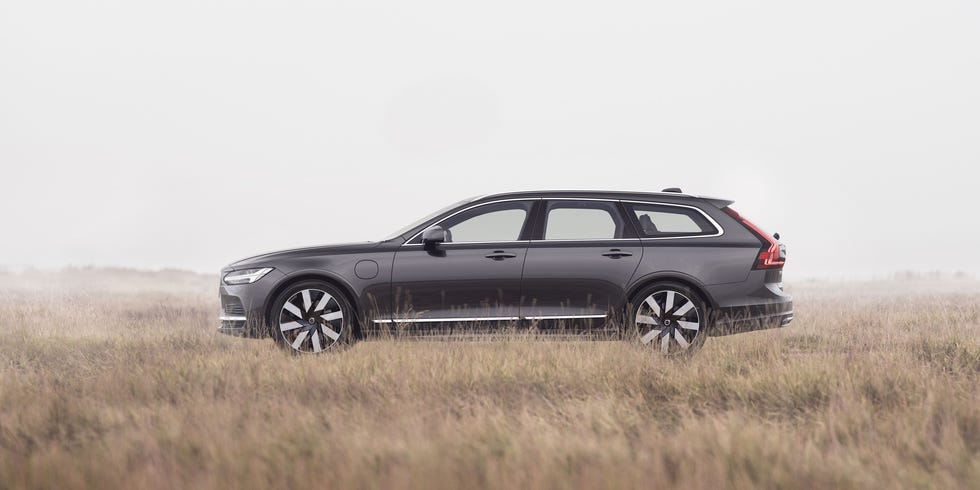
Volvo CEO Håkan Samuelsson has signaled a bold shift in strategy, confirming that volvo wagons are set for a major return to challenge the dominant SUV market. As the brand pivots toward full electrification, the classic two-box family cars are being reimagined for a new generation. While the 2026 lineup sees the departure of sedans, the survival and evolution of volvo wagon models like the V60 and V90 prove that the Swedish luxury estate is far from extinct.
The Engineering Logic: Why Wagons Outperform SUVs in the EV Age
For the last decade, the automotive industry has been obsessed with the vertical. SUVs and crossovers have dominated sales charts, but the transition to electric vehicles is forcing a mathematical reckoning. As an editor focusing on ownership costs, I often look at how vehicle shape impacts your wallet. In the world of internal combustion, a boxy SUV just meant a slightly higher fuel bill. In the electric era, that same boxy shape is a direct threat to usable range.
Volvo CEO Håkan Samuelsson has noted that the brand must move toward lower, more aerodynamic profiles to optimize EV hardware. The primary culprit is the drag coefficient. A tall SUV has to push significantly more air out of its way than a sleek wagon. By lowering the roofline and refining the silhouette, Volvo can extract more miles from a battery pack without simply making the battery bigger and more expensive. This aerodynamic efficiency is the functional driver behind the market renaissance of the wagon.
Interestingly, the market is already responding to this logic. In mid-2024, Volvo reintroduced the V60 and V90 estate models to its UK lineup due to a resurgence in customer demand, less than a year after initially removing them. This isn't just a niche trend; the station wagon market in the UK grew by 16 percent during the first four months of 2024. That is nearly double the growth rate of the overall automotive market in that region.
Beyond the math of the drag coefficient, there is a clear generational shift occurring. Younger buyers are beginning to view the large SUV as the parents' car. They are gravitating toward European shooting brakes and low-slung estates that offer utility without the bulky, suburban footprint of a traditional crossover. Future volvo electric wagons will likely lean into this identity—offering a sophisticated alternative for those who prioritize driving dynamics and efficiency over a high seating position.
2026 Model Guide: V60 vs. V90 Differences
As we look toward the 2026 model year, the current volvo wagon models serve as a bridge to this electric future. With the S60 and S90 sedans being retired in the US, the V60 Cross Country and V90 Cross Country are carrying the torch for the brand's legacy brand identity.
The differences between the volvo wagon v60 and the volvo wagon v90 come down to more than just price. There is a 2.6-inch difference in wheelbase that drastically alters the interior experience. While the V60 is agile and feels "wrapped around" the driver, the V90 Cross Country is a true highway cruiser with lounge-like rear legroom.
| Feature | 2026 V60 Cross Country | 2026 V90 Cross Country |
|---|---|---|
| Starting Price | $53,495 | $68,095 |
| Engine | 2.0L Turbo Mild-Hybrid (247 hp) | 2.0L Turbo & SC Mild-Hybrid (295 hp) |
| Max Cargo Capacity | 60.5 cu-ft | 69.0 cu-ft |
| Wheelbase | 113.2 inches | 115.8 inches |
| Highway Fuel Economy | 31 MPG | 29 MPG |
The South Carolina manufacturing plant is currently a hub for SUV production, such as the EX90, but Volvo’s move toward new platforms suggests these facilities could soon support larger, family-oriented estates. For buyers today, the volvo v90 vs v60 differences are clear: choose the V60 for urban maneuvering and higher efficiency, or the V90 for maximum luxury and long-distance hauling.
Practical Utility: Cargo Space and Fuel Economy
When readers ask me about volvo wagon vs suv fuel economy, the numbers favor the wagon almost every time. The V60 Cross Country maintains a 31 MPG highway rating, which is difficult for all-wheel-drive SUVs of comparable size to reach consistently. Because it sits lower to the ground, it suffers less from highway wind resistance, which is where most drivers do their most expensive commuting.
From a practical standpoint, volvo station wagon cargo space is often misunderstood. People assume an SUV holds more because it is taller. However, the V90 offers 69 cu-ft of total cargo space with a load floor that is perfectly flat and significantly longer than most mid-size crossovers. This segment-straddling utility means you can slide in a surfboard or a flat-pack furniture box much easier than you could in an XC60, where you might be fighting the height of the liftgate and the intrusion of the wheel wells.
For a buyer who needs the utility of a "two-box" design but doesn't want the fuel penalty of a heavy SUV, these wagons represent the best volvo wagons currently available. The ease of loading a low-profile vehicle also carries ergonomic benefits—lifting heavy gear into the trunk of a V60 is easier on your back than hoisting it up into a high-clearance SUV.
Buyer Profile: What is the Best Volvo Wagon to Buy?
Choosing the right car requires looking at your specific driving environment. If you live in a city and occasionally head to the mountains for the weekend, the V60 Cross Country is the best volvo wagon to buy. It offers a punchy distribution of power with 0.069 hp/lb, making it surprisingly quick for a family hauler. It is small enough to parallel park in tight urban spots while still providing that rugged Cross Country ground clearance for light trails.
For those who prioritize the "executive" experience, the V90 is the clear winner. Despite the V90 reaching its final year in its current form for some markets, it remains the gold standard for Swedish luxury. Global sales data reflects its specialized appeal; in 2024, the V60 and V90 combined for 44,077 units sold globally. While that is lower than the XC60's 230,853 units, it represents a loyal and growing base of enthusiasts who value the estate's unique profile.
Are volvo wagons reliable? Based on current maintenance schedules and the proven B5 and B6 mild-hybrid powertrains, these vehicles offer a stable ownership experience. Unlike fully electric startups, these models use refined platforms that benefit from years of iterative engineering. For a buyer who is not yet ready to go full EV but wants a vehicle that looks and drives like the future, the modern Volvo estate is a compelling mid-point.
FAQ
Do they still make Volvo wagons?
Yes, Volvo continues to produce and sell wagons globally. For the 2026 model year in the United States, the lineup consists of the V60 Cross Country and the V90 Cross Country. While standard "V" models without the Cross Country cladding have been phased out in some regions, the brand has confirmed a plans to expand its estate offerings over the next five years.
How much is a 2026 Volvo Wagon?
The 2026 V60 Cross Country starts at approximately $53,495. The larger, more powerful V90 Cross Country starts at $68,095. These prices place Volvo wagons in the premium luxury segment, competing with similar offerings from Audi and Mercedes-Benz.
What are Volvo Wagon models?
The current primary volvo wagon models are the V60 and the V90. Both are primarily sold in the "Cross Country" trim in North America, which includes standard all-wheel drive, increased ground clearance, and ruggedized exterior trim. In other global markets, Volvo occasionally offers the standard V60 and V90, as well as high-performance Recharge plug-in hybrid variants.
What is the best Volvo wagon to buy?
The V60 Cross Country is generally considered the best all-around choice for most buyers due to its balance of price, agility, and 31 MPG highway fuel economy. However, if you require maximum rear-seat legroom and a larger 69 cu-ft cargo area, the V90 Cross Country is the superior choice for long-distance family travel.
Which is better, Lexus or Volvo?
This depends on your priorities. Lexus typically wins on predicted long-term reliability and resale value. However, Volvo is widely considered superior in terms of interior seat comfort, Scandinavian design aesthetics, and the availability of true station wagon body styles, which Lexus does not currently offer in the North American market.