Our Top Picks
- Track Capability: The DE5 race car build represents the peak of front-wheel-drive engineering, proving this chassis can handle extreme vertical climbs and massive lateral loads without breaking a sweat.
- Engineering Pinnacle: The HRC-developed high-altitude cooling system is a masterclass in thermal management, maintaining over 360 hp even at the oxygen-deprived 14,000-foot summit.
- Driver Engagement: The precision-shifting 6-speed manual remains a core part of the identity of the Acura Integra Type S, bridging the gap between a technical race tool and a visceral enthusiast machine.
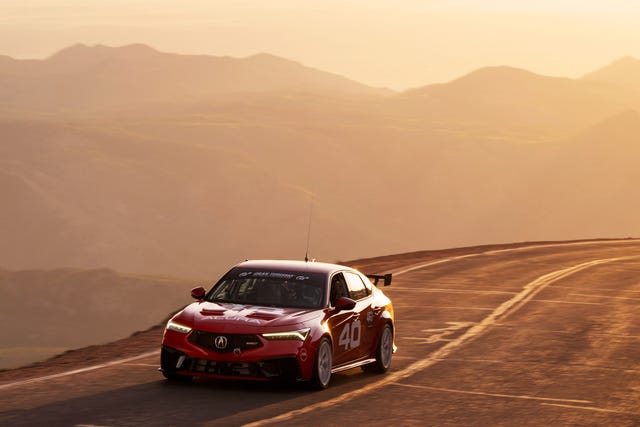
The Acura Integra Type S serves as the refined foundation for a legitimate hill climb monster, powered by a 2.0-liter turbocharged K20C1 engine that delivers 320 horsepower and 310 lb-ft of torque in its street guise. When transformed into the DE5 race variant by Honda Racing Corporation (HRC), the platform produces more than 360 horsepower to conquer Pikes Peak, eventually setting a new front-wheel-drive record with a blistering time of 10:33.174.
The Acura Integra Type S isn't just a refined daily driver—it's the foundation for a mountain-conquering beast. In its DE5 race configuration, this platform recently shattered the front-wheel-drive record at Pikes Peak with a time of 10:33.174. By leveraging the K20C1 engine and HRC engineering, the Integra Type S proves that Precision Crafted Performance is more than just a marketing slogan; it's a legitimate racing pedigree.
The Engineering Foundation: K20C1 Powertrain & Chassis
When you sit in the cockpit of a standard Acura Integra Type S, the first thing you notice is the balance. It is a car that feels mature, yet deeply capable. The heart of this machine is the K20C1 powertrain platform, a 2.0-liter turbocharged powerhouse that defines the current era of Japanese performance. While critics often compare it to its cousin, the Civic Type R, the Acura offers a distinct adaptive damper system tuning that provides a more sophisticated ride quality without sacrificing 1.02g of lateral grip.
The acura integra type s specs for the road-going version are impressive: 320 hp, a helical limited-slip differential, and those massive Brembo braking hardware components hiding behind 19-inch wheels. However, for the Pikes Peak International Hill Climb, the team didn't just want a fast street car; they needed a purpose-built weapon. The transition begins with chassis construction. The DE5 is built from a body-in-white shell, allowing HRC engineers to optimize every weld for rigidity.
One of the most significant changes in the acura integra type s vs civic type r tracking conversation is how the Acura manages its weight and center of gravity. For the race build, the team opted to delete the moonroof and much of the interior sound deadening, replacing it with a specialized lightweight rollcage construction. This doesn't just protect the driver; it ties the suspension pick-up points together, allowing the Dual-Axis Strut front suspension to work with surgical precision under heavy cornering loads.
Performance Specification Comparison
| Feature | Integra Type S (Street) | Integra Type S DE5 (Race) |
|---|---|---|
| Engine | 2.0L Turbo K20C1 | Modified 2.0L Turbo K20C8 |
| Horsepower | 320 hp | 360+ hp |
| Torque | 310 lb-ft | 340+ lb-ft |
| Transmission | 6-speed Manual | 6-speed Sequential or Manual |
| Weight | 3,219 lbs | Approx. 2,850 lbs |
| Brakes | 4-Piston Brembo | HRC Spec Racing Brakes |
| Tires | Michelin Pilot Sport 4S | Yokohama Advan A005 |
Building the Beast: HRC Performance Upgrades
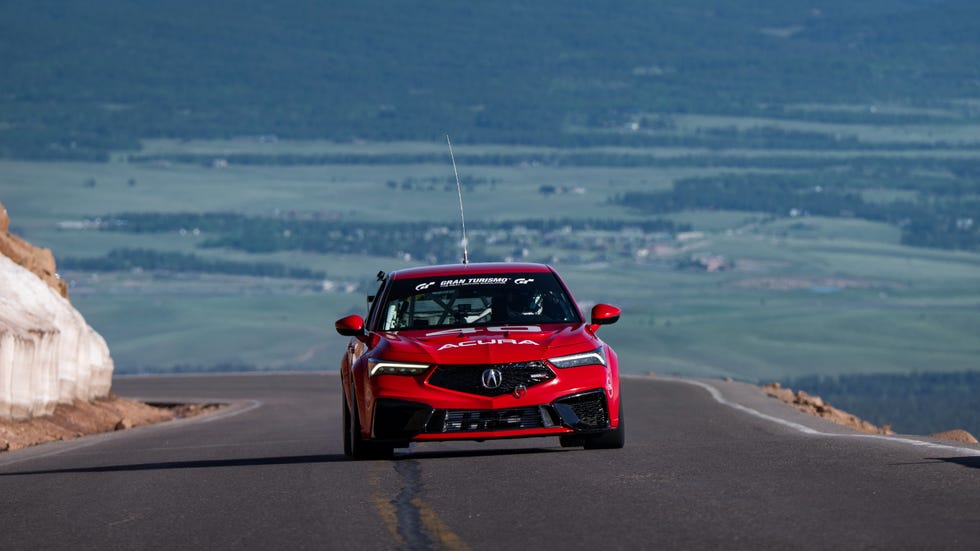
The jump from a street-legal acura integra type s engine to the racing-spec K20C8 found in the DE5 is a result of intense collaboration with Honda Racing Corporation (HRC). This isn't just a simple ECU tune. The acura integra type s hrc performance upgrades include a specialized fuel system, a race-tuned exhaust, and a calibration designed to maximize the surge of torque required to pull out of the 156 turns that make up the Pikes Peak course.
Introduced with a starting price of approximately $125,000, the acura integra type s de5 race car build is a turn-key solution for professional touring car series. Every element is refined for the track, from the adjustable HRC anti-roll bars to the camber plates that allow for aggressive alignment settings.
When modifying acura integra type s for hill climb duty, traction is the ultimate currency. To ensure the power actually makes it to the pavement, the DE5 utilizes Yokohama Advan A005 tires. These racing slicks, combined with the limited-slip differential, allow the driver to get on the throttle earlier than should be possible for a front-wheel-drive car. The engineering goal was clear: create a vehicle that could handle the violent transitions of a mountain road while maintaining the high-speed stability required for the fastest sections of the course.

Solving the 14,000-Foot Problem: Cooling and Aero
Perhaps the greatest challenge of Pikes Peak is the thin air. As you climb from the 9,390-foot start line to the 14,115-foot finish, the air pressure drops significantly. This creates a two-pronged crisis: acura integra type s high altitude power loss and a massive reduction in cooling efficiency. Turbochargers have to work twice as hard to produce the same amount of boost, which in turn generates immense heat.
To combat this, the DE5 utilizes a specialized acura integra type s engine cooling for racing setup. The center of this system is a lightweight PRL Motorsports intercooler, which features a significantly larger core volume than the stock unit. This allows for superior thermal management efficiency, ensuring that the intake air temperatures remain low enough to prevent the engine from pulling timing.
Aerodynamics also play a crucial role in cooling and performance at high-altitude forced induction levels. The DE5 features a massive front splitter and a swan-neck rear wing designed to produce meaningful downforce in the thin atmosphere. These components don't just keep the car pinned to the road; they are designed to duct air precisely into the high-volume intake system and through the upgraded radiator, preventing the K20C8 from overheating during the grueling 10-minute sprint to the clouds.
Record-Shattering Results: The Pikes Peak Run
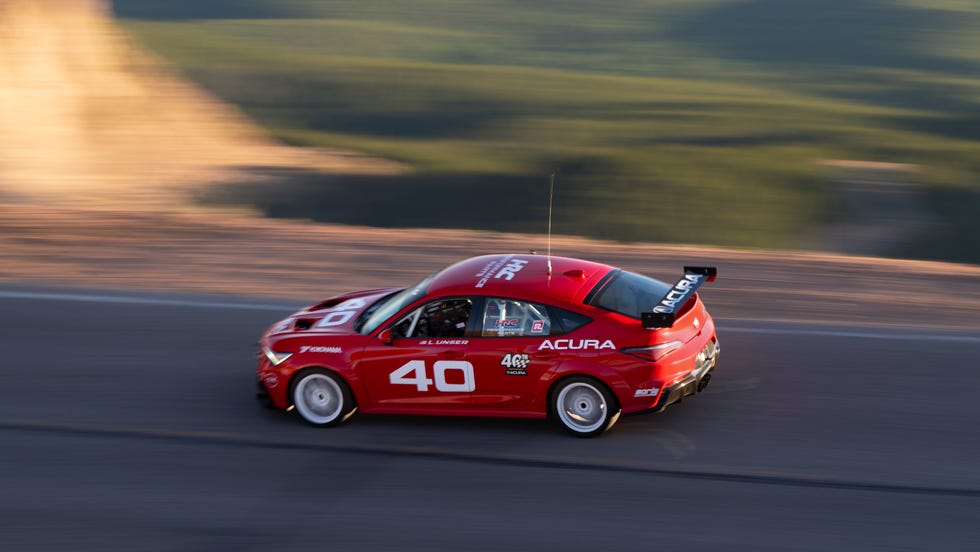
The culmination of all this engineering was the record-breaking run by veteran driver Dai Yoshihara. Piloting the Acura Integra Type S DE5 through the clouds, Yoshihara managed to maintain a blistering pace despite the changing grip levels and thinning air. The DE5, producing more than 360 horsepower and 340 lb-ft of torque, proved that front-wheel drive is no handicap when the chassis is this well-sorted.
The final result was a completion time of 10:33.174, which set a new front-wheel-drive record at the Pikes Peak International Hill Climb. To put that into perspective, this performance surpassed the previous record by nearly 15 seconds, which was held by a modified 2018 Acura TLX.
Watching the telemetry from that run reveals a car that is remarkably stable. While other high-horsepower, rear-wheel-drive competitors struggled with snap oversteer on the bumpy tarmac, the Integra remained composed. The combination of the active dampening technology and the HRC-tuned suspension allowed Dai Yoshihara to attack the hairpins with total confidence, proving that the Acura Integra Type S is one of the most capable performance platforms on the market today.

FAQ
Is the Integra type S fast?
Yes, the Acura Integra Type S is exceptionally fast for its segment. The street version achieves a 0-60 mph time of approximately 5.2 seconds and features a top speed of 167 mph. In its DE5 race configuration, it is fast enough to hold the front-wheel-drive record at Pikes Peak with a time of 10:33.174.
Is Integra faster than Civic?
While the Acura Integra Type S and the Civic Type R share the same K20C1 engine, they are very closely matched in terms of raw speed. The Acura produces 320 hp, which is a slight 5 hp increase over the American-spec Civic. However, the Acura is slightly heavier due to added premium features and sound deadening, meaning their real-world performance is nearly identical.
Is Acura a spec or type S better?
The Type S is the pinnacle of the Integra lineup. While the A-Spec focuses on sporty styling and a balanced daily driving experience with 200 hp, the Type S is a dedicated performance machine with 320 hp, a wider track, upgraded suspension, and high-performance Brembo brakes. For enthusiasts seeking a track-ready tool, the Type S is significantly better.
How much is an Acura Integra type S?
The street-legal Acura Integra Type S typically starts with an MSRP of around $52,000. For professional racers, the turn-key Integra Type S DE5 race car developed by HRC is priced at approximately $125,000, reflecting its extensive competition-grade upgrades and racing pedigree.