Quick Facts
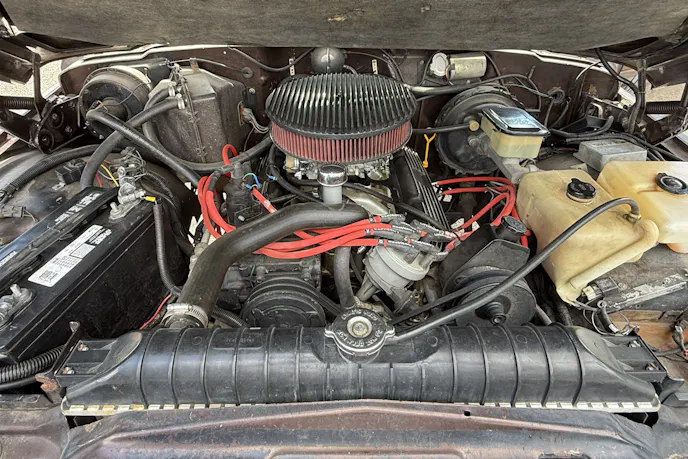
- Engine: 406-cubic-inch V8 Stroker built from a stock AMC 360 block by S&J Engines.
- Fuel & Air: Edelbrock 1406 four-barrel carburetor paired with Flowmaster 40 Series mufflers.
- Tires & Wheels: 37x12.50R15 Interco IROK Radials mounted on 15x8 Western Cyclone wheels.
- Lift Height: A combined 7-inch lift involving 4-inch leaf springs and a 3-inch body lift.
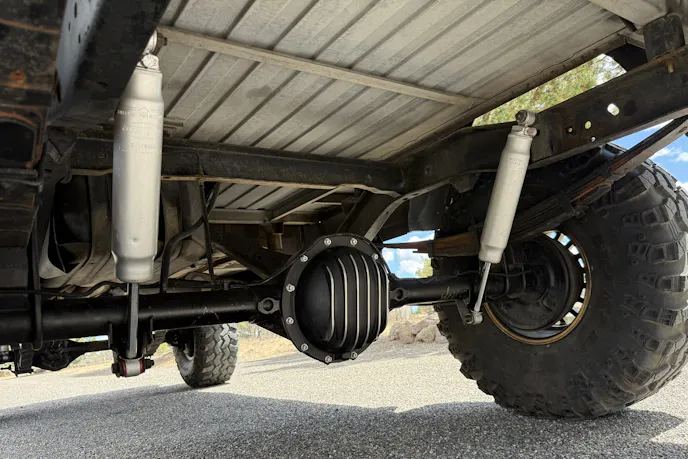
- Drivetrain: Reinforced Dana 44 axles with RCV Performance chromoly axle shafts and a 4.56:1 gear ratio.
- Traction: Eaton Detroit Locker in the rear and an Auburn Grip-N-Loc limited-slip differential in the front.
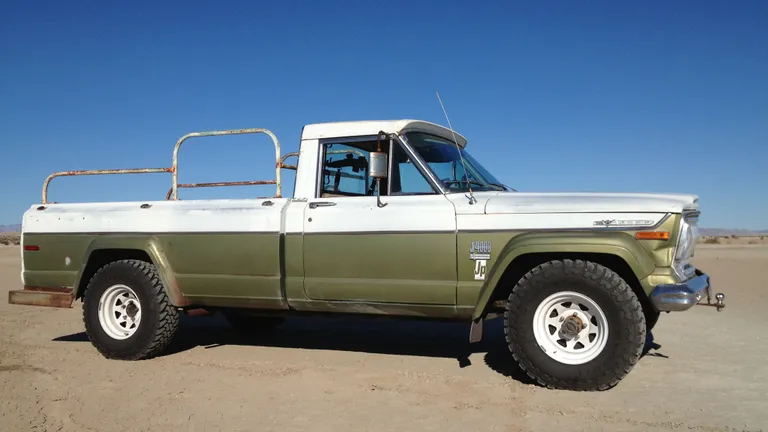
The 1986 Jeep J10 remains a legend in the Full-size Jeep (FSJ) community. This particular build elevates the classic 1986 Jeep J10 specs by swapping the stock AMC 360 for a high-performance 406 Stroker engine. To handle the trail, it features a 4-inch lift clearing 37-inch tires and reinforced Dana 44 axles. Whether you call it a Jeep J10 Gladiator or a classic J-series, this truck is built for the Rubicon Trail.
The History and Heritage of the 1986 Jeep J10
When you look at a 1986 Jeep J10, you are looking at the twilight of an era. The J-series trucks, built on the venerable SJ platform, had been in production for nearly 25 years when this specific truck rolled off the assembly line. By 1986, the platform had transitioned through various owners, from Willys-Overland to Kaiser and finally to AMC. This model year represents the penultimate year for the full-size truck before Chrysler took the reins and eventually focused on the XJ and YJ platforms.
Understanding the jeep j10 gladiator history and trims is essential for any purist. While the Gladiator name was officially dropped in the early 1970s in favor of the J-series designation, enthusiasts still use the names interchangeably. The J10 represented the half-ton payload capacity, distinguished from its heavier-duty sibling, the J20. By the mid-1980s, the aesthetic had shifted slightly. Gone were the "rhino" and "razor" grilles of the early years, replaced by the square headlight design that defined the Reagan era of off-roading.
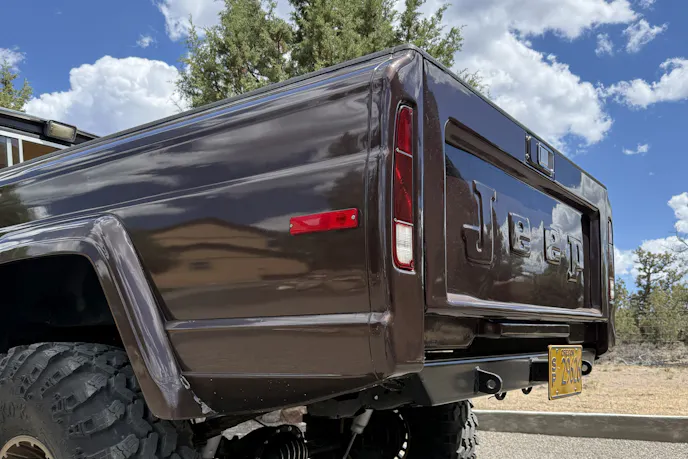
In this build, the owner opted to emphasize the jeep j10 stepside bed, a rare and highly sought-after configuration that provides a aggressive, narrow profile compared to the standard slab-sided townside beds. This particular truck isn't just a museum piece; it is a functional piece of history designed to endure another few decades of mountain passes.
Building the Heart: 406 Stroker Engine Performance
A classic truck needs classic power, but the original AMC 360 V8 often leaves modern drivers wanting more torque when crawling over boulders. To solve this, the builders turned to S&J Engines to create a custom 406 Stroker. By increasing the stroke of the original block, the engine gains significant displacement, which translates to the low-end grunt required to turn massive tires.
The jeep j10 406 stroker engine performance is further enhanced by a carefully selected valvetrain. A Comp Cams setup ensures the power band stays where you need it—in the low to mid-range. For fuel delivery, the reliability of an Edelbrock 1406 carburetor was chosen. This four-barrel unit is famous among off-roaders for being relatively easy to tune while maintaining performance at steep angles, a common challenge for carbureted rigs on the Rubicon Trail.
To let that big V8 breathe, the build utilizes a dual 2.5-inch exhaust system. The inclusion of Flowmaster 40 Series mufflers gives the truck that signature deep, hollow rumble that defines an American V8. This setup doesn't just sound intimidating; it effectively clears exhaust gases, allowing the 406 Stroker to hit its peak efficiency during high-load hill climbs.
Suspension and Stance: Fitting 37-Inch Tires
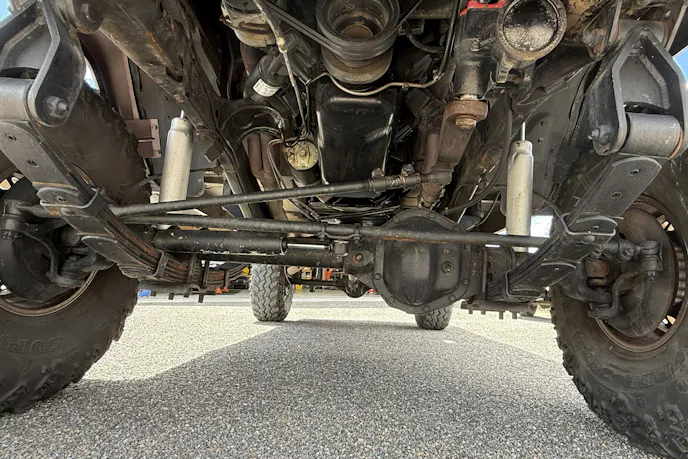
One of the most common questions I get is about the jeep j10 4 inch lift for 37 inch tires. Fitting 37-inch rubber on an FSJ isn't as simple as slapping on a standard kit. The wheel wells on these trucks, especially the stepside models, require a strategic combination of height and trimming. For this build, the solution was a "stack" approach: 4-inch lift leaf springs paired with a 3-inch body lift.
This 7-inch total increase in altitude provides the necessary clearance for Interco IROK Radial tires. The IROK is a legendary choice for technical terrain, featuring a directional tread pattern that excels in mud and loose rock. Measuring 37x12.50R15, these tires offer a massive contact patch when aired down.
Damping is handled by Rancho RS9000XL shocks. These are adjustable units, which is a massive win for a truck that sees both highway miles and technical trails. You can stiffen them up for the trip to the trailhead to reduce body roll and then soften them to allow for maximum flex when navigating rock gardens. The tires are mounted on period-correct 15x8 Western Cyclone wheels, maintaining the truck's 1980s soul while delivering modern performance.
Specification Comparison: Stock vs. Modified
| Component | Stock 1986 Jeep J10 specs | Modified 406 Stroker Build |
|---|---|---|
| Engine | AMC 360 V8 (Approx. 5.9L) | 406 Stroker V8 (Approx. 6.6L) |
| Horsepower | ~175 hp (Net) | ~350+ hp (Estimated) |
| Tire Size | 29-31 inches | 37-inch Interco IROK Radial |
| Axle Gearing | 2.72:1 or 3.31:1 | 4.56:1 Nitro Gear & Axle |
| Lift Height | Factory Standard | 7 inches (4" Suspension + 3" Body) |
| Traction | Open Differentials | Rear Detroit Locker / Front Auburn LSD |
Drivetrain Strength: Dana 44 Upgrades
When you move to 37-inch tires and double your torque, the weakest link usually becomes the axles. While the stock Dana 44 units are stout, they aren't invincible. The process of upgrading jeep j10 dana 44 axle strength for this build involved a "no-compromise" approach to internal components.
First, the factory shafts were ditched in favor of RCV Performance chromoly axle shafts. These use a CV-style joint that eliminates the binding and "jerking" felt with traditional U-joints at full steering lock, which is vital when you are trying to pick a precise line through boulders. Internally, the truck was regeared to 4.56:1 using Nitro Gear & Axle components. This shorter gearing compensates for the larger tire diameter, bringing the 406 Stroker back into its optimal power band.
Traction is the other half of the equation. In the rear, an Eaton Detroit Locker was installed. Known for its "set it and forget it" durability, the Detroit Locker ensures both rear wheels spin at the same speed under load. In the front, the builders opted for an Auburn Grip-N-Loc limited-slip differential. This provides a smoother steering feel than a full locker in the front while still delivering impressive locking force when one tire loses grip.
Trail Prep: Bumpers, Winches, and Interior Restoration
The final phase of any high-end 1986 jeep j10 off-road modifications is armor and recovery. To protect the vintage sheet metal, the truck features Buckstop vintage series bumpers. These heavy-duty steel bumpers are designed to match the square aesthetics of the 80s while providing a solid mounting point for a Warn Zeon 10-S winch. With 10,000 pounds of pulling capacity and synthetic rope, the Zeon is the gold standard for backcountry self-recovery.
Inside, the jeep j10 interior restoration and styling focuses on blending heritage with modern utility. The original bench seat and dashboard layout remain, preserving the truck's character, but the electronics have been modernized. An sPOD BantamX system was installed to manage the auxiliary lights, lockers, and winch. This keeps the wiring clean and prevents the "spaghetti mess" often found behind the dash of older project trucks.
Every detail, from the TorqueFlite 727 automatic transmission to the NP208 transfer case, has been touched to ensure reliability. This isn't just a trailer queen; it's a vehicle capable of driving to the trail, conquering the obstacles, and driving home.
FAQ
How much is the Jeep J10 worth?
The value of a Jeep J10 varies wildly based on condition and configuration. A rusted-out project might sell for $5,000 to $8,000, while a clean, survivor-quality truck can fetch between $20,000 and $35,000. Fully custom builds like this 406 Stroker version, featuring high-end components like RCV shafts and Buckstop bumpers, can easily exceed $45,000 at specialty auctions.
Is a Jeep J10 a Gladiator?
Technically, the J10 is part of the Gladiator family, but the naming convention changed over time. The Gladiator name was used from 1962 until 1971. In 1972, after AMC took over, the trucks were renamed the J-series (J10 for half-ton, J20 for three-quarter ton). While they share the same SJ platform and many body panels, a 1986 model is officially a J10, not a Gladiator.
When did Jeep stop making the J10?
Jeep ceased production of the J10 and the J-series pickups in 1987. This coincided with Chrysler's acquisition of AMC. Chrysler decided to discontinue the full-size Jeep truck to avoid internal competition with its own Dodge Ram lineup and to focus resources on the burgeoning SUV market with the Jeep Wagoneer and Cherokee.
Are Jeep J10 reliable?
A stock Jeep J10 is remarkably robust due to its simple mechanical design and heavy-duty drivetrain components like the Dana 44 axles and TorqueFlite 727 transmission. However, like any vehicle from the 1980s, reliability depends on maintenance. The AMC engines are known for longevity, but vacuum-operated systems and older carburetors require regular attention to keep the truck running at its best.