Imagine driving a precision instrument, a 717-horsepower masterpiece of British engineering, through a city that looks like it was recently used for artillery practice. This isn't a hypothetical scenario for the modern luxury car owner; it’s Tuesday in Los Angeles after an "atmospheric river" has turned the 405 into a minefield of rim-shredding craters. As you white-knuckle the steering wheel of the 2026 Aston Martin DBX S, you realize the fundamental paradox of the modern performance SUV: we are building cars for a world of glass-smooth racetracks, but we are driving them in a world of decaying infrastructure.
The reality is that while the DBX S is a triumph of physics, it is increasingly becoming a victim of its own sophistication. In an era where urban roads are crumbling, the ultimate luxury isn't a lower lap time—it’s more tire sidewall. The time has come for a "rally transformation" in the luxury segment, shifting the focus from track-day dominance to real-world survival.
Quick Facts: The Aston Martin DBX S
- Engine: 4.0L Twin-Turbo V8
- Output: 717 Horsepower / 664 lb-ft Torque
- 0-60 MPH: 3.1 Seconds
- Top Speed: 193 MPH
- Key Innovation: Optional 23-inch magnesium wheels (42 lbs unsprung weight savings)
- The Catch: A single replacement wheel can cost nearly as much as a new entry-level sedan.
Engineering Excellence at its Peak: The 717-HP Super SUV
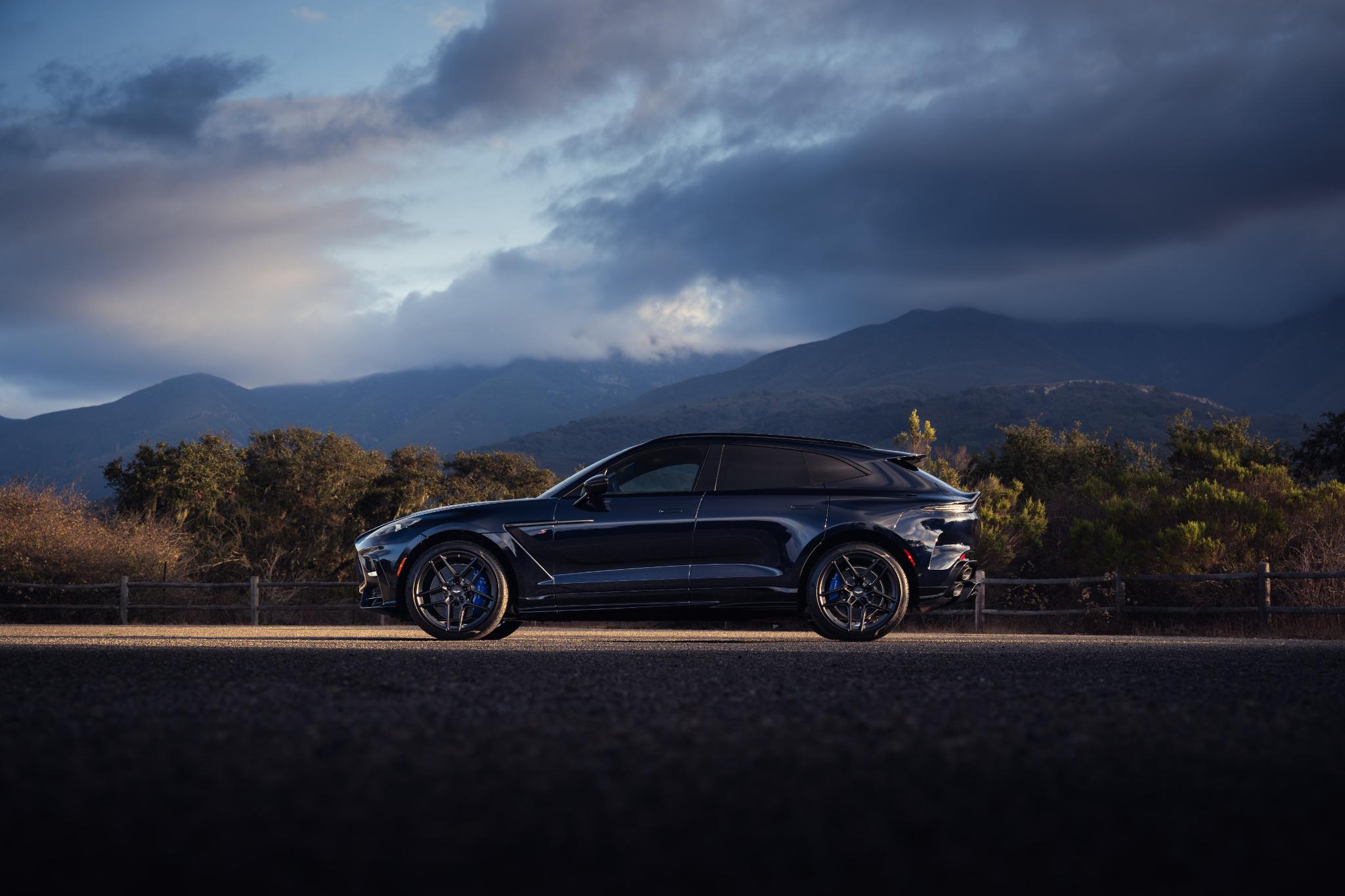
On paper, the 2026 Aston Martin DBX S is an absolute juggernaut. It produces a staggering 717 horsepower and 664 lb-ft of torque, figures that would have been reserved for top-tier supercars just a decade ago. But what’s more impressive than the raw power is how Aston Martin has managed the mass. In a world where the new BMW M5 has ballooned to over 5,300 pounds, the DBX S feels remarkably lithe by comparison, managing to save approximately 555 pounds over its heaviest German competitors through extensive use of bonded aluminum.
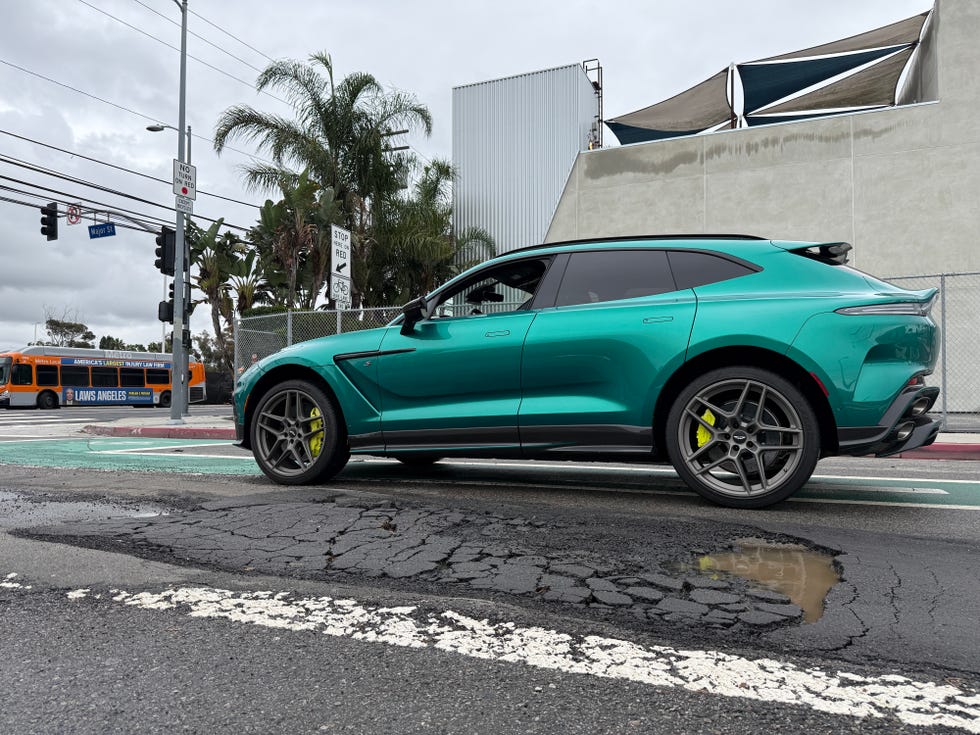
When the road opens up—and assuming that road is freshly paved—the DBX S is a revelation. The active center differential can send 100% of the torque to the rear wheels, allowing for the kind of throttle-steer antics usually reserved for a Vantage. The carbon-ceramic brakes, standard on the S, provide the kind of stopping power that makes you feel like you've hit a soft wall. It is, by every objective measure, the peak of the performance SUV.
Editor’s Note: The DBX S isn't just fast "for an SUV." It's fast, period. It carries its weight with a grace that defies its dimensions, making it one of the few high-riding vehicles that truly rewards an enthusiast driver.
The $22,000 Pothole: The Hidden Cost of Lightweight Luxury
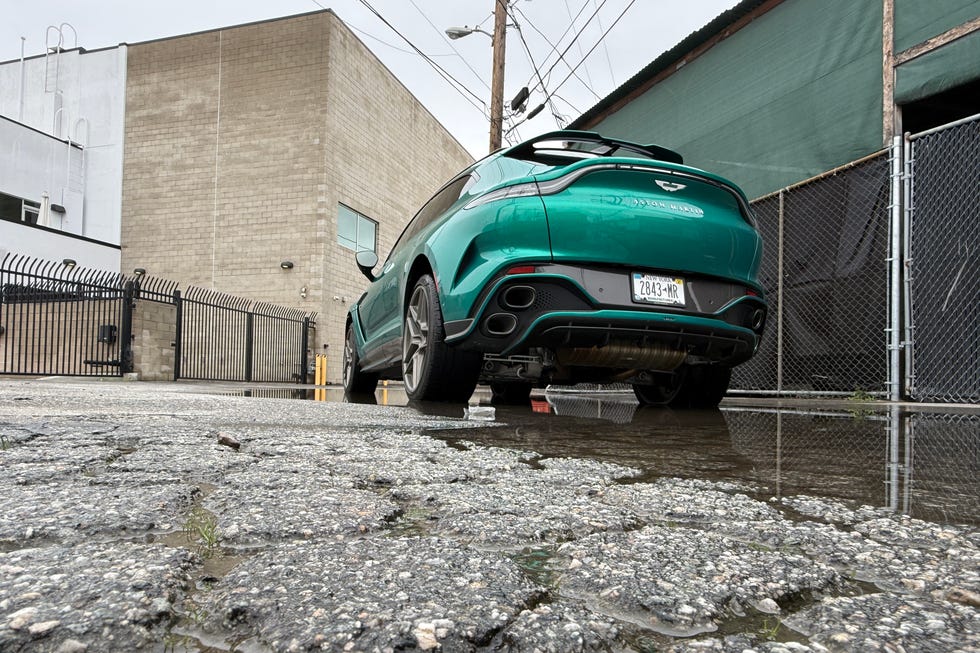
However, the pursuit of that ultimate performance has led to a vulnerability that is becoming impossible to ignore. To achieve those handling benchmarks, Aston Martin offers an optional $22,000 performance package that includes 23-inch forged magnesium wheels. These rims are a marvel, shaving 42 pounds of unsprung weight from the car, which significantly sharpens steering response and suspension recovery.
But there is a dark side to this lightweight wizardry. Magnesium is brittle. Combined with the ultra-low-profile tires required to fit a 23-inch rim, you have a recipe for financial catastrophe. In the "pothole season" that follows heavy rains, a single deep crater can crack a magnesium rim instantly.
The replacement cost? For the price of a single replacement wheel and a matching tire, you could literally walk into a Toyota dealership and buy a brand-new Corolla. It is the "Corolla Rim" analogy—the moment when a minor road hazard results in a repair bill that looks like a total loss for a normal car. For the owner, it’s not just about the money; it’s the indignity of having a 717-hp supercar-SUV sidelined by a four-inch hole in the asphalt.
When Safety Systems Attack: The ADAS Paradox
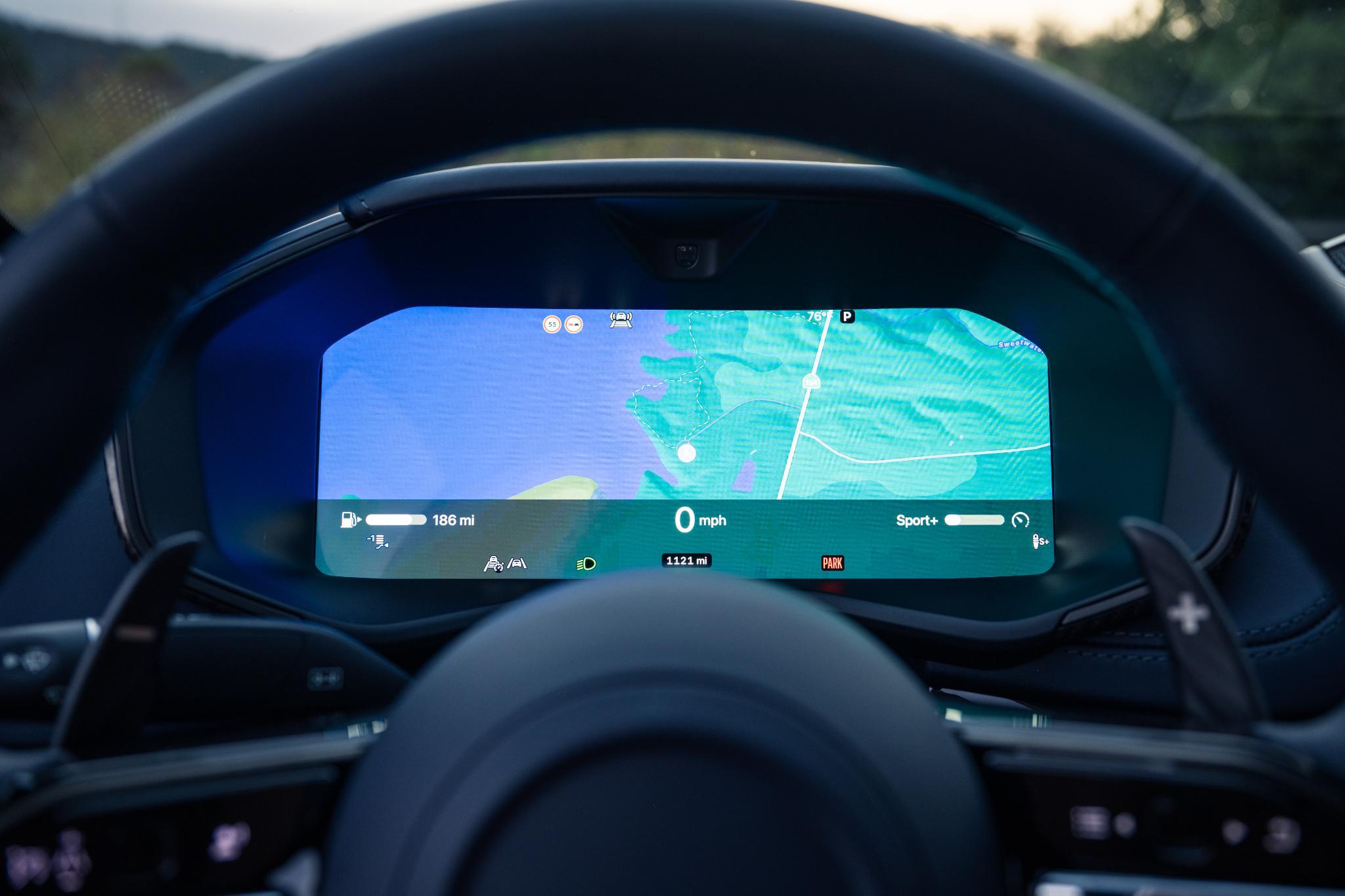
Compounding the physical risk is the digital interference of modern safety tech. The DBX S is equipped with a suite of Advanced Driver-Assistance Systems (ADAS) designed to keep you in your lane. However, when you’re scanning the road for rim-killing potholes, you often need to make sudden, precise steering inputs to swerve around a hazard.
In many modern luxury cars, the Lane Keep Assist (LKA) interprets this sudden swerve as an accidental drift. The steering wheel vibrates, and the car’s computer fights your input, attempting to steer you back into the lane—and potentially directly into the very pothole you were trying to avoid.
Furthermore, the frustration is amplified by the lack of "persistent settings." Due to various safety regulations, you often have to dive three menus deep into the touchscreen to disable these intrusive systems every single time you start the car. In a vehicle that costs north of $250,000, "luxury" should mean the car remembers how you like to drive, not that it treats you like a teenager on a learner's permit.
The Case for 'Rally-fication': Learning from the 911 Dakar
This brings us to the core argument: why every modern performance car—including the DBX S—needs a rally-spec option. We have reached "Peak Rim." There is no more performance to be gained by going to 24 or 25-inch wheels. Instead, the smartest engineers in the room are looking at the Porsche 911 Dakar and the Lamborghini Sterrato.
These cars represent a radical shift in philosophy. By choosing smaller wheels with larger tire sidewalls and increasing ground clearance, these manufacturers have created the ultimate "real-world" supercars.
- Softer Damping: Allows the car to absorb mid-corner bumps rather than being deflected by them.
- Predictable Body Roll: Gives the driver more communication about where the limit of grip actually is.
- Sidewall Protection: Acts as a secondary suspension layer, protecting expensive alloys from the harsh reality of urban neglect.
Imagine a DBX "Rally" edition: 20-inch wheels wrapped in chunky, high-performance all-terrain tires, an extra inch of suspension travel, and underbody skid plates. It wouldn't just be more practical; it would be more fun. You could drive it with the confidence of a trophy truck driver through the worst Manhattan or London has to offer.

The 2026 Luxury SUV Landscape: Where Does the DBX S Stand?
If you are in the market for a high-performance SUV in 2026, the choices are more polarized than ever. The DBX S sits at the top of the "Dynamic" tier, but how does it fare against the competition when utility and infrastructure are considered?
| Feature | Aston Martin DBX S | Porsche Cayenne Turbo E-Hybrid | BMW X5 M Competition |
|---|---|---|---|
| Horsepower | 717 HP | 729 HP | 617 HP |
| 0-60 MPH | 3.1s | 3.5s | 3.7s |
| Urban Resilience | Low (Magnesium/23" rims) | Medium (Air suspension focus) | Low (Stiff M-Suspension) |
| Interior Vibe | Bespoke British Luxury | Tech-Forward Precision | Brutalist Performance |
| Best For | The Collector/Driving Purist | The Tech-Savvy Commuter | The Rational Speed-Seeker |
While the BMW X5 M offers a "rational" performance and the Genesis GV80 provides a masterclass in interior design for half the price, the DBX S remains the emotional choice. However, for those who truly value the ability to go anywhere without fear, the Mercedes G-Wagon remains the "rugged status symbol" benchmark. It doesn't handle like the Aston, but it treats a pothole with the same indifference a tank treats a speed bump.
Conclusion: The End of the Low-Profile Era
The Aston Martin DBX S is a 9/10 masterpiece trapped in a world of 2/10 infrastructure. It is a stunning achievement of engineering, offering more soul and speed than almost any other SUV on the planet. But as our cities continue to age and "atmospheric rivers" become the new normal, the prestige of a 23-inch magnesium wheel is starting to fade.
We are entering a new era where "capability" is the ultimate luxury. I don't want my car to tell me it can do a sub-8-minute lap of the Nürburgring; I want it to tell me I can hit a pothole at 40 mph and not have to call a flatbed. It's time for manufacturers to embrace the rally ethos—to give us the travel, the sidewall, and the ruggedness to actually enjoy the 717 horsepower they’ve worked so hard to give us.
FAQ
Q: Are the magnesium wheels on the DBX S worth the $22,000 upgrade? A: If you live in an area with pristine roads or plan on tracking your SUV (a rare use case), yes—the reduction in unsprung weight is noticeable. However, for urban drivers in the Northeast or California, the replacement risk far outweighs the performance gains.
Q: How does the DBX S handle flooding or heavy rain? A: While it has adjustable air suspension that can raise the ride height, its low-profile performance tires are prone to hydroplaning. This is why a "rally-spec" setup with deeper tread and more sidewall would be superior for "atmospheric river" conditions.
Q: Can I turn off the lane-keep assistance permanently? A: Currently, most regulatory frameworks require these systems to reset to "On" every time the vehicle is started. In the DBX S, this requires a few taps on the central touchscreen, which can be frustrating for drivers who prefer manual control over pothole-dodging.
Q: What is the best alternative if I want performance but fear potholes? A: The Porsche Cayenne with a smaller wheel option (20 or 21-inch) and the off-road package, or the Lamborghini Sterrato/Porsche 911 Dakar if you don't strictly need the SUV body style.