There is a specific kind of silence that descends upon a racetrack just before the engines fire up—a heavy, expectant stillness. At Thunderhill West for the 2026 Performance Car of the Year (PCOTY) testing, that silence didn't last long. It was shattered by a mechanical symphony: the high-pitched, 9,000-rpm scream of a flat-six, the supercharged fury of a massive American V-8, and the whistling, jet-like roar of a twin-turbocharged mid-engine monster.
This isn't just a comparison; it’s an artillery fight with the biggest guns in the automotive world. We brought together the three most anticipated performance icons of the decade: the 1,064-hp 2025 Chevrolet Corvette ZR1, the $327,000 race-car-for-the-road Ford Mustang GTD, and the eternal benchmark, the 2025 Porsche 911 GT3 (992.2).
After weeks of brutal track sessions and thousands of miles on broken California backroads, the results are definitive. The 2025 Chevrolet Corvette ZR1 has officially claimed the title of 2026 Performance Car of the Year. With a staggering 1:19.1 lap time at Thunderhill West, it didn't just beat its rivals; it embarrassed them, establishing a 3.6-second lead over the Porsche and a 3.8-second lead over the Mustang. While the Porsche remains the steering fidelity king and the Mustang is a carbon-fiber moonshot, the ZR1 is, quite simply, the new apex predator of the internal combustion era.

The Contenders: Specs and the Power-to-Dollar Ratio
Before we talk about how these cars feel, we need to talk about what they are. We are looking at three entirely different philosophies of speed: Mid-engine, Front-engine, and Rear-engine.
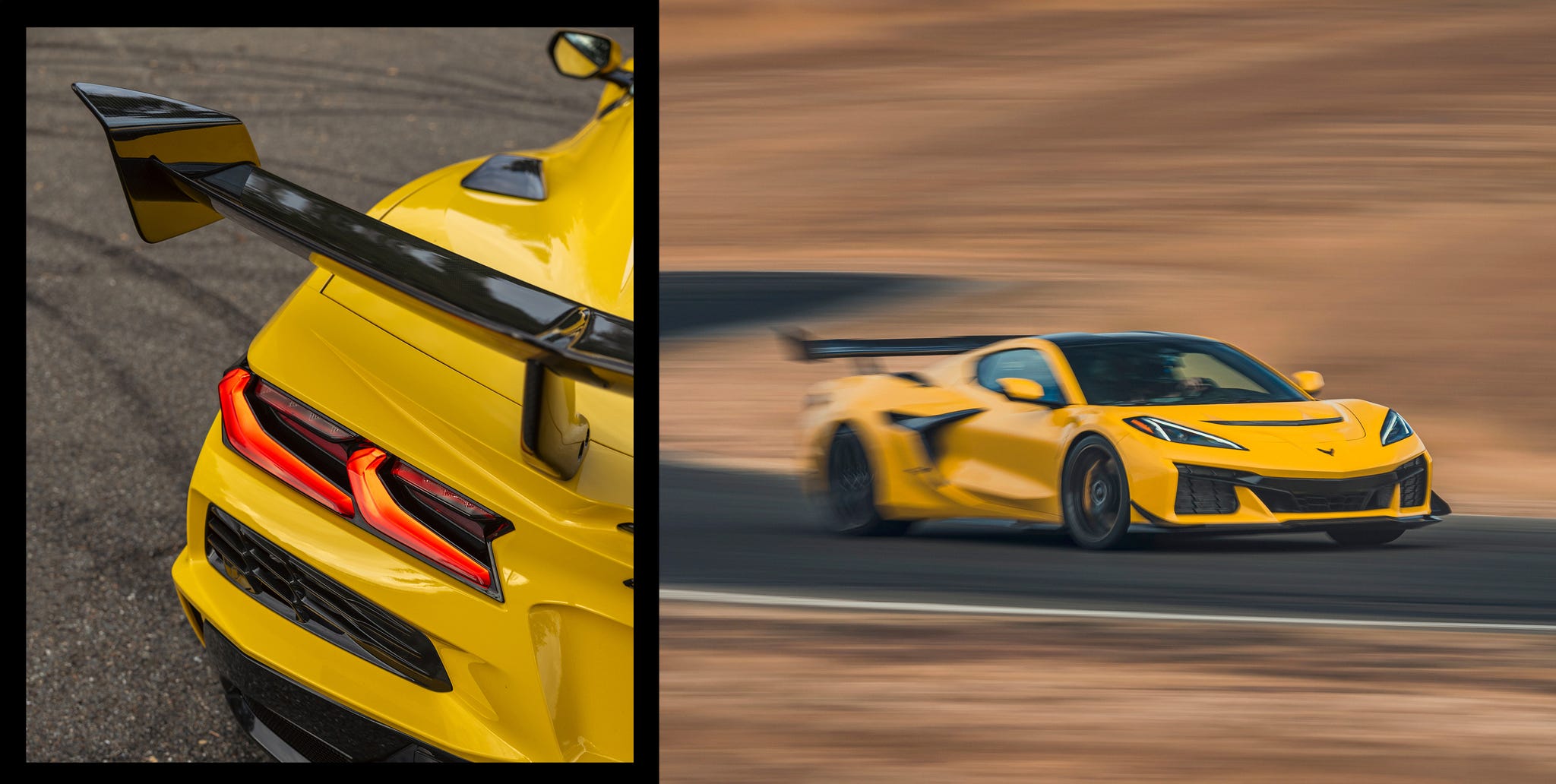
The Corvette ZR1 is GM’s "moonshot." Its LT7 engine—a 5.5-liter twin-turbocharged DOHC flat-plane crank V-8—churns out a mind-numbing 1,064 horsepower. At a base price of $174,995, it offers a power-to-dollar ratio that seems like a mathematical error: roughly 6 horsepower for every $1,000 spent.
The Mustang GTD is Ford’s attempt to build a GT3 race car that just happens to have a license plate. It features a 5.2-liter supercharged V-8, a rear-mounted transaxle for 50/50 weight distribution, and an asking price of $327,960. That equates to about 2.5 horsepower per $1,000, making it the most expensive and exclusive Mustang in history.
The Porsche 911 GT3 (992.2) remains the purist’s scalpel. Its 4.0-liter naturally aspirated flat-six produces "only" 502 horsepower, but in a world of turbochargers and heavy batteries, its 9,000-rpm redline and 3,200-lb curb weight are the stuff of legend. At $224,495, it sits in the middle of the price bracket but at the bottom of the power charts.
| Feature | 2025 Chevrolet Corvette ZR1 | 2025 Ford Mustang GTD | 2025 Porsche 911 GT3 |
|---|---|---|---|
| Engine | 5.5L Twin-Turbo V8 | 5.2L Supercharged V8 | 4.0L Flat-Six |
| Horsepower | 1,064 hp | 815 hp | 502 hp |
| Torque | 828 lb-ft | 664 lb-ft | 331 lb-ft |
| 0-60 MPH | 2.2 Seconds | 3.0 Seconds (est.) | 3.2 Seconds |
| Top Speed | 233 MPH | 202 MPH | 193 MPH |
| Base Price | $174,995 | $327,960 | $224,495 |
On the Track: Breaking the Tie at Thunderhill
When we arrived at Thunderhill West, the tension was palpable. On paper, the Corvette should dominate, but the Mustang GTD’s advanced aerodynamics and the Porsche’s legendary chassis tuning suggested a closer fight.
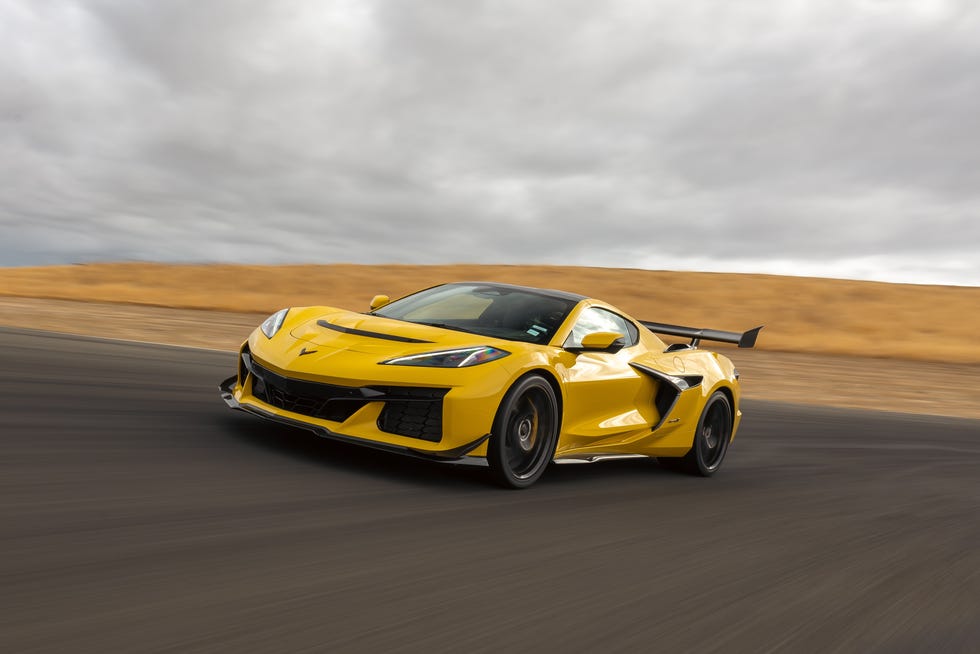
The Corvette ZR1 proved to be a force of nature. It didn't just accelerate; it warped reality. Coming out of Turn 11, the ZR1’s twin turbos spool up with a whistle that sounds like a Gulfstream taking off, pinning your skull against the headrest. Its 1:19.1 lap time is a testament to the Z07 performance package’s massive downforce and the 10-piston Alcon carbon-ceramic calipers that provide "throw-the-anchor" stopping power. It even went to Sonoma Raceway and set a staggering production-car record of 1:34.941, proving the mid-engine platform has finally reached its zenith.
The Mustang GTD is a different beast entirely. It feels like a GT3 car because, under the skin, it is one. The Multimatic adaptive spool-valve (ASV) suspension allows the car to drop 40mm in Track Mode, but at 4,343 lbs, it is the heavyweight of the group. While it managed a respectable 1:22.9, it struggled to hide its mass in the tighter technical sections of the track. The active aero—DRS on the rear wing—is a marvel, but it couldn't overcome the ZR1's 249-hp advantage.
The Porsche 911 GT3 is the car you want to drive all day. It’s the lightest, most communicative car here. While its 1:22.7 lap time was nearly four seconds slower than the Corvette, the GT3 never felt "slow." Its steering fidelity is unmatched, providing a telepathic connection to the front tires. However, in an "arms race" of lap times, the GT3 simply lacked the sheer firepower needed to keep pace with the American heavy hitters.
On the Road: The Reality Check
Performance isn't just about lap times; it’s about how a car handles the world outside the paddock. This is where the hierarchies began to shift.
The ZR1’s "Superpower" is its versatility. Thanks to the Magnetic Ride Control 4.0, you can soften the dampers and cruise down a highway with the civility of a standard Stingray. It is surprisingly quiet at cruising speeds, and the 8-speed dual-clutch transmission is smooth enough for stop-and-go traffic. It’s a 1,000-hp car that doesn't demand 1,000 hp worth of effort to drive to the grocery store.
Contrast that with the Mustang GTD’s "Bouncy" struggle. On imperfect asphalt, the GTD feels high-strung. Its race-derived suspension is so stiff that mid-corner bumps can unsettle the chassis, requiring constant corrections. The supercharger whine is intoxicating for the first twenty minutes, but on a two-hour road trip, the drone and the rigid ride start to wear on you. It is a car that demands a smooth surface to shine, making it a difficult companion for "real world" backroads.
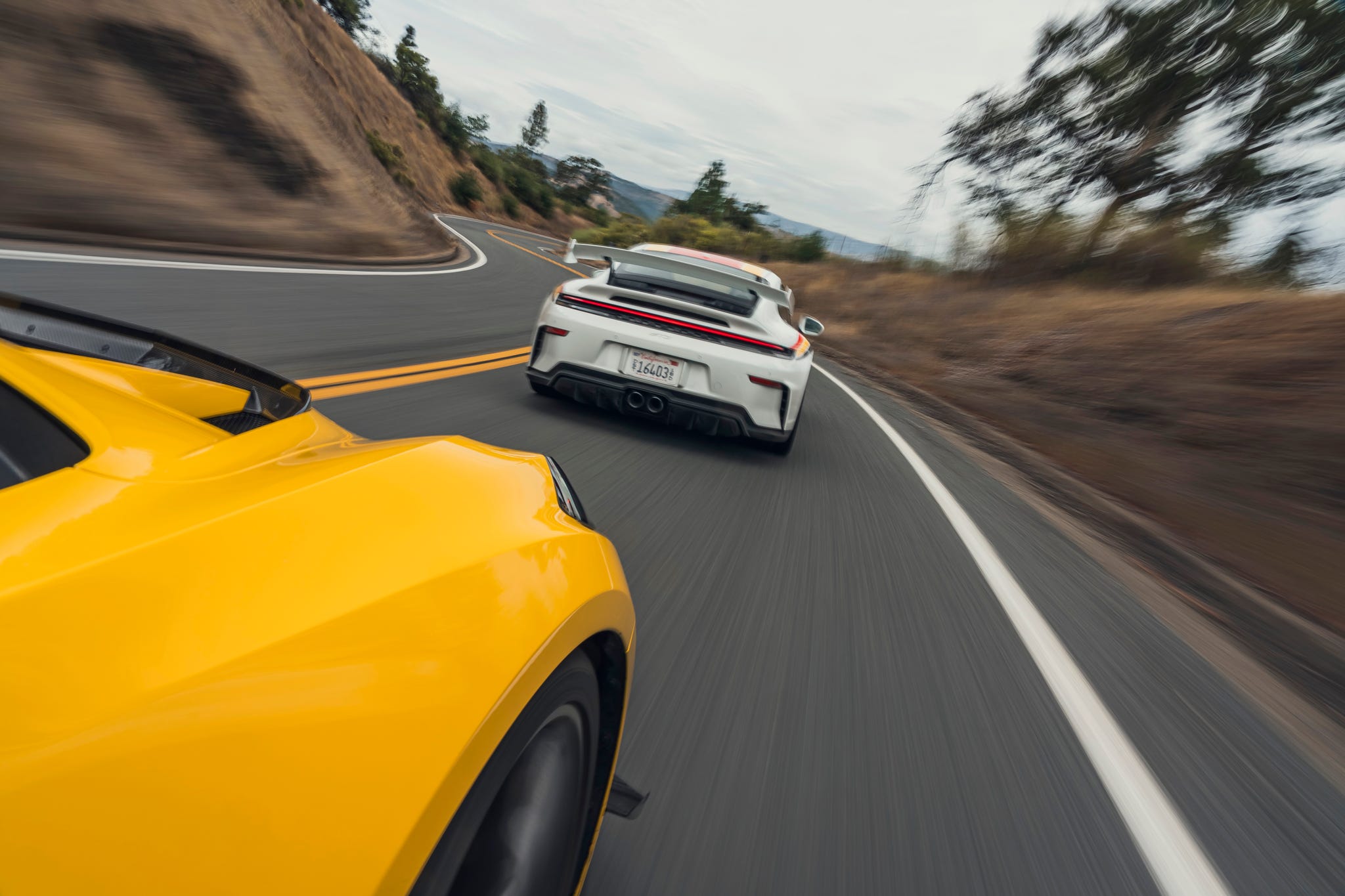
The Porsche 911 GT3 remains the hero of the mountain pass. While the ZR1 is faster, the GT3 is more rewarding. The mechanical click of the six-speed manual (our test car’s spec) and the way the engine begins to sing above 6,000 rpm create an emotional experience the others can't quite replicate. It feels "vacuumed to the tarmac" without being punishing, proving that Porsche’s engineers are still the masters of damping.
In the Cabin: Luxury vs. Utility
Inside, the price differences become even more apparent, though not always in the way you’d expect.
- Corvette ZR1: The 3LZ trim is plush, featuring leather-wrapped surfaces and carbon-fiber accents. The "wall of buttons" remains a polarizing design choice, but the ergonomics are solid. The addition of the "split window" rear glass (a nod to the 1963 classic) adds a sense of heritage to a cabin that feels like a modern fighter jet.
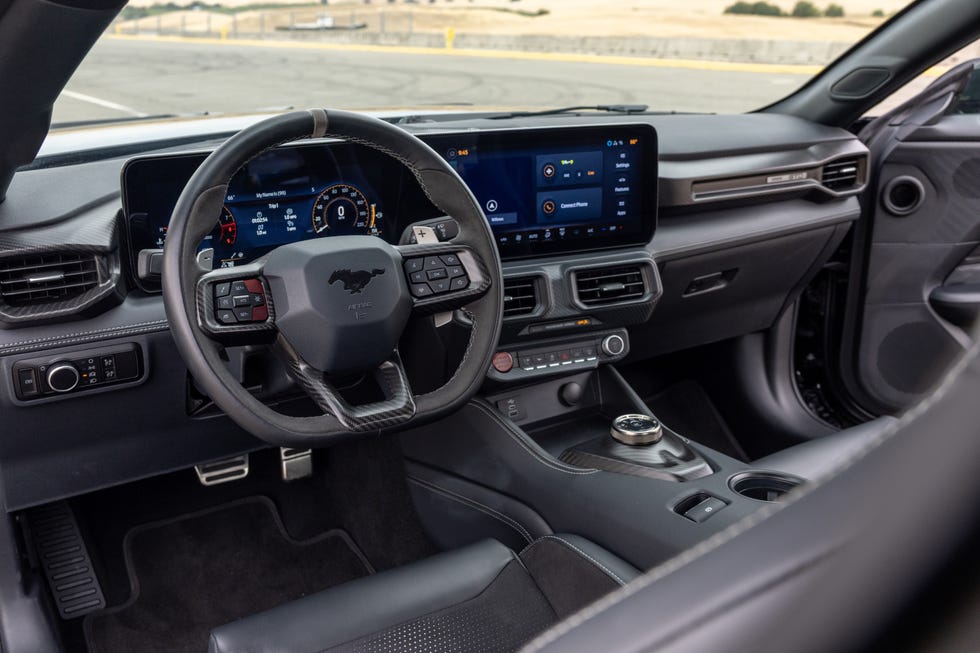
- Ford Mustang GTD: This is where the GTD faces its harshest critique. For a $327,000 car, finding interior bits shared with a $40,000 EcoBoost Mustang is a tough pill to swallow. However, the 3D-printed titanium paddle shifters (sourced from retired F-22 parts) and the rear window that lets you peer at the horizontal suspension transaxle are stunning technical touches that remind you where your money went.
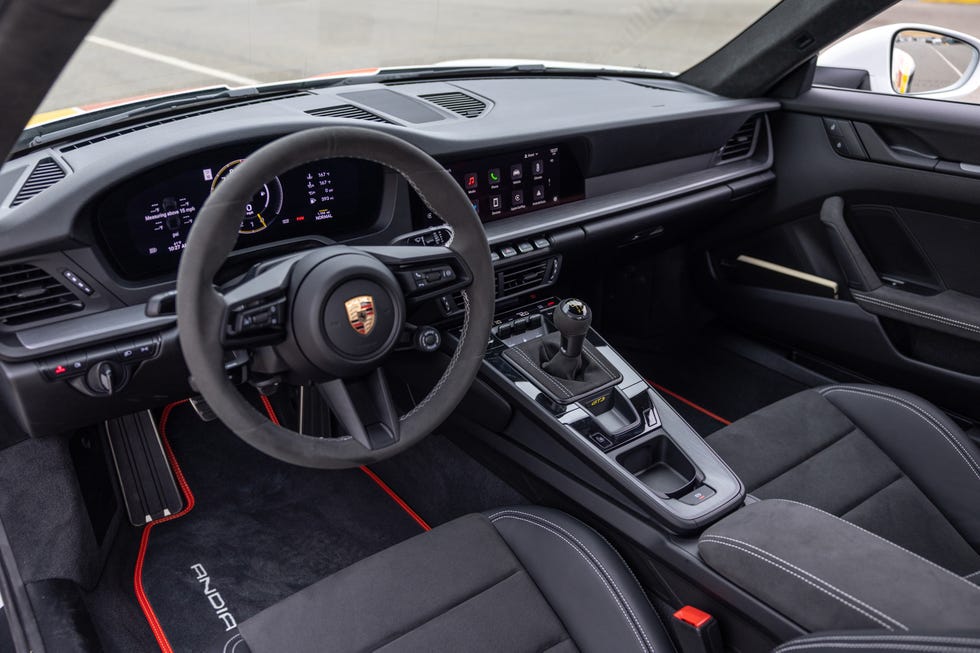
- Porsche 911 GT3: Porsche has moved to a fully digital instrument cluster for the 992.2, a move that purists have decried. However, the ergonomics remain the gold standard. Everything you touch feels expensive, deliberate, and built to last a century. It feels like a professional tool—minimalist but high-end.
The Final Verdict
Choosing a winner for the 2026 Performance Car of the Year was surprisingly easy once the data was laid bare.
The Mustang GTD is a magnificent outlier—a middle finger to the status quo and a testament to Ford’s racing ambition. But its price tag and compromised road manners keep it from the top spot. The Porsche 911 GT3 is a Hall-of-Famer, perhaps the greatest "driver's car" ever made, but it simply cannot compete with the sheer velocity of the new era.
That leaves the Corvette ZR1. It is the "K.O." Chevrolet didn't just build a fast Corvette; they built a car that makes seven-figure hypercars look overpriced. With 1,064 horsepower, street-legal refinement, and a lap time that reset our expectations of what a production car can do, the ZR1 isn't just a winner—it’s a legend in the making.
Final Ranking:
- Chevrolet Corvette ZR1 (The King)
- Porsche 911 GT3 (The Purist’s Choice)
- Ford Mustang GTD (The Carbon Experiment)
FAQ
Which car is the fastest to 60 mph? The Chevrolet Corvette ZR1 is the quickest, clocking a 0-60 mph time of just 2.2 seconds, significantly faster than the Mustang GTD (approx. 3.0s) and the Porsche 911 GT3 (3.2s).
Why did the Porsche rank higher than the more powerful Mustang GTD? While the Mustang is more powerful, the Porsche 911 GT3 offers superior steering feel, a better interior, and a more cohesive driving experience on public roads. The Mustang’s weight and stiff track-focused ride made it less "usable" as a performance car.
Is the Corvette ZR1 street legal? Yes. Despite its 1,000+ horsepower and aggressive aero, the ZR1 is a fully street-legal production car with a full factory warranty, air conditioning, and a premium infotainment system.