The sun-bleached asphalt of the Nevada desert stretches toward the horizon, shimmering under a heat haze that makes the distant Panamint Range look like a mirage. We are miles outside of Las Vegas, heading toward the rugged, unforgiving heart of Death Valley. This isn't just a scenic drive; it’s the ultimate litmus test for a vehicle that claims to bridge the gap between suburban school runs and rock-strewn trails.
For years, the Ford Explorer has been the quintessential American family hauler. But as the market pivots toward "rugged-lite" adventures, Ford has retired the "Timberline" nameplate in favor of something with a bit more grit. Enter the 2026 Ford Explorer Tremor. It joins a prestigious lineage—alongside the F-150, Maverick, and Expedition—designed to offer serious hardware for those who actually intend to get their tires dirty.
The Evolution: From Timberline to Tremor
The shift from Timberline to Tremor isn't just a rebranding exercise; it’s a strategic repositioning. While the Timberline was a solid first attempt at an off-road-oriented Explorer, the Tremor feels more cohesive within Ford’s broader portfolio. It’s aimed squarely at the "soft-roader" enthusiast—someone who needs three rows of seats and a 5,000-pound towing capacity during the week but wants to tackle washboard roads and moderate trails on the weekend.
The Tremor doesn't try to be a Bronco. It doesn't have a detachable roof or 35-inch mud-terrains. Instead, it focuses on "mechanical balance." By combining the Explorer’s inherently strong rear-wheel-drive-based architecture with upgraded dampers and smarter traction management, Ford has created a mid-size SUV that feels as comfortable on a 75-mph highway cruise as it does crawling over desert floor.
Powertrain & Performance: The 400-HP Island
When we talk about performance in this segment, most competitors are content with "adequate." Ford, however, decided to drop a hammer. The 2026 Ford Explorer Tremor features a twin-turbo 3.0-liter V-6 engine producing 400 hp and 415 lb-ft of torque as part of the "Ultimate Package." This powerhouse is paired with a 10-speed automatic transmission and an intelligent all-wheel-drive system.
While a 2.3-liter turbocharged I-4 producing 300 hp is the standard offering, the V-6 is the soul of this machine. In our testing, the V-6-equipped Tremor felt remarkably punchy, delivering 0-60 mph sprints in the mid-five-second range. That is muscle-car territory for a vehicle with a third row. The 10-speed automatic, often criticized in earlier iterations for being indecisive, has been refined here. It holds gears longer in "Sport" and "Off-Road" modes, ensuring the turbos stay spooled when you need that immediate surge of torque.
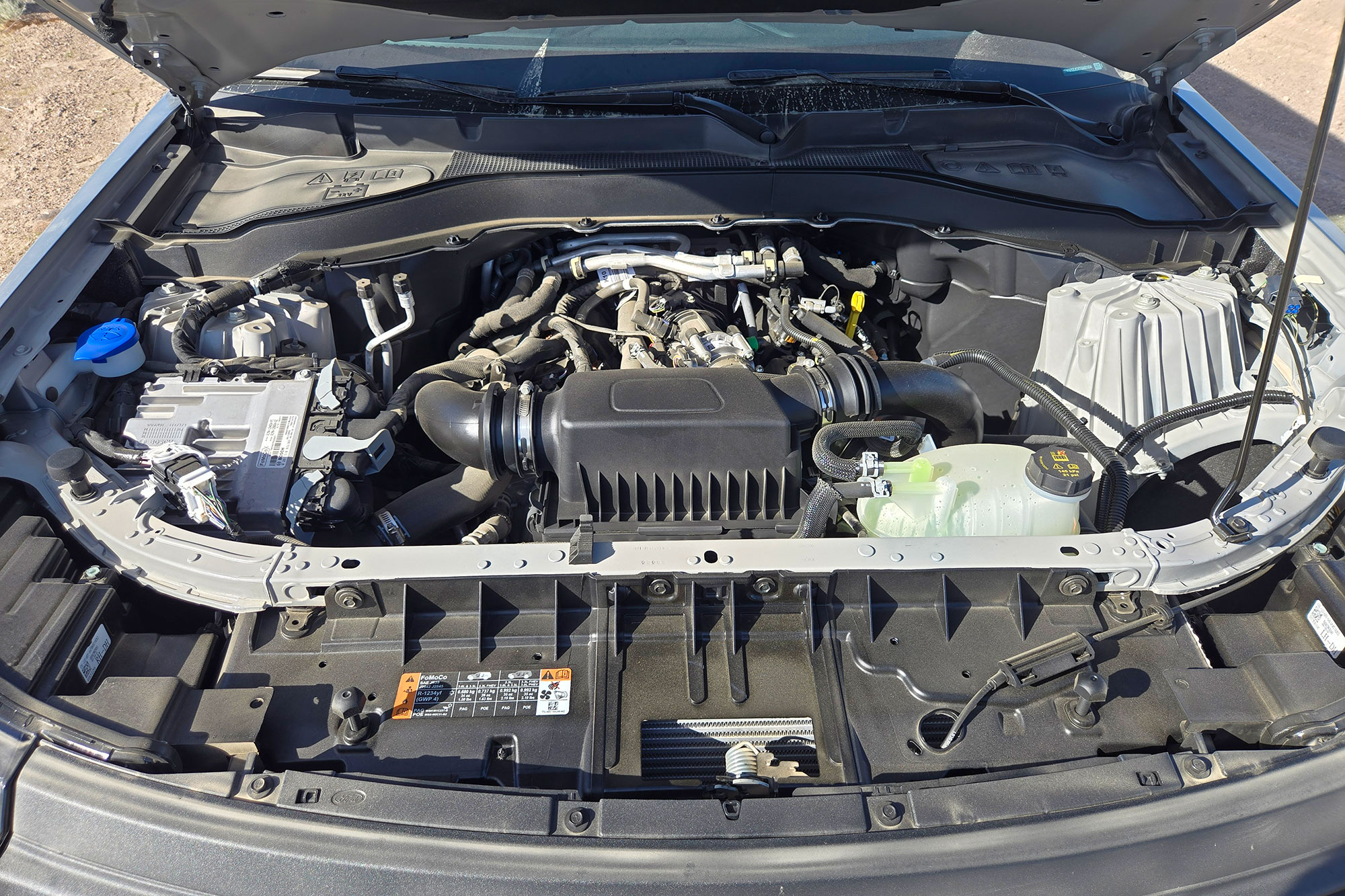
There is, of course, a price to pay for this power at the pump. The 2026 Ford Explorer Tremor V-6 achieves an EPA-rated 19 mpg combined (17 city / 22 highway). This represents a 3-mpg highway drop compared to the non-Tremor V-6 AWD models, a trade-off directly attributable to the increased ride height and the aerodynamic drag of those chunky all-terrain tires.
Powertrain Comparison: 2.3L vs. 3.0L
| Feature | 2.3L EcoBoost I-4 (Standard) | 3.0L EcoBoost V-6 (Ultimate) |
|---|---|---|
| Horsepower | 300 hp | 400 hp |
| Torque | 310 lb-ft | 415 lb-ft |
| 0-60 mph (est.) | 6.0 seconds | 5.2 seconds |
| EPA Combined MPG | 21 mpg | 19 mpg |
| Max Towing | 5,000 lbs | 5,000 lbs |
Off-Road Grit: Hardware and Capability
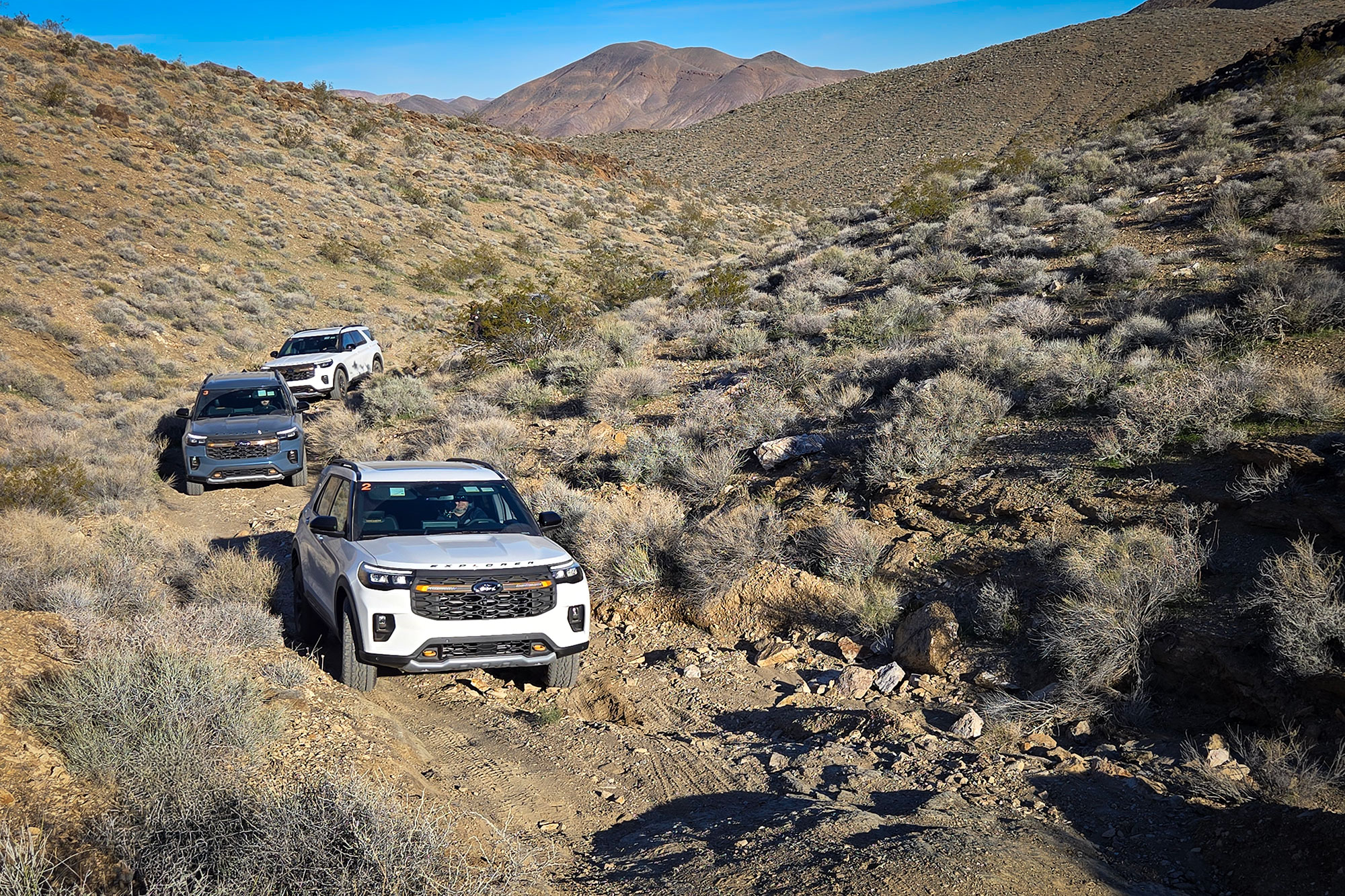
The real magic of the Tremor happens underneath the bodywork. The 2026 model offers 8.7 inches of ground clearance, which is a 0.4-inch increase over the standard Explorer. While that might sound incremental, it provides a significant improvement in geometry: a 23.5-degree approach angle and a 23.7-degree departure angle.
Technical Breakdown: More Than Just a Lift
Unlike some "off-road" trims that are merely appearance packages, the Tremor includes legitimate hardware upgrades:
- Torsen Limited-Slip Rear Differential: This is a crucial addition. Unlike the brake-actuated systems found in many competitors, the Torsen unit mechanically distributes torque to the wheel with the most grip, making a world of difference when climbing loose, silty inclines.
- Underbody Protection: Three heavy-duty steel skid plates protect the front end, transfer case, and rear fuel tank area.
- Suspension Tuning: Unique dampers, springs, and sway bars are tuned specifically to handle the extra weight of off-road gear while maintaining composure on the road.
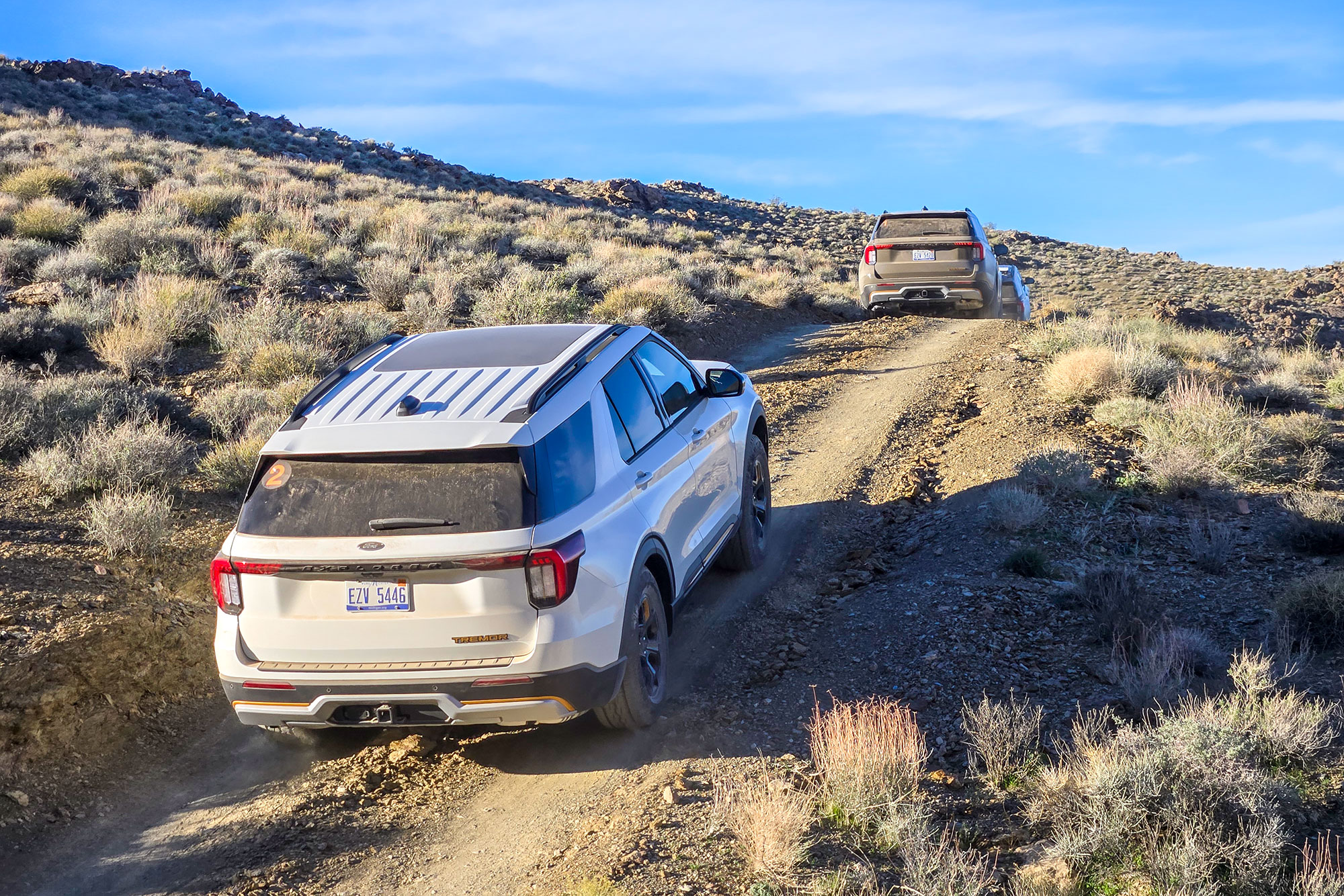
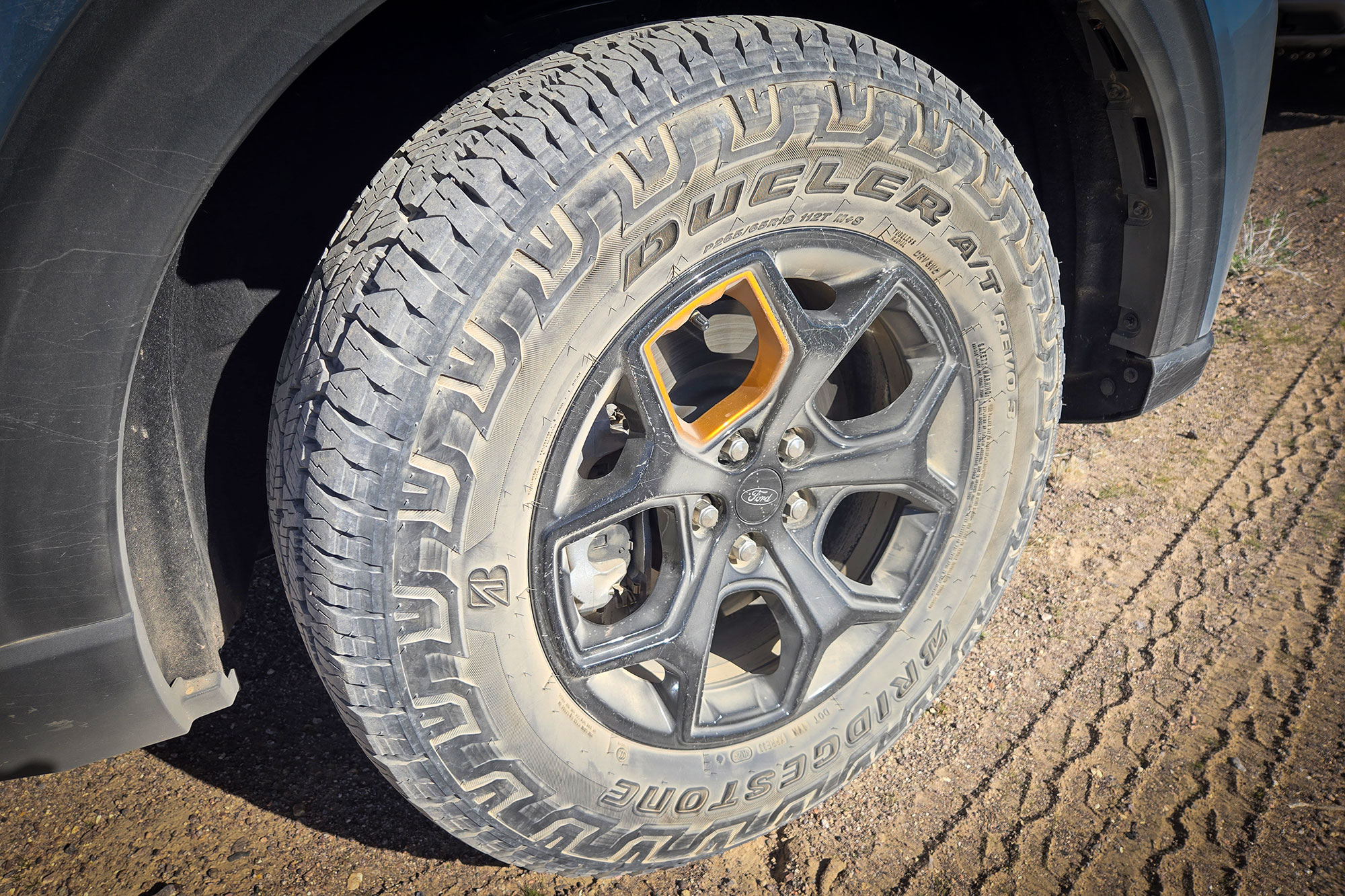
The Tremor rolls on 18-inch carbonized gray-painted aluminum wheels wrapped in Bridgestone Dueler A/T tires. These tires strike a respectable balance; they provide enough "bite" for gravel and light mud without the excessive road noise typically associated with more aggressive mud-terrain rubber.
On-Road Manners: Finding the Perfect Balance
What surprised us most during our trek through the Mojave was how civil the Tremor remains on paved surfaces. Usually, when you lift an SUV and add off-road dampers, the steering becomes vague and the ride gets "fidgety."
Ford’s engineers have managed to avoid these pitfalls. The revised suspension feels plusher than the stiffly sprung Explorer ST, soaking up mid-corner bumps with ease. The steering calibration has been tweaked to account for the taller sidewalls of the Bridgestone tires, maintaining a sense of precision that allows you to point the nose with confidence.
Noise, Vibration, and Harshness (NVH) levels are also impressively low. Even at highway speeds, the cabin remains a quiet sanctuary, allowing the B&O Sound System to shine. It’s this dual personality—the ability to be a quiet long-distance cruiser and a rugged trail-runner—that defines the "balance" mentioned in the title.
Interior Refinement & Tech Upgrades
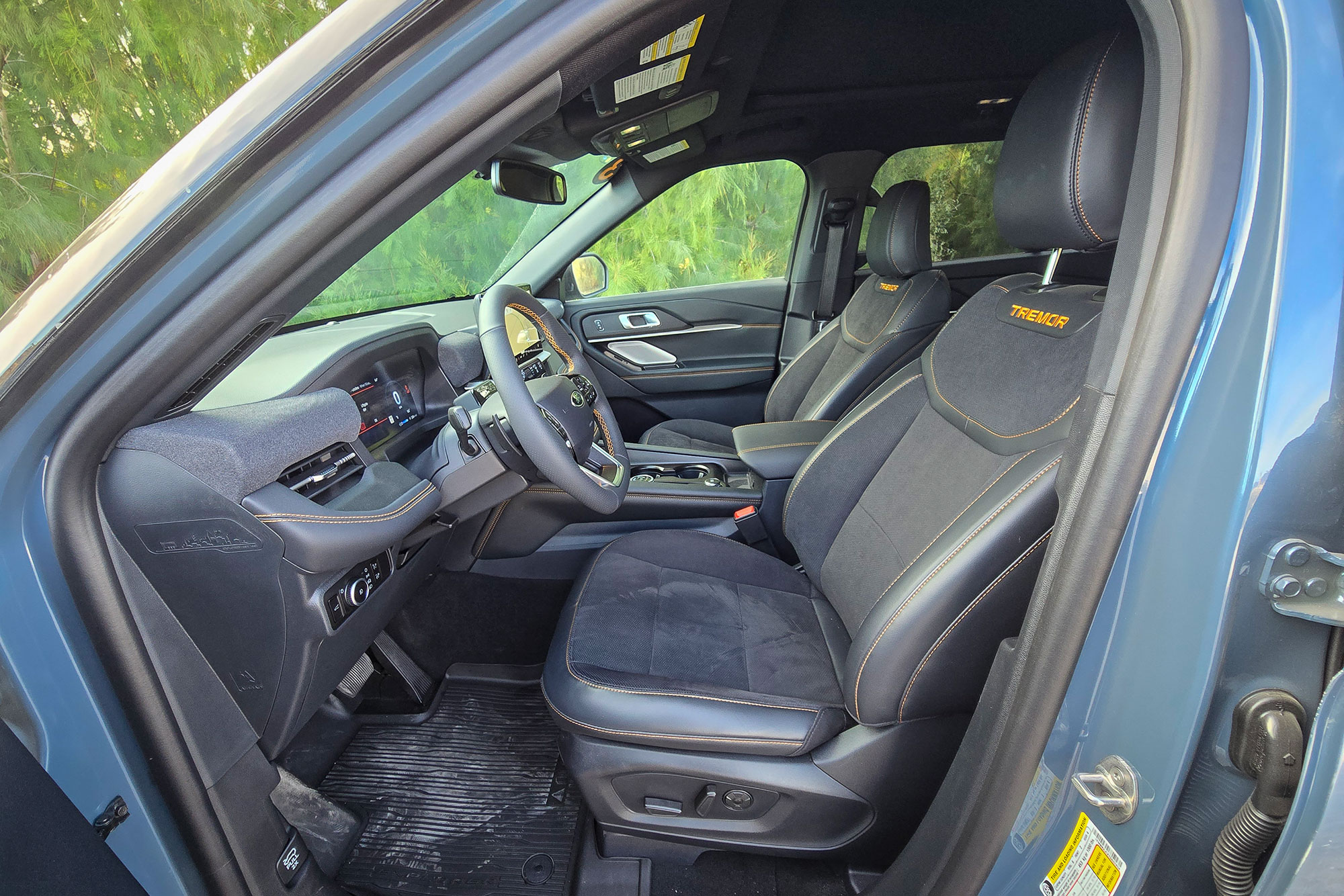
Stepping inside the 2026 Tremor reveals the most significant update to the Explorer lineup in years. The dashboard has been completely redesigned to accommodate a 13.2-inch landscape touchscreen. Gone is the awkward vertical "tablet" of previous years, replaced by a sleek, responsive interface powered by Google Built-in.
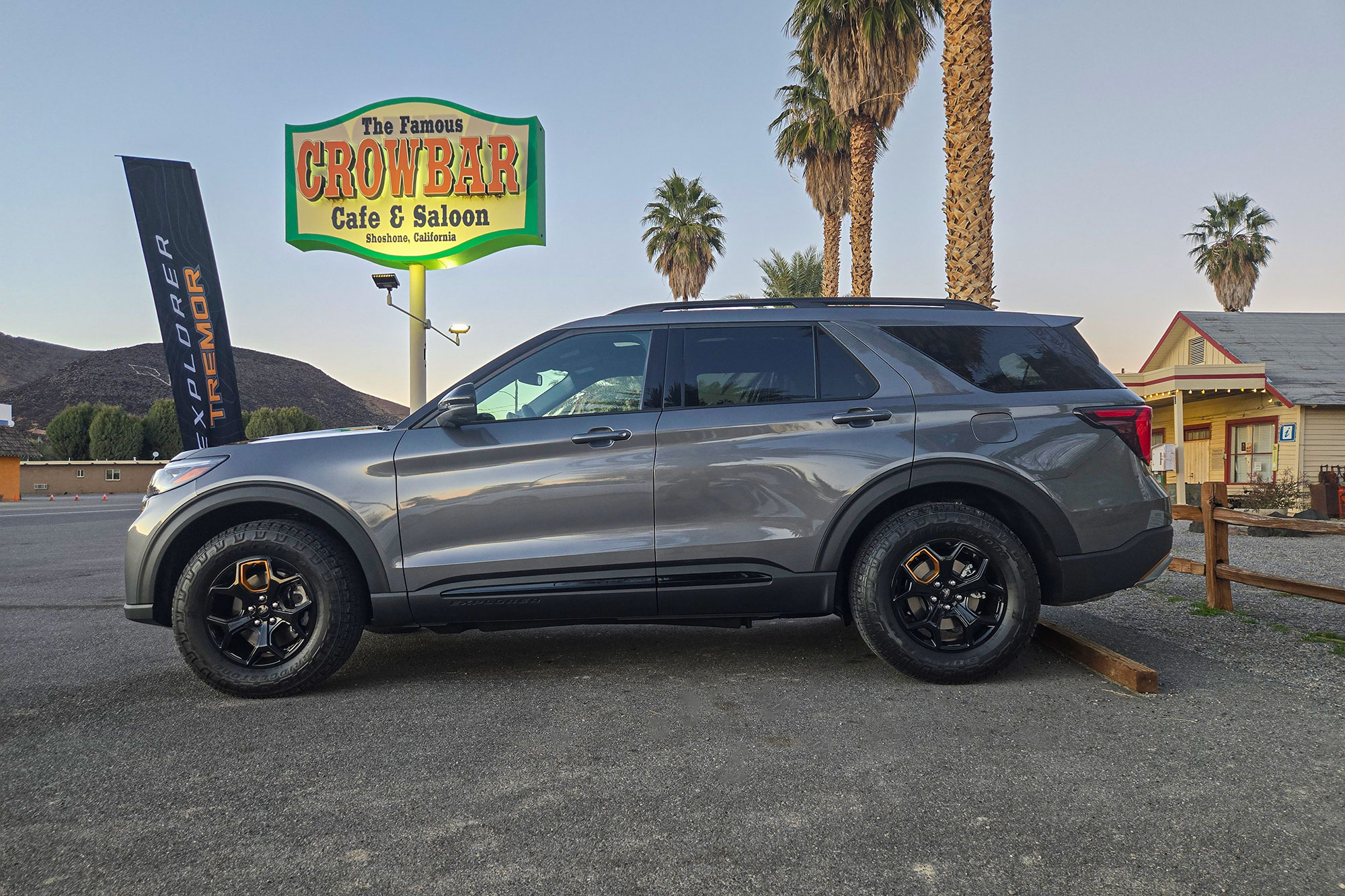
The Tremor-exclusive aesthetics add a touch of personality to the cabin. You’ll find "Electric Spice" contrast stitching throughout the interior, which complements the durable Miko Suede seat inserts. These materials aren't just for show; the suede provides extra "grip" for your body during off-camber maneuvers, and the surfaces are easy to wipe down after a dusty day on the trail.
Trail Tech and BlueCruise 1.5
The tech suite extends beyond the infotainment. The Tremor features a front-facing trail camera that acts as a virtual spotter, projecting a clear view of the terrain immediately in front of the bumper—essential when cresting steep hills where all you can see through the windshield is blue sky.
On the highway, the Tremor is available with BlueCruise 1.5. This latest version of Ford’s hands-free driving tech includes a new lane-change assist feature. In our testing, the system handled the long stretches of I-15 with remarkable smoothness, initiating lane changes automatically to pass slower traffic or following prompts from the turn signal.
Pricing and Market Comparison
The 2026 Ford Explorer Tremor enters a crowded field of "rugged" three-row SUVs. Its base price starts at $50,160, positioning it competitively against the Honda Pilot TrailSport ($49,000+) and the Kia Telluride X-Pro ($50,000+).
However, the value proposition shifts when you look at the performance. To get the 400-hp V-6 and the "Ultimate Package," the price climbs to an estimated $65,000. While that is a significant investment, it’s worth noting that the Tremor is the only vehicle in its class to offer a 400-hp powertrain for sub-$65,000. Rivals like the Chevy Traverse Z71 offer great off-road chops but lack the sheer muscle found in the Ford's twin-turbo V-6.
Editor’s Tip: If you don’t plan on heavy towing or high-speed desert running, the standard 2.3L engine is more than enough for most trails. However, for those who want the ultimate "do-everything" machine, the V-6 is the clear choice.
Verdict: Should You Buy the Explorer Tremor?
The 2026 Ford Explorer Tremor is a masterclass in compromise—the good kind. It doesn't sacrifice daily usability for the sake of off-road "clout," yet it possesses the mechanical hardware to back up its rugged looks.
Highs:
- Muscle-car acceleration from the 400-hp V-6.
- Superb on-road refinement and highway manners.
- Intuitive new tech interface with Google Built-in.
- Legitimate off-road hardware (Torsen diff and skid plates).
Lows:
- Steep price jump for the V-6 Ultimate Package.
- Fuel economy is noticeably worse than the standard Explorer.
- Third-row space remains tighter than some newer competitors like the Chevy Traverse.
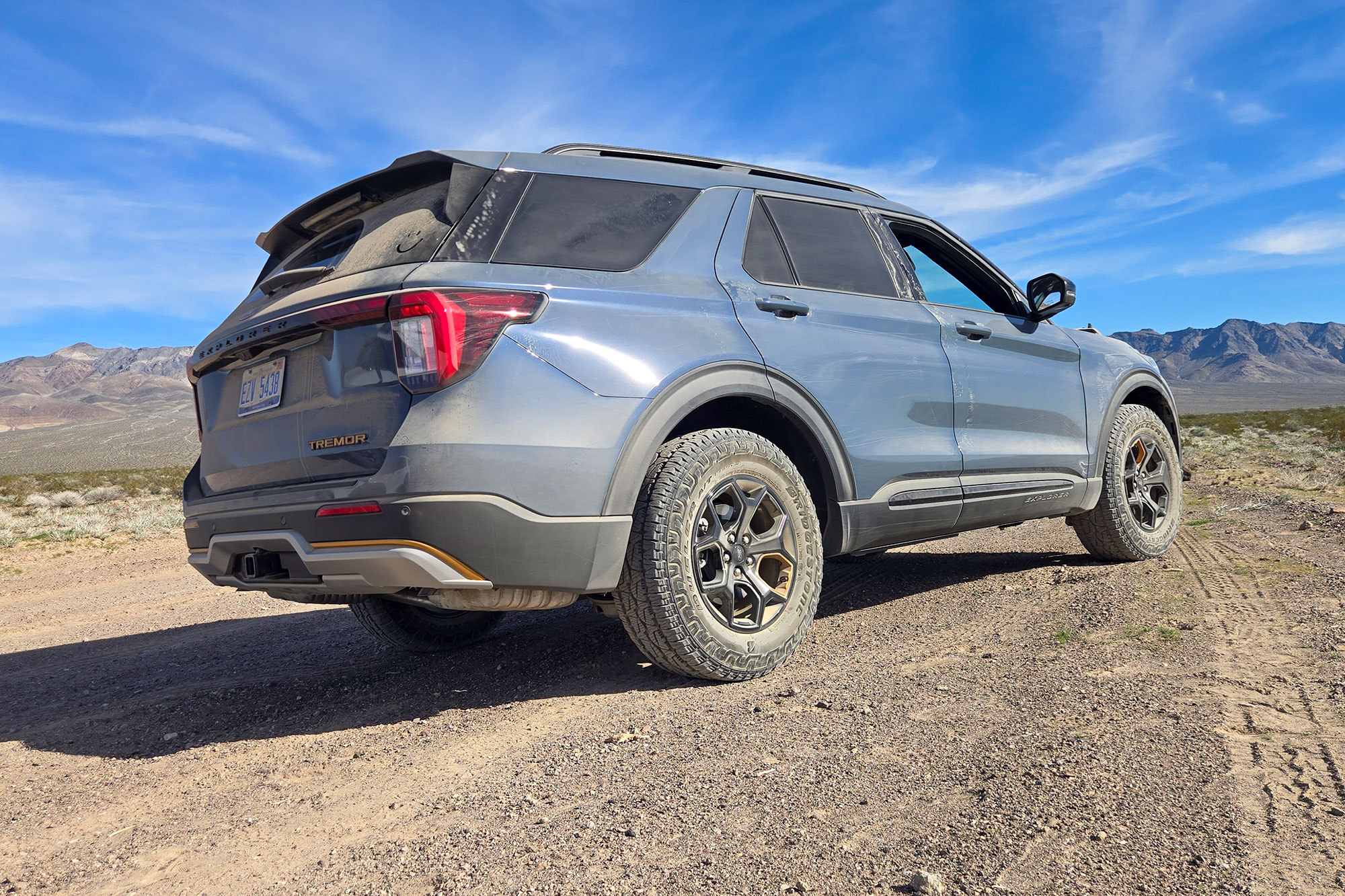
Ultimately, if you’re looking for a vehicle that can commute in silence on Monday and conquer a mountain pass on Saturday, the Tremor finds that perfect, elusive balance.
FAQ
How does the Tremor differ from the Explorer ST? While both use the 400-hp V-6, the ST is tuned for on-road performance with stiff suspension and low-profile tires. The Tremor is tuned for off-road durability, featuring a lift, softer dampers, all-terrain tires, and a Torsen limited-slip differential which the ST lacks.
Is the 2026 Ford Explorer Tremor good for towing? Yes. Both the 2.3L and 3.0L engines are rated to tow up to 5,000 pounds when properly equipped. The V-6, however, provides a much more confident towing experience through hilly terrain thanks to its higher torque.
Does the Tremor come with a 3rd row? Yes, the Tremor maintains the Explorer’s standard three-row configuration, though the 3rd row is best suited for children or short trips for adults.