Our Top Picks
- The Best Value EV: The 2027 Chevrolet Bolt starts at $28,995, reclaiming its title as the most affordable electric vehicle in the U.S. market.
- The Commuter's Dream: With a 150 kW peak charging speed and native Tesla Supercharger access, it finally solves the "slow charging" stigma of the original.
- The Catch: Chevrolet plans a strictly limited 18-month production run, meaning if you want this specific value proposition, you’ll need to move fast.
If you have been waiting for the electric vehicle market to stop chasing six-figure "ludicrous" modes and start caring about your monthly car payment, the 2027 Chevrolet Bolt is the news you’ve been looking for. After a three-year hiatus that left a gaping hole in the budget EV segment, the "patron saint of cheap electric commuting" has returned. It looks familiar, but under the skin, it has undergone a heart transplant that fundamentally changes how you’ll live with it.
The Lowdown: A Familiar Silhouette with a New Heart
The return of the Bolt wasn't originally in GM's playbook. After sunsetting the first generation in 2023, consumer demand and the slow rollout of larger Ultium-based SUVs forced a pivot. The 2027 model isn't a ground-up reinvention; rather, it’s a "greatest hits" compilation. It uses the Bolt EUV’s slightly longer chassis but replaces the aging battery architecture with a modern Lithium Iron Phosphate (LFP) pack.
The most critical number for most buyers is $28,995. That is the starting MSRP for the LT trim, making it officially the cheapest EV in USA 2027. While luxury EVs are busy adding theater screens and 1,000-horsepower motors, the Bolt is focused on being a car you can actually afford to park in your driveway.
However, there is a significant caveat: the production catch. Unlike the Equinox EV, which is a long-term staple of the Chevy lineup, the 2027 Bolt has a strictly limited planned production lifecycle of only 18 months. It is essentially a bridge vehicle—a high-value "limited edition" designed to keep Chevy in the sub-$30,000 game while they finalize their next-generation compact platforms. If you miss this window, your next affordable option might look very different.
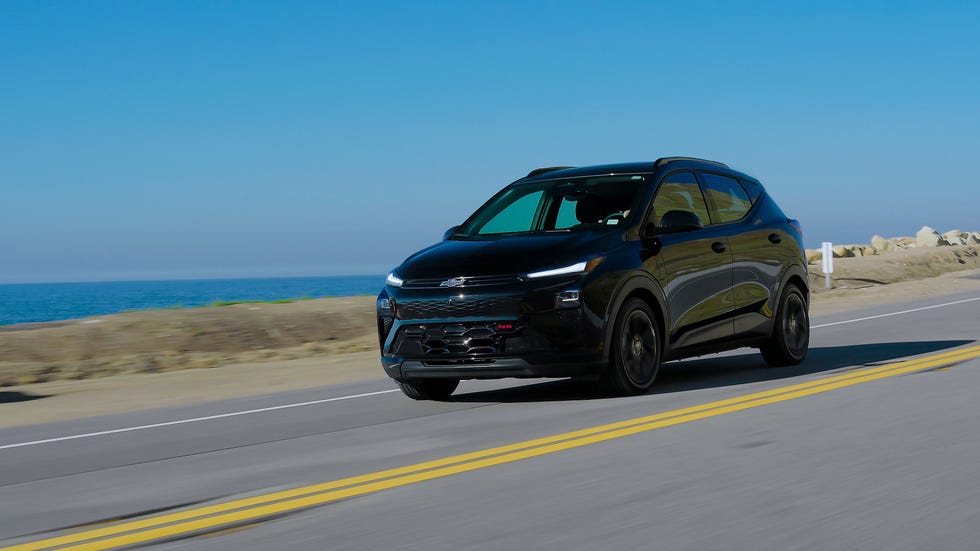
Performance & Charging: The 150 kW Revolution
For years, the Bolt was the ultimate "city car with an asterisk." That asterisk was its 55 kW DC fast-charging limit. In a world where 15-minute charging stops are becoming the norm, the old Bolt’s hour-long wait at the plug felt like a relic of the past.
The 2027 Chevrolet Bolt features a peak DC fast-charging speed of 150 kW. To put that into perspective, this is a 172% increase in peak speed compared to the original Bolt’s 55 kW limit. In real-world terms, you can now add roughly 100 miles of range in about 20 minutes, rather than nearly an hour.
This technical leap is supported by two major upgrades:
- LFP Battery Chemistry: The 65-kWh pack is more durable for daily 100% charging compared to traditional nickel-cobalt-manganese batteries.
- The Tesla Connection: The 2027 Bolt is the first Chevy EV to include a native NACS (North American Charging Standard) port. This means you can pull up to a Tesla Supercharger and plug in directly without fumbling for a fragile plastic adapter.
On the road, the Bolt produces 210 horsepower from its front-mounted motor. It’s punchy enough to win the "stoplight grand prix" against most gas-powered crossovers, though it lacks the neck-snapping torque of a dual-motor Performance Tesla. It’s "zippy," a word I don't use lightly, but perfectly suited for the urban cut-and-thrust.
Driving Impressions: Practicality Over Performance
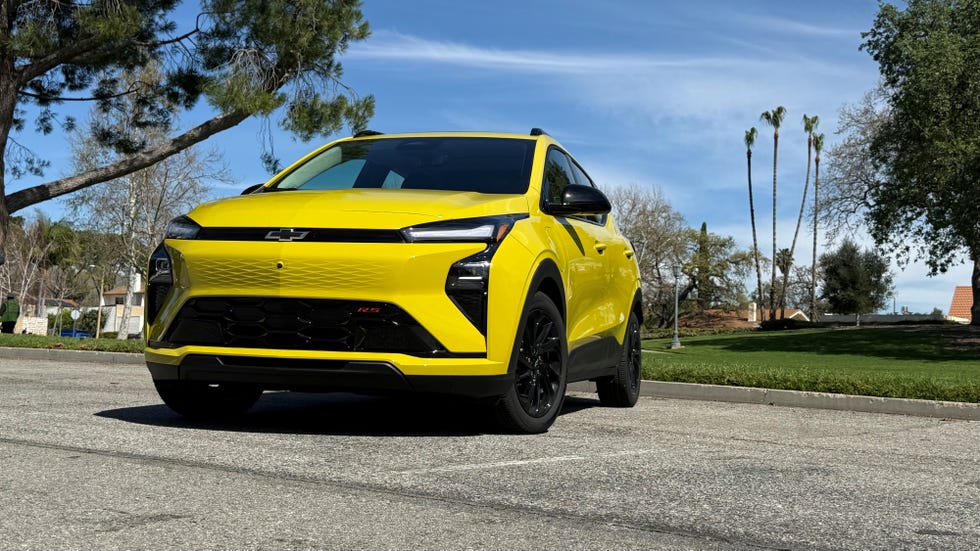
Behind the wheel, the 2027 Bolt feels like a "Jetson’s bubble car" in the best way possible. The visibility is world-class; because the pillars are thin and the glass is expansive, you feel like you have a 360-degree view of your surroundings. This makes it an absolute weapon for parallel parking in tight city spots.
Handling and Ride Quality
- Nimble Steering: The short wheelbase makes it incredibly easy to maneuver, but the steering is light and lacks significant feedback.
- Soft Suspension: Chevy tuned this for comfort. It soaks up potholes well, but if you take a highway off-ramp too quickly, you will notice a fair amount of body roll.
- 0-60 MPH: At 6.8 seconds, it’s respectable. It won’t win drag races, but you’ll never feel nervous about merging into fast-moving traffic.
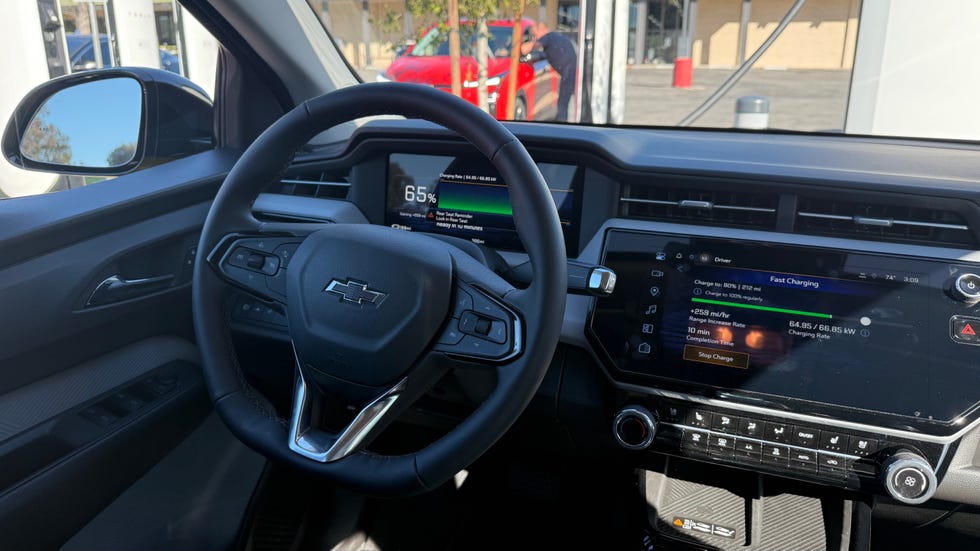
One change that might polarize long-time Bolt fans is the removal of the physical "regen paddle" on the back of the steering wheel. Previously, you could pull this paddle like a brake to slow the car down and recoup energy. Now, one-pedal driving is managed entirely through the touchscreen settings. It works well, but I miss the tactile engagement of the paddle.
For those who spend hours on the interstate, Super Cruise is available as an option. Even on a budget EV, having a true hands-free driving assistant for mapped highways is a luxury that makes the sub-$30,000 price point feel like an absolute steal.
Living with the Bolt: Interior & Infotainment
The interior is where the Bolt’s "utilitarian-chic" philosophy shines. It’s not "luxury," but it is smart. You’ll find a mix of hard plastics and soft-touch points that feel durable enough to survive a decade of kids and grocery hauls.
The space efficiency is the real story here. Because it uses the "EUV" (Electric Utility Vehicle) dimensions from the previous generation, the rear-seat legroom is surprisingly generous—better, in fact, than many mid-sized sedans.
The Infotainment Controversy
We have to talk about the elephant in the room: the lack of Apple CarPlay and Android Auto. Chevrolet has fully transitioned to a Google Built-in system.
- The Good: Google Maps is native, fast, and handles EV route planning (showing you chargers along your route) better than a phone-projected map ever could.
- The Bad: If you are deeply tied to your phone's interface, the learning curve is annoying. You’ll have to sign into your Spotify or Audible accounts directly on the car’s screen.
Storage-wise, the Bolt is a pack-rat's dream. There are over eight distinct cubbies, deep bottle holders in the doors, and a hidden sub-floor in the cargo area that’s perfect for hiding your charging cables or a laptop bag.
The Competition: Is the Bolt Still the Value King?
In 2027, the "sub-$25,000 EV" remains something of a mirage, making the Bolt’s $28,995 sticker price the most grounded reality in the market.
How does it stack up against its closest rivals?
| Feature | 2027 Chevy Bolt | 2027 Nissan Leaf | 2027 Equinox EV |
|---|---|---|---|
| Starting Price | $28,995 | $29,500 (Est.) | $34,995 |
| Charging Port | NACS (Native) | CHAdeMO/CCS | NACS (Native) |
| DC Fast Charging | 150 kW | 50 kW | 150 kW |
| EPA Range | 262 Miles | 212 Miles | 319 Miles |
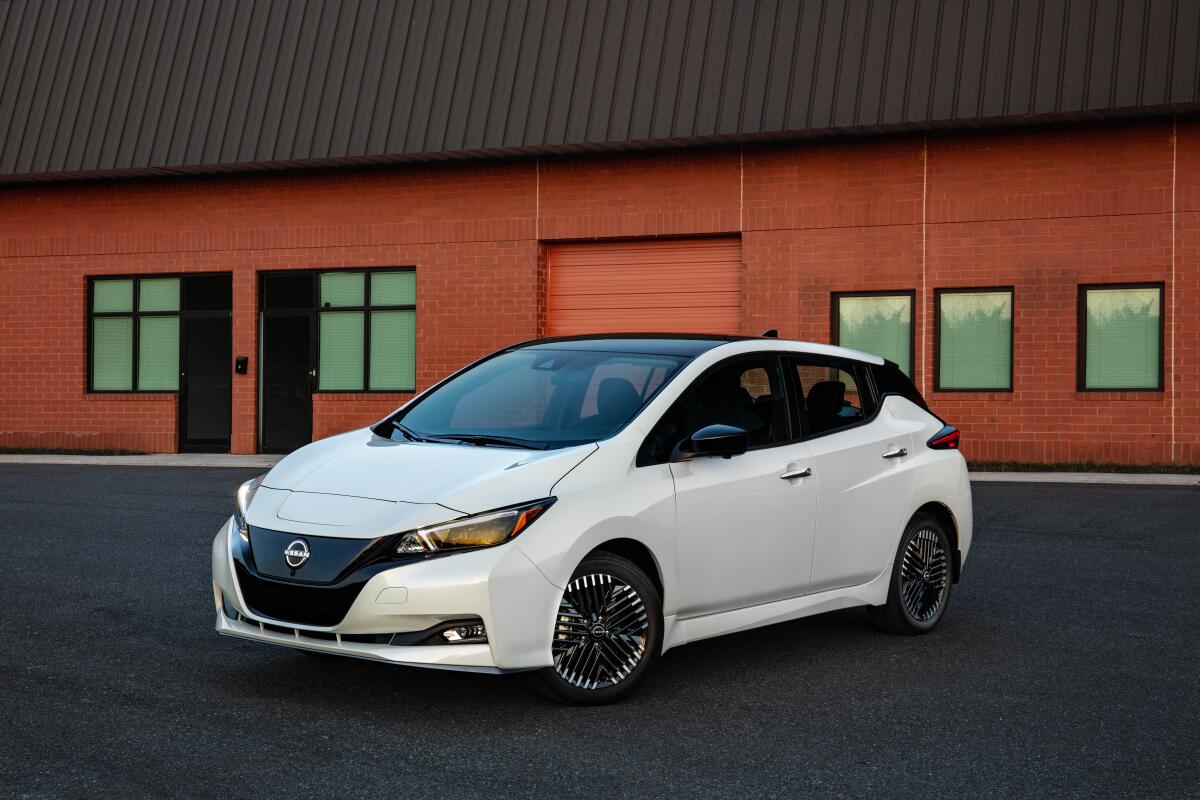
The Nissan Leaf remains the Bolt's most persistent shadow, but it’s a tough sell in 2027. The Leaf still largely relies on the aging CHAdeMO charging standard, which is becoming increasingly difficult to find at public stations. The Bolt’s move to NACS effectively future-proofs it in a way the Leaf cannot match.
Then there’s the Equinox EV. For about $8,000 more, you get a much larger vehicle with more range. If you have a large family, the jump is worth it. But for the solo commuter or the two-person household, that $8,000 is a lot of "gas" money saved by sticking with the Bolt.
Verdict: Should You Buy the 2027 Bolt?
The 2027 Chevrolet Bolt is a masterclass in compromise. It isn't the fastest, the most luxurious, or the most technologically advanced EV on the road. But it is exactly what the American market needs: a reliable, long-range electric car that doesn't require a six-figure salary to finance.
Buy the Bolt if:
- You want the absolute best "miles per dollar" ratio available in a new car.
- You primarily charge at home but want the security of fast DC charging for occasional trips.
- You live in an urban or suburban environment where its small footprint is an asset.
Skip the Bolt if:
- You cannot live without Apple CarPlay or Android Auto.
- You need to tow anything (it’s not rated for it).
- You have a large family and need massive trunk space for strollers and sports gear.
For under $30,000, the Bolt isn't just a car; it's an invitation to join the electric revolution without the financial hangover. Just remember that 18-month production clock—if you want one, don’t wait for the 2028 model year. It might not exist.

FAQ
1. Does the 2027 Chevrolet Bolt qualify for the $7,500 federal tax credit? Yes. Because the Bolt uses U.S.-sourced LFP battery cells and is assembled in North America, it is expected to qualify for the full $7,500 federal EV tax credit, potentially bringing the effective price of the LT trim down to approximately $21,495 for eligible buyers.
2. Can I use a Tesla Supercharger on day one? Absolutely. Because the 2027 Bolt has a native NACS port, you do not need an adapter. You simply pull up to any open Supercharger (that is open to non-Tesla vehicles, which is most of the network now) and plug in. Your payment is handled through the MyChevrolet app or the Tesla app.
3. Is the interior smaller than the old Bolt? No. The 2027 Bolt actually uses the dimensions of the old Bolt "EUV," which was the slightly larger version of the original hatchback. This means you get 39.1 inches of rear legroom, which is class-leading for a subcompact vehicle.
4. Why is the production run only 18 months? Chevrolet is using this Bolt as a "gap-filler" while they transition their factory lines to a new, even more cost-effective "next-gen" compact platform. Think of the 2027 Bolt as a final, perfected version of the old technology before the brand moves to its next major architecture in late 2028.