Quick Facts
- Production End Date: Subaru has officially confirmed that production for the Japanese-market WRX S4 will cease on May 18, 2026.
- Final Special Edition: The ultra-limited 2026 WRX STI Sport# will serve as the model's swan song, with production capped at just 600 units.
- The "Why": Increasingly stringent Japanese noise and emissions regulations are making it difficult for the 2.4-liter turbocharged Boxer engine to remain compliant in its current form.
- U.S. Availability: While Japan sees a hard stop in 2026, North American production schedules often vary; however, this marks the beginning of the end for the pure internal combustion (ICE) VB generation globally.
- Successor Outlook: Subaru is pivoting toward electrification, with the "Trailseeker" concept hinting at a future performance AWD EV or high-output hybrid.
The Final Countdown: May 18, 2026
There is a specific, mechanical rhythm to a Subaru factory—the hiss of pneumatics and the low thrum of Boxer engines coming to life for the first time. But at the Gunma assembly plant in Japan, that rhythm now has a metronome ticking toward a definitive end. Subaru has officially announced that orders for the WRX S4 will close in early 2026, with the final assembly lines scheduled to fall silent on May 18, 2026.
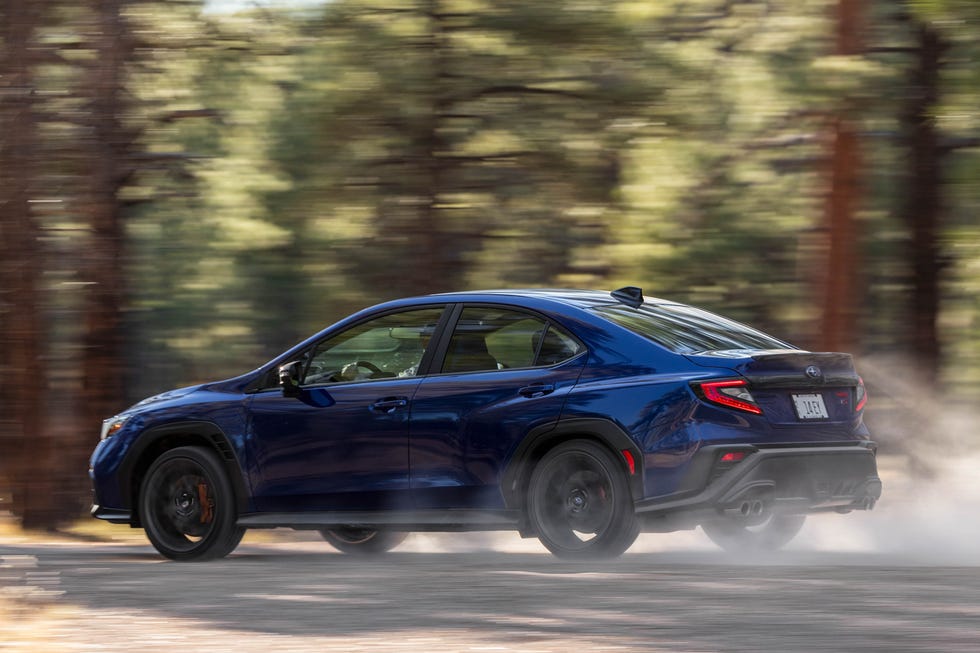
For those of us who have spent decades tracking the evolution of the WRX, this feels like more than just a model cycle ending; it’s the closing chapter of the rally-bred, internal combustion era. The "VB" platform, which debuted with much controversy over its rugged plastic cladding, has proven itself on the tarmac as a rigid, highly capable chassis. Yet, the very heart of the beast—the FA24 2.4-liter turbocharged engine—is running out of room to breathe in a regulatory landscape that is increasingly hostile to high-output, petrol-powered sedans.
This isn't just a rumor whispered in enthusiast forums. Subaru’s definitive timeline serves as a "Last Call" for the Japanese Domestic Market (JDM), signaling that the transition from a mechanical-first experience to an electronically-augmented future is no longer a distant threat—it’s on the calendar.
Why the WRX S4 is Being Discontinued
The decision to pull the plug on the WRX S4 in Japan isn't due to a lack of fans. Rather, it’s a casualty of the "Three E’s": Emissions, Efficiency, and Ear-splitting noise (at least, according to regulators). Japan’s Ministry of Land, Infrastructure, Transport, and Tourism has been tightening the screws on drive-by noise limits and fleet-wide CO2 averages. The 2.4-liter Boxer, while a masterpiece of torque delivery and low-center-of-gravity handling, struggles to meet the upcoming 2026 standards without significant—and costly—re-engineering.
In Japan, the WRX S4 is the equivalent of what we know in the U.S. as the high-tech, CVT-equipped GT trim. While purists often clamor for the manual, the S4 has carved out a niche as a sophisticated, all-weather grand tourer.
Comparison: Japanese WRX S4 vs. U.S. WRX GT
| Feature | Subaru WRX S4 (Japan) | Subaru WRX GT (U.S.) |
|---|---|---|
| Engine | 2.4L Turbocharged FA24 | 2.4L Turbocharged FA24 |
| Transmission | Sport Lineartronic (CVT) | Performance Transmission (CVT) |
| Driver Assist | EyeSight X (Satellite-linked) | Standard EyeSight |
| Suspension | ZF Electronic Damping | ZF Electronic Damping |
| Final Edition | STI Sport# (Limited 600) | tS (Series Production) |
The phase-out of the STI Sport grade alongside the standard S4 suggests that Subaru is unwilling to invest in a mid-cycle refresh for a platform that cannot survive the next round of legislative hurdles.
The 2026 WRX STI Sport#: A 600-Unit Farewell
Before the lights go out, Subaru is giving the S4 one final, glorious moment in the sun. The 2026 WRX STI Sport# is the ultimate expression of the current chassis. Limited to only 600 units, this isn't just a badge-and-sticker job.
I’ve had the chance to sample STI-tuned "sharp" (#) models in the past, and the difference is always in the tactile feedback. This final variant features:
- STI-tuned Dampers and Springs: Specifically valved to reduce "pitch and roll" while maintaining that uncanny Subaru ability to soak up mid-corner bumps.
- Flexible Draw Stiffeners: A signature STI component that improves turn-in response by maintaining tension between the chassis and the subframe.
- Forged BBS Wheels: Reducing unsprung mass for sharper steering transitions.
- Exclusive Ultrasuede Interior: Providing the grip you need when the lateral G-forces climb.
For collectors, the 600-unit production cap ensures this will be one of the most sought-after variants of the VB generation. It is the definitive "thank you" note to a fan base that has stayed loyal through every iteration of the Symmetrical AWD system.
Impact on the U.S. Market: Is the Manual WRX Safe?
This news naturally sends a shiver down the spine of North American enthusiasts. Does the end of Japanese production mean the U.S. market WRX is also on life support?
The short answer: Not immediately.
Emissions regulations in the United States, while tightening, currently offer a different glide path than Japan’s strict R51-03 noise standards. The WRX remains a vital "halo" car for Subaru of America, especially since the discontinuation of the full-fat STI. Furthermore, the U.S. market is the primary stronghold for the 6-speed manual transmission. While the Japanese S4 is CVT-only, the U.S. consumer still votes with their left foot, with manual take rates remaining surprisingly high.
However, we shouldn't be complacent. The global automotive trend is a monolith. If the home market in Japan can no longer sustain the 2.4L Boxer, the R&D costs for keeping the engine "clean" for the U.S. alone will eventually become prohibitive. We are likely looking at a 2027 or 2028 sunset for the ICE WRX in North America.
What Comes Next? From Boxer Engines to Electric Trailseekers
Subaru’s Gunma plant isn't just closing a line; it’s retooling for a new era. The company has been vocal about its shift toward electrification, and the "Trailseeker" concept is the most vivid hint at where they are headed.
Imagine a WRX that replaces the mechanical center differential with dual or triple electric motors. The instant torque of an EV would suit the WRX’s "point-and-shoot" driving style perfectly. However, the challenge for Subaru engineers will be capturing the soul of the car. The WRX has always been a car you drive, not just a car that moves you. The vibration of the flat-four, the mechanical whine of the AWD system, and the heavy steering are all part of the charm.
Subaru's future likely includes:
- High-performance Hybrids: Using Toyota’s hybrid synergy but tuned for rally-like power delivery.
- The "STe" Era: Subaru has already trademarked "STe," signaling that the future of STI is electric.
- Enhanced X-Mode: Utilizing electric motor precision to take AWD grip to levels a mechanical system simply can't reach.
Buying Guide: Should You Act Now?
If you’ve been sitting on the fence, the "May 2026" deadline in Japan should serve as your wake-up call. We are currently in the "Golden Hour" of the internal combustion performance sedan.
Why You Should Buy a 2024/2025 WRX Now:
- The FA24 Engine: It is arguably the most reliable and tunable engine Subaru has ever put in a WRX. It makes power effortlessly compared to the old EJ series.
- Analog Feel: Even with the infotainment screens, the steering rack and the 6-speed manual offer a level of driver engagement that is disappearing from the industry.
- Resale Value: History shows that "last of the line" Subarus hold their value exceptionally well. The last generation of pure-ICE WRXs will likely be future classics.
What to Look For:
- The WRX tS: For 2025, this is the one to get. It brings back the electronically controlled dampers and the Brembo braking system that the VB platform was crying out for at launch.
- Base & Premium Trims: If you plan on building a project car, the Base and Premium trims remain the best "blank canvas" in the AWD performance world.
FAQ
Q: Will the U.S. Subaru WRX be discontinued in 2026? A: Currently, the May 18, 2026, deadline applies specifically to the Japanese-market WRX S4. While Subaru of America hasn't announced a specific end date, global production cycles usually align within a year or two.
Q: Is there going to be a 2026 WRX STI? A: Not in the traditional sense. There will be the WRX STI Sport# (in Japan) and the WRX tS (globally), which feature STI-tuned suspension and components, but a full-blown WRX STI with a bespoke high-output engine is not expected for this generation.
Q: Can I still get a manual transmission in the WRX? A: Yes, for the North American market, the 6-speed manual remains available on the Base, Premium, Limited, and the new tS trims. The Japanese S4, however, remains CVT-only.
Conclusion
The end of the Subaru WRX S4 production in May 2026 is a sobering reminder that the automotive world is shifting beneath our feet. For decades, the WRX has been the go-to choice for the driver who needs to haul groceries on Tuesday and hunt apexes on Sunday, regardless of the weather.
As an editor who has spent thousands of miles evaluating these machines, my advice is simple: don't wait for the "next big thing." The "big thing" is already here, and its clock is ticking. Whether it’s the limited-run STI Sport# in Japan or the track-ready tS in the U.S., these are the final, refined iterations of a legendary formula. When the line stops in Gunma on May 18, 2026, a piece of rally history will go with it. Get behind the wheel while you still can.