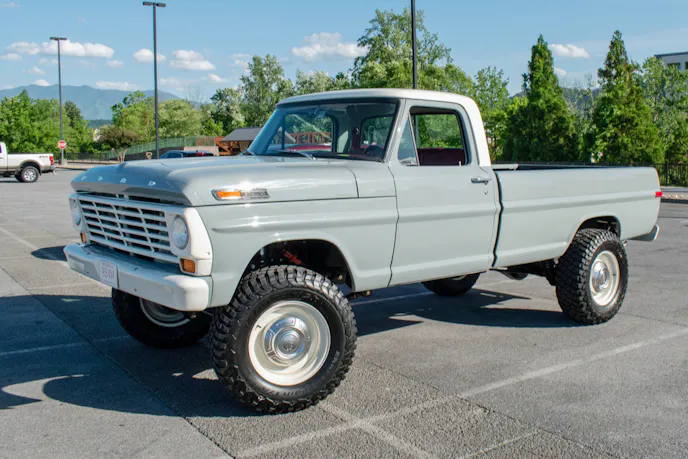
The silhouette is unmistakable: the rugged, utilitarian lines of a "Bumpside" Ford F-Series that defined the American landscape in the late 60s and early 70s. But as the 1970 Ford F-250 known as "Teton" rumbles to life, the sound is anything but vintage. Gone is the wheezing FE-series V8 of yesteryear, replaced by the modern mechanical symphony of a 7.3-liter "Godzilla" V8.
This isn't just another restoration; it’s a masterclass in restomod engineering led by Bennett Lisenby of Project 15. The 'Teton' F-250 is a dual-threat machine, combining a high-output 625-HP Godzilla swap with a bespoke Roadster Shop RS4 chassis. It represents a 45% increase in horsepower over the factory crate engine rating, all while maintaining the timeless aesthetics of a classic workhorse. Recognized as a top-ten finalist in the 2025 SEMA Battle of the Builders Young Guns competition, Teton bridges the gap between show-floor glamour and off-road lethality.
The Origin Story: From Idaho Junk to SEMA Contender
Every great build has a humble beginning, and Teton is no exception. Bennett Lisenby originally sourced the truck from Facebook Marketplace—a derelict 2WD donor found in the rugged terrain of Idaho. At the time, it was a far cry from a SEMA-quality build, but Lisenby saw the potential in the fifth-generation F-Series body.
The transformation from a discarded farm truck to a high-performance icon required a complete teardown. Lisenby’s vision was to create a "sanitary" build—a term often used in the industry to describe a vehicle that looks deceptively simple but is executionally flawless. To achieve this, the body underwent extensive work, including shaved and filled details that clean up the factory lines without losing the "Bumpside" character.
The color choice was a critical decision in the truck's identity. Lisenby opted for a two-tone scheme featuring Ford’s modern Cactus Grey paired with the legendary Wimbledon White. The result is a palette that feels both contemporary and deeply rooted in Ford’s heritage, perfectly encapsulating the restomod spirit.
The Heart of the Beast: Building a 625-HP Godzilla V8
For decades, the Coyote 5.0L and the GM LS-series were the go-to engines for high-end swaps. However, the Ford 7.3L Godzilla V8 has shifted the paradigm. Built originally for Ford’s Super Duty trucks, the Godzilla offers a massive displacement in a surprisingly compact pushrod package.
In the 'Teton' build, this engine has been pushed far beyond its industrial roots. Through a collaboration with Willis Performance Enterprises and Mast Motorsports, Lisenby installed a custom-grind camshaft that unlocks the engine's true high-revving potential.
Performance Breakdown: Stock vs. Teton Godzilla
| Metric | Factory Crate Godzilla | Teton Build (Modified) |
|---|---|---|
| Displacement | 7.3L (445 ci) | 7.3L (445 ci) |
| Horsepower | 430 HP | 625 HP |
| Torque | 475 lb-ft | 650 lb-ft |
| Valvetrain | Stock Pushrod | Custom Willis/Mast Camshaft |
| Induction | Factory Plastic | Holley Hi-Ram Intake |
The engine's aesthetic is just as impressive as its output. It features a Holley intake manifold, a Willis front-drive system, and a Griffin cooling system to manage the heat generated by those 625 horses. Power is sent through a heavy-duty Gearstar 4R100 transmission and an Atlas 2 transfer case, ensuring that Teton can handle both highway cruising and technical trails.
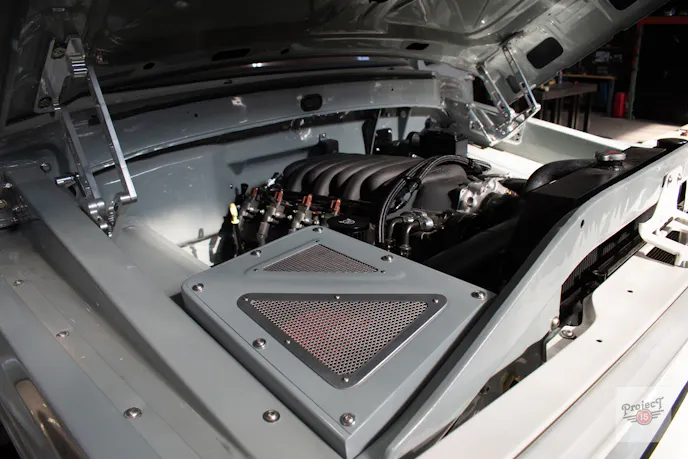
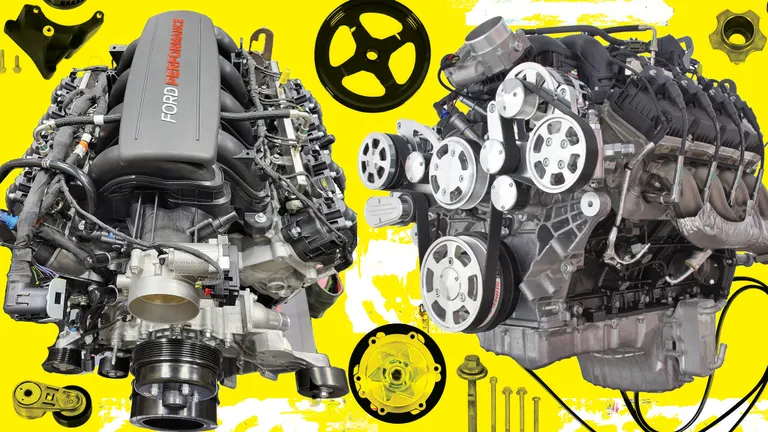
To make a Godzilla swap successful, Lisenby emphasizes the importance of the supporting "ecosystem." You cannot simply drop a modern 7.3L into a 1970 engine bay and expect it to work with 50-year-old peripherals.
Pro Tip: "When planning a Godzilla swap, budget for the front drive and cooling early. The factory Super Duty accessories are often too bulky for classic engine bays. Companies like Willis Performance offer slim-line solutions that are essential for a clean fit." — Bennett Lisenby, Project 15.
The Foundation: A Bespoke Roadster Shop RS4 Chassis
A common pitfall in high-horsepower truck builds is putting a modern engine on a flexible, antiquated frame. Lisenby avoided this by partnering with the industry leaders at Roadster Shop.
The 'Teton' sits on a custom RS4 chassis, but this wasn't an off-the-shelf part. To ensure a perfect fit for the 1970 body, Roadster Shop performed a full 3D scan of a sixth-generation "High-Boy" frame. This allowed them to engineer a chassis that aligns perfectly with the F-250’s body mounts while providing the structural rigidity needed for 650 lb-ft of torque.
Suspension and Drivetrain Specs:
- Front Suspension: Fox 2.5 Factory Series coilovers with 10 inches of travel.
- Rear Suspension: Four-link geometry with Fox 2.5 Factory Series coilovers and 12 inches of travel.
- Axles: Currie 44 (front) and Currie 60 (rear), both equipped with Detroit Truetrac limited-slip differentials for maximum traction.
- Braking: Massive Baer multi-piston calipers to bring the heavy-duty rig to a halt.
- Wheels & Tires: 35-inch BFGoodrich Mud-Terrain KM3 tires wrapped around Detroit Steel wheels, maintaining that classic "steelie" look with modern rubber.
Interior & Exterior Refinement
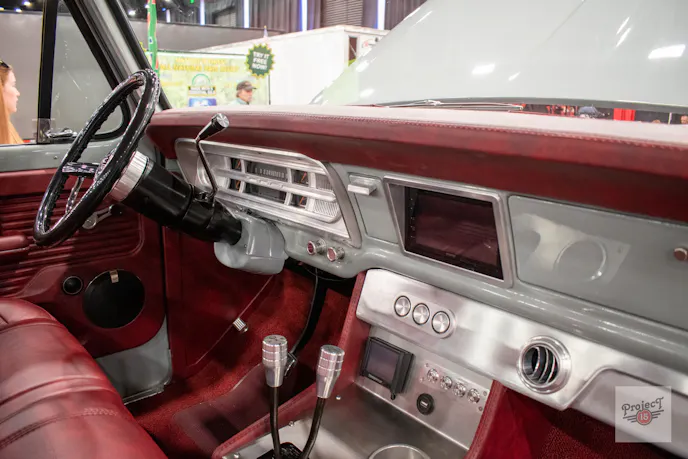
While the chassis and engine are the stars of the show, the cabin of Teton is where the "Project 15" attention to detail truly shines. Lisenby worked with Morgan’s Auto Trim to create an interior that feels like a premium version of a 1970s factory offering.
The custom-trimmed bench seat and dash pad utilize high-quality materials that stand up to the rigors of off-road use while providing the comfort of a modern luxury SUV. For climate control, a Restomod Air A/C system was integrated, which is a necessity for long summer hauls to shows like SEMA.
Technological integration is subtle but effective. A Holley Terminator X display is tucked into the dash, providing the driver with real-time engine vitals without ruining the vintage vibe. A Kenwood audio system provides the soundtrack when the roar of the Godzilla V8 isn't enough.
Why Choose the Godzilla Platform for Your Next Swap?
If you are considering a classic Ford truck build, the Godzilla 7.3L offers several distinct advantages over the more common Coyote or LS swaps.
- Space Efficiency: Because it is a pushrod (OHV) design, the Godzilla is significantly narrower than the DOHC Coyote. This makes it much easier to fit between the frame rails of an F-100 or F-250 without cutting into the inner fenders.
- Torque Density: The 7.3L displacement provides massive low-end torque, which is exactly what heavy trucks need. Unlike smaller displacement engines that need to rev high to find power, the Godzilla pulls hard from the moment you touch the pedal.
- Reliability and Cost: As a "take-out" engine from wrecked Super Duty trucks, the Godzilla can often be sourced more affordably than a brand-new Coyote crate engine. Furthermore, its iron block and simplified valvetrain make it an incredibly robust platform for forced induction or high-performance naturally aspirated builds.
FAQ
Q: How difficult is the wiring for a Godzilla swap into a 1970 Ford?
A: Using a standalone EFI system like the Holley Terminator X Max makes the process much simpler. It handles the engine management and electronic transmission control, allowing you to bypass the complexities of a modern Ford factory ECU and PATS (Passive Anti-Theft System).
Q: Does the Roadster Shop RS4 chassis require body modifications?
A: While the RS4 chassis is designed to mount to the factory body points, some minor clearancing of the floor pans may be required depending on the transmission choice (like the large 4R100 or 10R80) and the ride height you desire.
Q: Can this 625-HP setup be used for daily driving?
A: Absolutely. Thanks to the custom camshaft tuning and modern EFI, the Teton build maintains smooth idle and drivability characteristics. The Griffin cooling system ensures the engine stays within safe operating temperatures even in heavy traffic.
The 'Teton' 1970 Ford F-250 isn't just a trophy piece; it’s a blueprint for the future of the classic truck hobby. By blending the soul of a 1970s icon with the heart of a modern powerhouse and the bones of a race rig, Bennett Lisenby has created something truly special. Whether it's conquering the SEMA floor or the trails of Idaho, Teton stands as the ultimate Godzilla-swapped Ford.