In 1961, when John Cooper first tinkered with the diminutive British hatchback that would eventually bear his name, the goal was singular: giant-killing performance through mechanical purity. Cooper, a man with two Formula 1 World Championships under his belt, understood that speed wasn't just about horsepower; it was about the intimate connection between the driver’s palms and the contact patch of the tires. Decades later, as I step into the cockpit of the 2026 Mini Cooper John Cooper Works (JCW), that legacy feels like it’s being translated into a new, binary language.
The automotive world is currently obsessed with the "Digital Experience," and Mini is leading the charge. But the question remains: Has the 2026 Mini Cooper JCW lost its performance soul in the pursuit of pixels? The short answer is that while the 2026 model retains its characteristic "corner-exit clawing" and playful lift-off oversteer, the shift from raw, analog feedback to a digital-first approach—replacing manual gearboxes with seven "experience modes"—marks a fundamental change in identity. This is no longer a track-tuned instrument; it is a high-performance lifestyle accessory.
The Digital Cockpit: Software Replacing Mechanical Soul
The most jarring departure from Mini’s heritage is found the moment you settle into the JCW sport seats. The familiar cluster of analog dials is gone, replaced by a singular, stunning 9.4-inch circular OLED interface running Operating System 9. It is beautiful, crisp, and undeniably modern, but it signals the end of an era.
The mechanical connection has been largely digitized through seven distinct "Experience Modes." While the names—Core, Go-Kart, Green, Vivid, Timeless, Balance, and Personal—sound like presets for a smart home, they dictate the car's personality. "Go-Kart" mode sharpens the throttle and firms up the steering, accompanied by a synthesized engine growl piped through the speakers. Conversely, "Timeless" mode attempts to evoke the past with classic typography and a cleaner display, but it feels like a digital filter on a photo rather than a genuine mechanical shift.
The most controversial omission is the manual transmission. The 2026 JCW is exclusively paired with a 7-speed dual-clutch transmission (DCT). While the DCT is objectively faster and handles the engine’s torque with more precision, the loss of a third pedal removes a layer of engagement that defined the JCW brand for forty years. It’s a shift from driving the car to managing its software.
Driving Dynamics: A Looser, More Playful Chassis
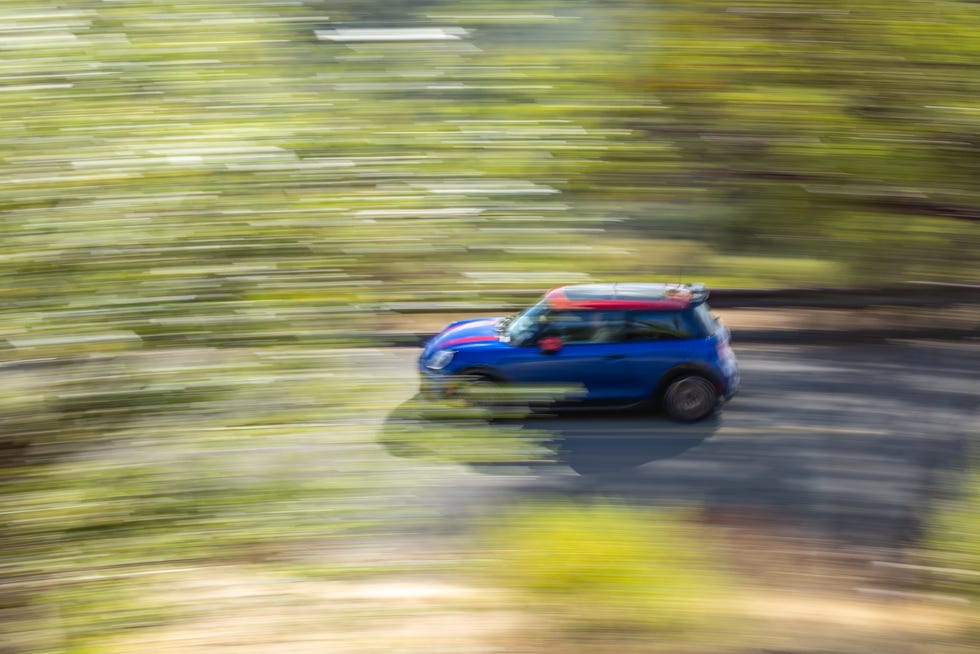
On the road, the 2026 Mini JCW maintains its signature personality, though the edges have been sanded down. With a compact 98.2-inch wheelbase, the car remains an eager companion on tight, technical backroads. It still exhibits that classic Mini trait: lift-off oversteer. Enter a corner too hot, trail the brakes or abruptly lift the throttle, and the rear end will rotate predictably, helping you point the nose toward the apex.
However, the chassis feels softer than its predecessor. There is more body roll than a purist might expect from a "track-ready" badge. The steering, while incredibly sharp and direct, lacks the granular feedback of the old hydraulic-assisted units. It’s a "Point-and-Shoot" experience rather than a "Feel-and-Flow" one.
Expert Insight: The move toward a softer suspension setup isn't accidental. Mini is targeting a broader demographic that prioritizes daily drivability over Nürburgring lap times. While it may frustrate the weekend track-day warrior, it makes the JCW a significantly more livable daily driver.
Powertrain & Hardware: Where the Analog Magic Still Lives
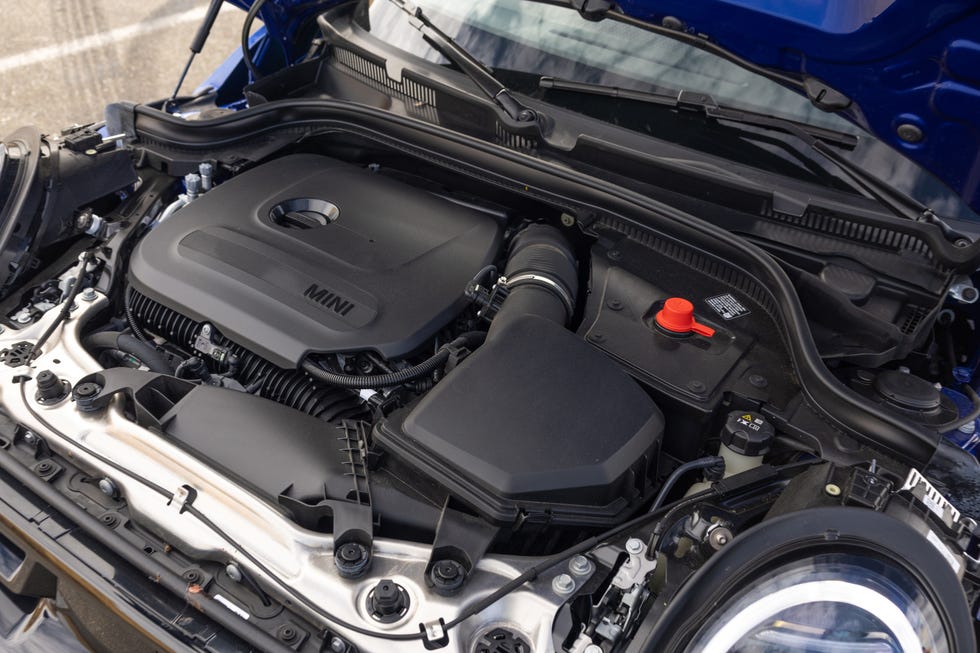
Despite the digital veneer, the heart of the JCW remains a formidable piece of hardware. Under the hood sits the BMW-sourced 2.0L turbocharged inline-four, pumping out 228 horsepower and a stout 280 lb-ft of torque.
The way this engine delivers power is the car’s saving grace. Peak torque arrives at just 1500 rpm, providing a "shove" that feels like a team of Alaskan Malamutes lunging at their harnesses. When you floor it out of a corner, the electronically locking front differential works overtime to manage that torque, clawing at the pavement to pull you through the exit.
To manage this aggression, Mini has equipped the 2026 model with heavy-duty Brembo brakes. They offer excellent initial bite and resisted fade surprisingly well during our spirited mountain descent. This is where the JCW feels most like its old self—aggressive, torque-rich, and eager to play.
Performance Specs Comparison: 2020 vs. 2026
| Feature | 2020 Mini JCW (Hardtop) | 2026 Mini JCW (Hardtop) |
|---|---|---|
| Engine | 2.0L Turbo I4 | 2.0L Turbo I4 |
| Horsepower | 228 hp | 228 hp |
| Torque | 236 lb-ft | 280 lb-ft |
| Transmission | 6-speed Manual / 8-speed Auto | 7-speed Dual-Clutch Only |
| Interface | Analog + 6.5-inch screen | 9.4-inch circular OLED |
| EPA Combined MPG | 25 MPG | 26 MPG |
Interior & Practicality: Style over Substance?
The interior of the 2026 JCW is a masterclass in modern textile design. The knitted dashboard surface, made from recycled polyester, offers a unique tactile experience that sets it apart from the sea of "vegan leather" in its competitors. The sport seats are supportive and look the part with their JCW-specific stitching.
However, the "Mini" name remains literal when it comes to practicality.
- Cargo Space: You’re looking at a mere 9 cubic feet of space with the rear seats up.
- Rear Seating: Best reserved for grocery bags or very patient toddlers.
- Price Creep: This is perhaps the most significant "de-evolution." The JCW family has seen a substantial price hike. For instance, the starting price for the Mini Countryman JCW has risen from $42,250 in 2020 to $49,225 for the 2026 model—a 16.5% increase in just six years.
The Future of Engagement: Can Digital Shifting Save the EV JCW?
As we look toward the inevitable electrification of the JCW brand, the 2026 model feels like a bridge. The industry is currently experimenting with "simulated engagement." We’ve seen the Hyundai Ioniq 5 N use software to mimic gear ratios and jolts, and BMW’s M division is currently developing an "artificial transmission" for future performance EVs.
If the 2026 JCW feels digital, the next generation will be entirely code-based. The success of future Minis will depend on whether software engineers can replicate the soul that mechanical engineers spent 60 years perfecting.
The Verdict: A Different Kind of Fun
The 2026 Mini Cooper JCW is a polarizing machine. For the purist, the loss of the manual gearbox and the "cartoonish mien" of the digital interface may feel like a betrayal. It is softer, more expensive, and more reliant on software than ever before.
However, if you judge it as a modern performance car, it’s undeniably charming. It’s one of the few cars left on the market that doesn't take itself too seriously. It’s fast, it’s stylish, and it still knows how to dance around a corner. It hasn't lost its soul; it has simply updated its operating system.
The Highs and Lows
- Highs: Torque-rich engine with great low-end shove; stunning OLED display; retains playful "lift-off" handling characteristics.
- Lows: No manual transmission option; numb steering feedback; significant price increase over previous generations.
FAQ
Does the 2026 Mini Cooper JCW come in a manual?
No. For the 2026 model year, the Mini Cooper JCW is exclusively equipped with a 7-speed dual-clutch automatic transmission.
What are the "Experience Modes" in the new Mini?
There are seven modes (Go-Kart, Timeless, Vivid, Core, Green, Balance, and Personal). These modes change the ambient lighting, display graphics, throttle response, and synthesized engine sounds.
Is the 2026 Mini JCW faster than the old one?
In terms of straight-line acceleration and torque delivery, yes. The increased torque (280 lb-ft) and faster-shifting dual-clutch transmission make it more responsive in real-world driving.
How much does the 2026 Mini Countryman JCW cost?
The 2026 Mini Countryman JCW starts at approximately $49,225, reflecting a significant price increase from previous years.