For years, the full-size truck market has been caught in a tug-of-war between two extremes: the heavy, feature-laden "basement" campers that require a dually to haul, and the minimalist pop-up shells that offer little more than a tent on wheels. As the overlanding movement matures, the demand has shifted toward a "Goldilocks" solution—a hard-side, non-slide camper that is light enough for a half-ton pickup but rugged enough to handle the vibrating washboards of the Mojave or the sub-zero mornings of the Tetons.
Enter the 2025 Adventurer 80RB Overlander Edition. This isn’t just a cosmetic trim package; it is a calculated response to the off-grid evolution. By combining a lightweight 1,877-pound base dry weight with a robust 400W solar array and a heated lithium power plant, Adventurer has created what might be the most versatile hard-side camper currently on the market for full-size pickups.
Quick Specifications & Key Takeaways
Before we dive into the nuances of its construction and livability, let’s look at the hard data. The Adventurer 80RB Overlander is designed to fit a wide range of trucks, from the ubiquitous Ford F-150 and Toyota Tundra to the heavy-duty Ram 2500 and GM 2500 series.
- Base MSRP: $41,568
- Base Dry Weight: 1,877 lbs
- Floor Length: 8 feet 4 inches
- Fresh Water Capacity: 15 Gallons
- Power System: 400W Solar + 132Ah Heated Lithium Battery
- Warranty: 3-Year Structural Warranty
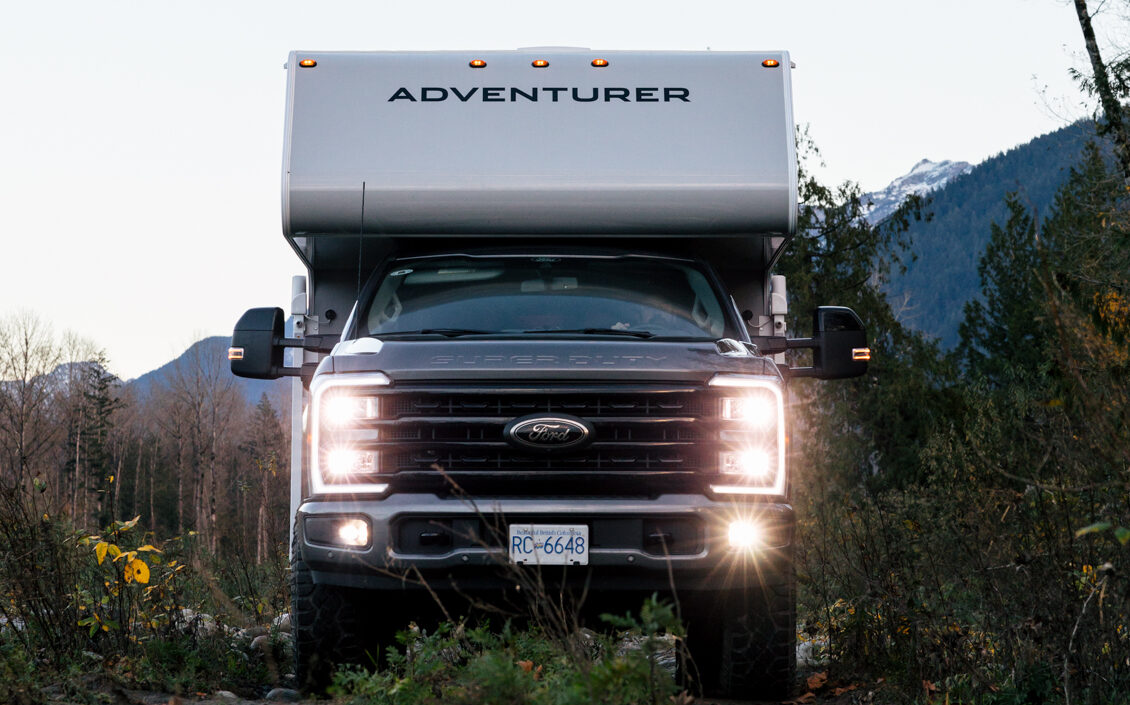
The 80RB Overlander’s biggest strength is its compatibility. Because it features a "non-slide" design, the center of gravity is kept low and tight at 30.5 inches, significantly improving the handling of the vehicle on winding mountain roads or off-camber trails. Whether you are running a short-bed or a long-bed, this camper maintains a profile that doesn't overwhelm the truck’s chassis.
Built for the Wild: The Overlander Edition Upgrades
The "Overlander" designation signifies a departure from traditional "RV park" thinking. While the standard 80RB is a formidable camper, the Overlander Edition is factory-tuned for self-sufficiency.
Power Management and Autonomy
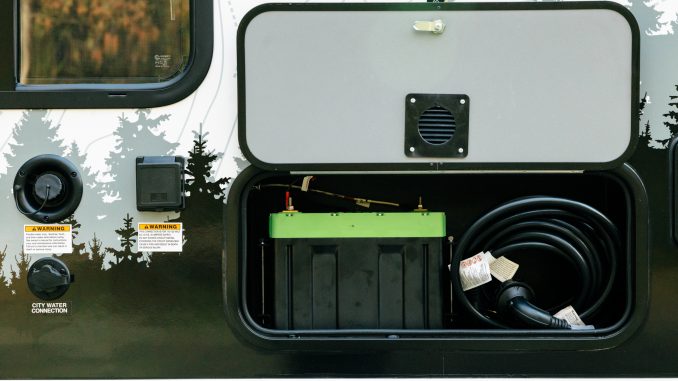
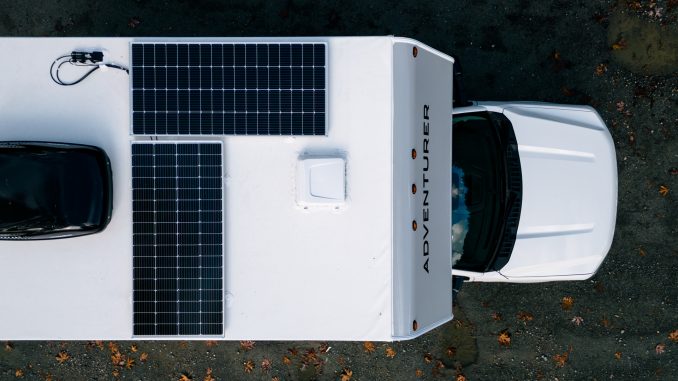
The heart of this edition is its electrical backbone. Adventurer equips the Overlander with a 400-watt solar power system and a 132 amp-hour internally heated lithium battery. In the world of off-grid travel, lithium is the undisputed king. Unlike traditional lead-acid batteries, this lithium unit can be discharged more deeply without damage and, crucially for late-season hunters or skiers, features internal heating elements. This allows the battery to accept a charge even when temperatures drop well below freezing, a common failure point for standard lithium setups.
Climate Control and Durability
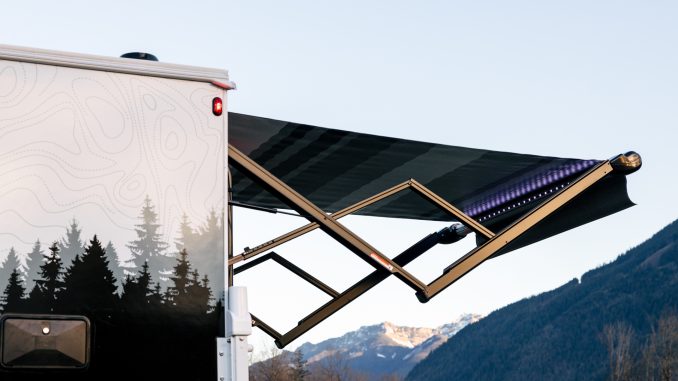
To complement the power system, the Overlander features a low-profile air conditioning unit and a high-efficiency furnace. The exterior is wrapped in custom "Overlander" graphics and features ruggedized components like power jacks and a rear awning. The construction utilizes TCC (Tru-Composite Construction), which bonds the interior wall, insulation, and exterior fiberglass into a single, incredibly strong unit that resists the delamination often seen in lower-quality builds.
Interior Comfort & Floor Plan Analysis
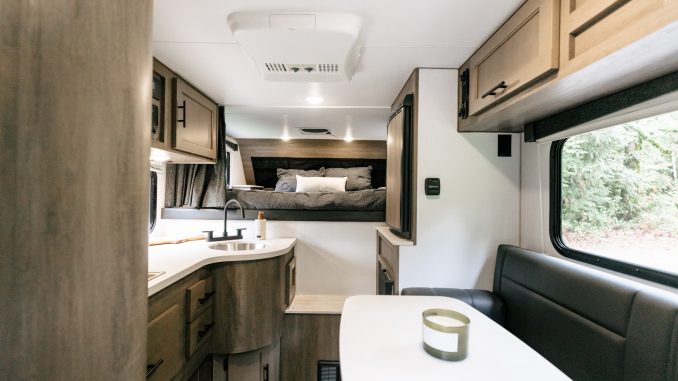
Stepping inside the 80RB Overlander, the immediate sensation is one of purposeful luxury. The layout maximizes every inch of its 8-foot-4-inch floor length, utilizing a light color palette and large windows to prevent that "boxed-in" feeling common in small campers.
The North-South Queen Bed
One of the most critical design choices in the 80RB is the North-South queen bed. In a "East-West" configuration, the person sleeping against the front wall has to climb over their partner to get out of bed—a maneuver that becomes tiresome very quickly during full-time travel. The North-South orientation allows both occupants to exit the bed gracefully into the main aisle. It also provides extra storage hampers on both sides of the mattress, perfect for clothing and personal gear.
Wet Bath & Kitchen Utility
The "RB" in 80RB stands for "Rear Bath." This model includes a fully functional wet bath, which is a significant luxury in a camper this light. While the 15-gallon fresh water capacity requires a bit of discipline (think "navy showers"), having a dedicated toilet and shower inside the rig is a game-changer for those camping in inclement weather.
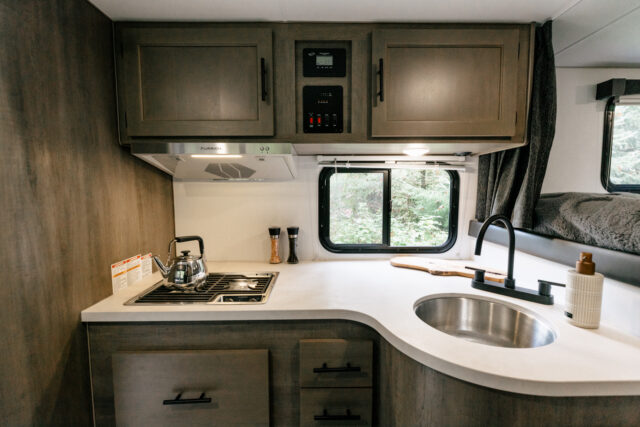
The galley is equally efficient, featuring a stainless steel sink, a two-burner cooktop, and a refrigerator that runs efficiently off the lithium-powered 12V system. The cabinetry uses high-quality wood and marine-grade materials, ensuring that doors don't rattle loose after a day of driving on washboard roads.
Truck Matching: Payload and Stability
As an editor, I cannot stress this enough: payload is the most important number in truck camping. While the 80RB Overlander is marketed as "half-ton friendly," you must do your homework.
The 1,877-pound base dry weight is impressive, but once you add 15 gallons of water (approx. 125 lbs), a full propane tank (20 lbs), your gear, and passengers, you are looking at a "wet weight" closer to 2,300–2,400 lbs.
- Half-Ton Trucks (F-150, Silverado 1500): Many modern half-tons have payloads between 1,600 and 2,200 lbs. To safely carry the 80RB, you likely need a truck equipped with a "Heavy-Duty Payload Package" or planned suspension upgrades like airbags or Timbrens.
- Three-Quarter Ton Trucks (F-250, Ram 2500): This is the "sweet spot" for the 80RB. These trucks typically have 3,000+ lbs of payload, allowing you to carry the camper, a full crew, and even tow a boat or trailer without breaking a sweat.
The 30.5-inch Center of Gravity (COG) is strategically placed to sit forward of the truck's rear axle. This placement ensures that the front tires stay firmly planted, maintaining steering response and braking efficacy even when the camper is fully loaded.
Adventurer 80RB Overlander vs. The Competition
How does the 80RB Overlander stack up against its rivals? Its primary competition comes from the "minimalist" camp, like the Scout Kenai, and the "premium" camp, like the Northern Lite 8-11 (though the latter is significantly heavier).
| Feature | Adventurer 80RB Overlander | Scout Kenai | Standard 80RB |
|---|---|---|---|
| Base Dry Weight | 1,877 lbs | 1,331 lbs | 1,833 lbs |
| Solar Power | 400W (Standard) | 175W (Optional) | Optional |
| Battery Type | 132Ah Heated Lithium | Portable Power Station | Lead Acid (Standard) |
| Bathroom | Full Wet Bath | Cassette Toilet Only | Full Wet Bath |
| Starting Price | $41,568 | ~$28,000 | ~$34,000 |
While the Scout Kenai is lighter and cheaper, it lacks the integrated systems and "RV comforts" of the Adventurer. The 80RB Overlander sits in a unique position: it offers the turnkey systems of a luxury camper at a weight that doesn't require a commercial-grade truck.
Pricing and Availability
The $41,568 starting MSRP reflects the high-end components integrated into the Overlander Edition. When you factor in the cost of aftermarket lithium upgrades and solar installations (which can easily run $4,000–$6,000), the factory-integrated Overlander package represents significant value.
Adventurer supports their builds with a 3-year structural warranty, giving owners peace of mind when they head into remote areas. The dealer network is extensive across North America, making service and parts relatively easy to source compared to boutique, "direct-to-consumer" brands.
Frequently Asked Questions (FAQ)
Can I really haul the Adventurer 80RB on a Ford F-150? Yes, but with caveats. You must check your specific truck’s door jamb sticker for the "Payload Capacity." If your payload is at least 2,200 lbs, you are in the safe zone for a "dry" camper. If it is lower, you will need to consider suspension upgrades or look at a lighter pop-up camper.
Is the Overlander Edition truly four-season capable? The 80RB features a heated basement and insulated tanks, making it much better for winter than most lightweight campers. However, because it is not a "true" basement model with massive insulation, you will still want to use your furnace regularly in sub-freezing temperatures to keep lines from freezing.
What are the main differences between the Standard 80RB and the Overlander? The Overlander includes the 400W solar system, 132Ah heated lithium battery, low-profile A/C, specific "Overlander" exterior graphics, and premium interior finishes as standard equipment, whereas these are costly options or unavailable on the standard model.
Conclusion
The 2025 Adventurer 80RB Overlander Edition is a masterclass in compromise—in the best way possible. It manages to balance the weight requirements of modern full-size pickups with the power and comfort demands of the modern off-grid traveler. By focusing on high-quality electrical systems and a proven, stable floor plan, Adventurer has delivered a camper that is as comfortable in a National Park campground as it is on a remote ridge in the backcountry.
If you are looking for a hard-side camper that respects your truck's payload while fueling your independence, the 80RB Overlander should be at the top of your list.