If the standard Subaru Forester is the reliable pair of cross-trainers you wear to the gym, the 2026 Subaru Forester Wilderness is the heavy-duty hiking boot you lace up for a week-long trek through the backcountry. It’s a vehicle that doesn’t just suggest adventure; it demands it with a rugged aesthetic defined by chunky black cladding, copper accents, and 17-inch wheels wrapped in beefy all-terrain rubber.
While some SUVs in this segment approach off-roading like "melting butter with a flamethrower"—all raw power and extreme, often unnecessary, hardware—the Forester Wilderness remains the pragmatic choice. It isn't trying to be a rock-crawling Jeep Wrangler. Instead, it’s a highly specialized evolution of a proven platform, designed to get you and your gear to the trailhead without the punishing ride quality or abysmal fuel economy of more dedicated rigs. Underneath the hood, you’ll find the familiar 2.5-liter Boxer four-cylinder producing 180 horsepower and 178 lb-ft of torque, but the real magic lies in the "invisible changes" made to the drivetrain and cooling systems.
Capability Overhaul: Towing and Cooling Upgrades
The most significant headline for the 2026 model year isn't something you can see from the curb. The 2026 Subaru Forester Wilderness features a maximum towing capacity of 3,500 pounds. To put that into perspective, the standard Forester is rated at just 1,500 pounds. This represents a staggering 133% increase in capability, effectively moving the Wilderness from "small utility trailer" territory into the realm of lightweight campers, small boats, and heavy-duty gear haulers.
This massive jump in towing capacity is the result of a comprehensive mechanical overhaul. Subaru engineers didn't just slap on a hitch; they integrated enhanced engine and rear differential cooling systems. These upgrades ensure that when you're pulling a load up a steep mountain pass in the mid-July heat, the powertrain remains within its optimal operating temperature.
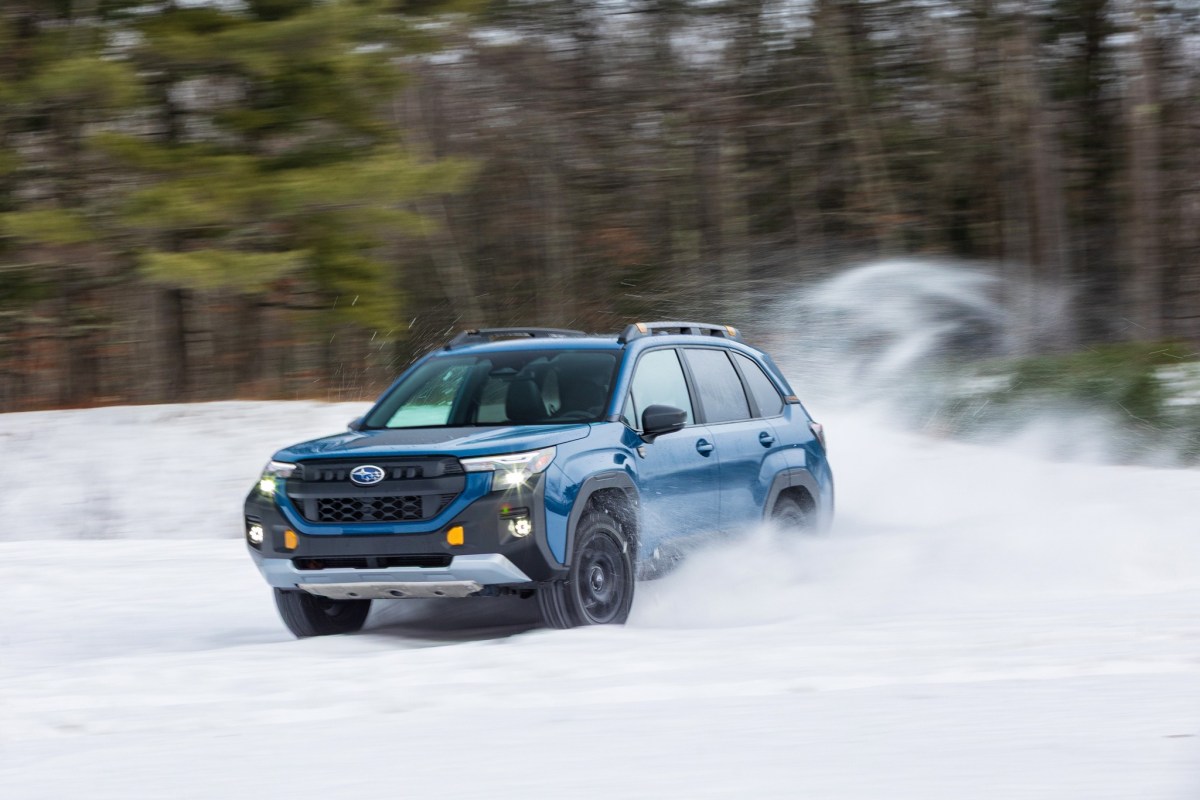
Beyond what you can pull behind you, the Wilderness is engineered to carry significant weight on top. The standard roof rails have been reinforced to support a static load of 800 lbs and a dynamic load of 176 lbs. For the overlanding community, this is a "green light" for rooftop tents. You can sleep two adults comfortably atop the vehicle without worrying about the structural integrity of the roof racks.
Off-Road DNA: Clearance and Traction Tech
When the pavement ends, the Forester Wilderness shrugs off bumps that would make other compact SUVs wince. For the 2026 model, Subaru has pushed the ground clearance to 9.3 inches—a 0.1-inch increase over the previous generation. While a tenth of an inch sounds incremental, in the world of off-roading, every millimeter counts when you're trying to clear a jagged rock or navigate deep ruts.
The vehicle’s geometry is equally impressive for a "soft-roader":
- Approach Angle: 23.5 degrees
- Departure Angle: 25.5 degrees
- Breakover Angle: 22.0 degrees
To make the most of this clearance, Subaru has equipped the Wilderness with Yokohama Geolandar A/T G015 tires (235/60R-17). These tires provide the necessary bite on loose gravel and mud while maintaining a relatively quiet profile on the highway.
Control is managed via Subaru’s dual-function X-Mode system. Unlike the standard "Snow/Dirt" modes found in other trims, the Wilderness version includes specialized settings for "Deep Snow" and "Mud." These settings allow for more wheel spin to maintain momentum in viscous terrain. A front-view camera also acts as a "digital spotter," projecting the trail directly ahead onto the 11.6-inch screen so you can avoid tire-slashing obstacles you might otherwise miss over the hood.
The Powertrain Secret: Gearing vs. Horsepower
Critics often point to the Forester’s 180-hp 2.5-liter Boxer engine as a weak point, especially since Subaru has opted not to offer a turbocharger or a hybrid powertrain for the Wilderness trim this year. However, looking at the spec sheet only tells half the story. The "Boxer punch"—referring to the horizontally opposed pistons that lower the vehicle's center of gravity—is aided here by a re-tuned CVT (Continuously Variable Transmission).
The Wilderness uses a shorter 4.11:1 final drive ratio compared to the 3.70:1 ratio found in the standard Forester. This "shorter" gearing provides significantly more low-end torque, which is exactly what you need when crawling over obstacles or accelerating with a trailer attached. It makes the 180 horses feel more energetic and capable of "dispatching hurdles" that would bog down a standard CVT. While it won't win a drag race, the Wilderness feels purposeful and stout in the environments it was designed for.
On-Road Refinement: NVH and Handling
One of the most pleasant surprises of the 6th-generation Forester is the improvement in Noise, Vibration, and Harshness (NVH). Subaru has increased body rigidity by 10% and adopted a dual-pinion steering rack derived from the WRX. The result is a vehicle that feels more "connected" to the road.
From behind the wheel, the steering is sharper and more predictable. Despite the higher center of gravity and the specialized suspension, the Wilderness doesn't feel floaty or disconnected. Subaru has added significantly more sound-deadening material throughout the chassis to offset the inevitable hum of the all-terrain tires. You’ll still hear the Geolandar tread on concrete highways, but it's a distant murmur rather than a conversation-interrupting roar.

However, there is a trade-off for this ruggedness. The Wilderness trim sees a dip in fuel efficiency, averaging about 26 MPG combined, compared to the 29 MPG offered by the standard Forester. For the target demographic, this is usually a small price to pay for the added utility and confidence.
Interior Utility and Infotainment
Inside, the Wilderness remains a "fishbowl on wheels." The visibility is arguably the best in class, with thin pillars and large windows that make navigating tight forest trails (and tight parking spots) a breeze.
The cabin is designed for easy cleanup after a muddy weekend.
- StarTex Upholstery: This water-repellent synthetic material is durable and wipes down easily.
- Rubberized Floor Mats: Heavy-duty mats come standard, catching the dirt and snow you'll inevitably track in.
- Cargo Space: You get up to 74 cubic feet of storage with the rear seats folded, enough for a full suite of camping gear.
The 11.6-inch vertical touchscreen serves as the central hub. While visually impressive, it can occasionally feel "lazy bones"—a bit laggy when first starting up or switching between complex menus. Thankfully, wireless Apple CarPlay and Android Auto are standard, allowing you to bypass much of the native interface.
Pricing and Market Comparison: Is It Worth It?
The 2026 Subaru Forester Wilderness starts at $39,835. While this places it at the higher end of the Forester lineup, the mechanical upgrades (cooling, gearing, suspension) offer value that is difficult to replicate with aftermarket parts.
Here is how the 2026 Wilderness stacks up against its primary "off-road lite" competitors:
| Feature | Subaru Forester Wilderness | Ford Bronco Sport Badlands | Honda CR-V TrailSport |
|---|---|---|---|
| Ground Clearance | 9.3 inches | 8.8 inches | 8.2 inches |
| Max Towing | 3,500 lbs | 2,200 lbs | 1,000 lbs |
| Engine | 2.5L Flat-4 (180hp) | 2.0L Turbo-4 (250hp) | 1.5L Turbo-4 (190hp) |
| AWD System | Symmetrical Full-Time | Part-time 4WD | On-Demand AWD |
| Cargo Space (Max) | 74.4 cu. ft. | 60.6 cu. ft. | 76.5 cu. ft. |
The Bronco Sport Badlands offers more raw power, but the Forester Wilderness wins on towing capacity and interior volume. The CR-V TrailSport is a refined road car, but it lacks the serious underbody protection and clearance needed for true off-grid excursions.
FAQ
Q: Does the 2026 Forester Wilderness have a turbo engine? A: No. Unlike the Outback Wilderness, the Forester Wilderness currently only offers the naturally aspirated 2.5-liter Boxer engine. Subaru has focused on gearing and cooling upgrades to improve performance rather than adding a turbocharger.
Q: Can I get a hybrid version of the Wilderness? A: Not for the 2026 model year. While Subaru has announced a Forester Hybrid is on the way, the Wilderness trim remains focused on traditional internal combustion for its mechanical simplicity and cooling requirements during heavy towing.
Q: How much can the roof of the 2026 Forester Wilderness hold? A: The roof rails are rated for a 176-lb dynamic load (while driving) and an 800-lb static load (while parked), which is specifically designed to accommodate rooftop tents.
Conclusion
The 2026 Subaru Forester Wilderness isn't a radical departure from its predecessor, but rather a finely-tuned refinement. By addressing the previous model’s biggest limitation—towing capacity—and sharpening the on-road handling through WRX-inspired steering components, Subaru has created the most versatile Forester yet.
It remains the quintessential vehicle for the "weekend warrior." It’s comfortable enough for the Monday morning commute but capable enough to handle a washed-out forest service road on Saturday afternoon. If you value visibility, safety, and a massive 133% increase in towing capability over raw horsepower, the Wilderness is currently the most pragmatic "hiking boot" in the SUV market.