The romanticized version of van life—sunsets over the Sierras and steaming coffee at trailheads—rarely includes the 3 AM dash to a "pee jar" or the lingering scent of a bucket toilet in a 60-square-foot space. Yet, sanitation is the ultimate gatekeeper of long-term off-grid travel. If you can't manage your waste comfortably, your trip has an expiration date.
After four months of living out of a compact expedition vehicle, I’ve tested nearly every "solution" on the market, from the rudimentary $20 five-gallon bucket to high-end incinerator toilets. Recently, I put the CompoCloset Cuddy Lite through a rigorous field test to see if it truly solves the three biggest hurdles of van life sanitation: odor, space, and maintenance frequency.
Technical Specifications and First Impressions
Right out of the box, the Cuddy Lite feels less like a piece of camping gear and more like a rugged piece of marine hardware. It measures 16.8 x 15.1 x 16.3 inches and weighs nearly 20 pounds, striking a balance between being substantial enough to feel stable and light enough for a solo traveler to maneuver.
The build quality is impressive. Constructed from durable, high-density polypropylene with heavy-duty stainless steel hinges, it lacks the "flimsy plastic" feel of entry-level portable toilets. The design is intentional; every curve and latch feels engineered for a high-vibration environment—essential for those of us who spend our time on washboarded forest service roads.
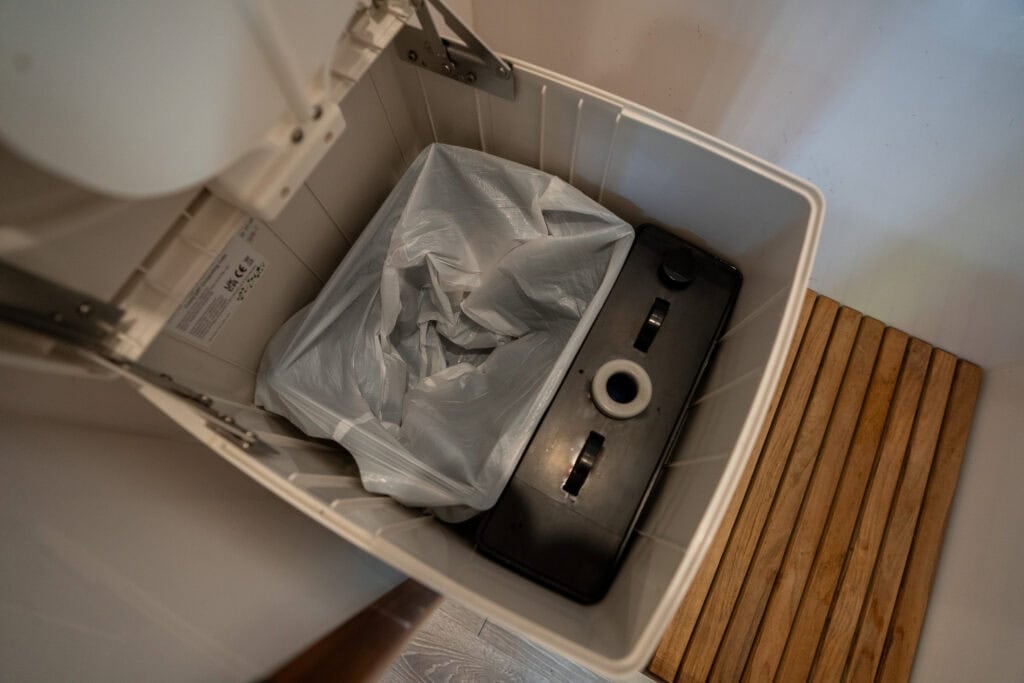
While the original Cuddy made waves with its internal agitator, the "Lite" version marks a shift toward simplicity. It’s designed for users who want the benefits of a urine-diverting system without the mechanical complexity (and cleaning headache) of a churn-style composting bin.
Real-World Performance: The Field Test Results
The fundamental principle of a composting toilet is the separation of liquids and solids. When the two mix, they create sewage; when kept apart, the solids dry out and the liquids remain relatively odorless. The Cuddy Lite executes this separation through a precisely angled diverter.
Liquid Management and the "Smart" Sensor
In a small van, the liquids bottle is always the first point of failure. The Cuddy Lite features a 6.5-liter (1.7-gallon) liquids bottle. During my field test with two people sharing the unit, we found the capacity to be the defining factor of our "dump cycle."
How long can two people use the CompoCloset Cuddy Lite? For a duo traveling full-time, the 6.5-liter liquids bottle typically lasts 2 to 3 days before needing to be emptied. The solids bin, thanks to the lack of an agitator taking up space, can accommodate approximately 2 to 3 weeks of use before requiring a full reset.
One of the standout features is the integrated LED indicator. Powered by a simple 9V battery, this sensor solves the "guesswork" problem. There is nothing worse than an overflow in a moving vehicle, and the Cuddy Lite’s sensor provides a clear visual cue when you’re nearing the limit.
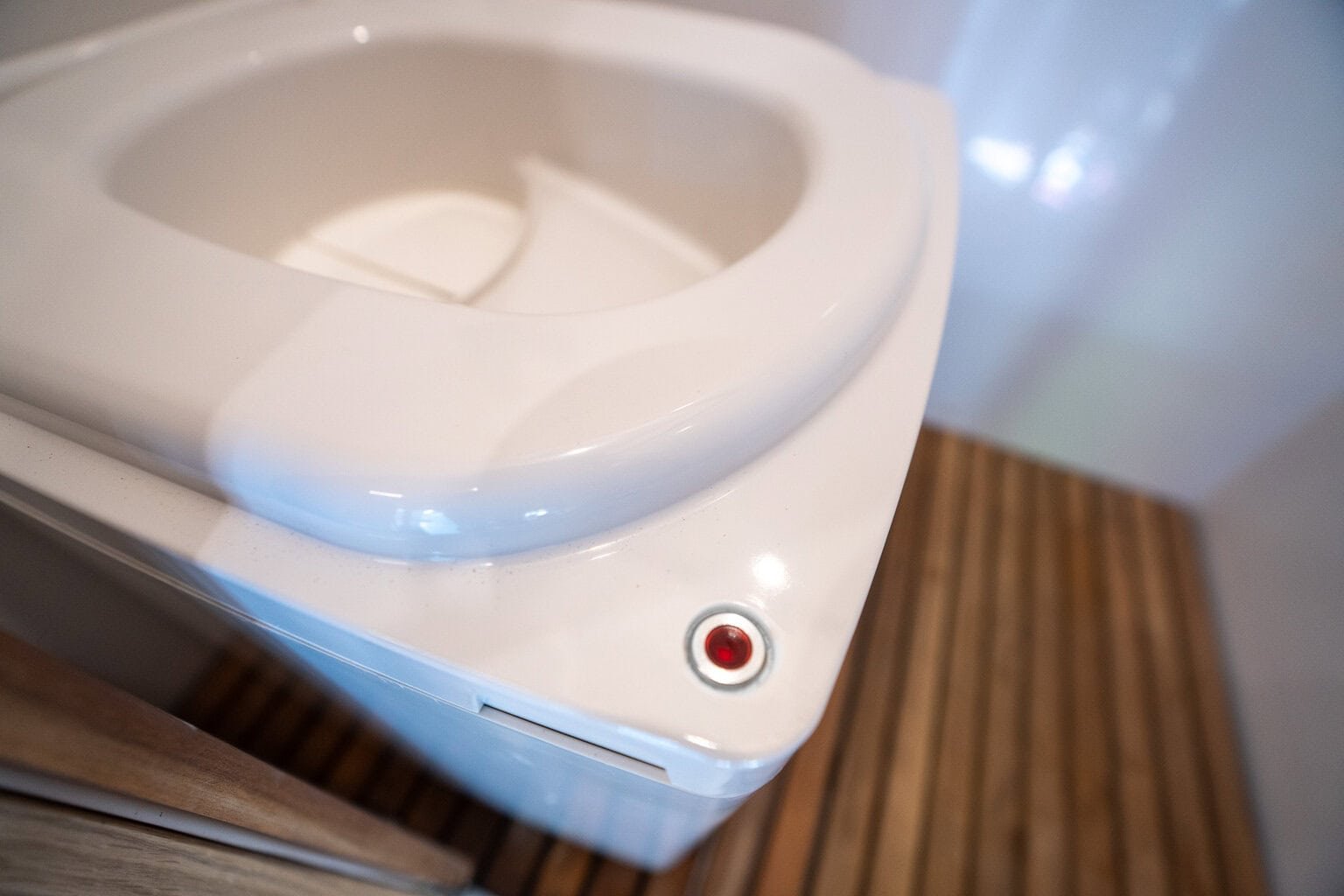
The 6.5-liter liquids container signals capacity reach at the 72-hour mark for two users, providing a reliable safety net that allows you to plan your stops at dump stations or public restrooms accordingly.
The Design Difference: Cuddy vs. Cuddy Lite
Many potential buyers ask: What is the difference between the Cuddy and the Cuddy Lite?
The answer lies in the internal mechanism. The original Cuddy features an internal agitator (a crank handle) used to mix solids with substrate. The Cuddy Lite removes this internal agitator, allowing users to use compostable bags and substrate for a significantly simpler emptying and cleaning process.
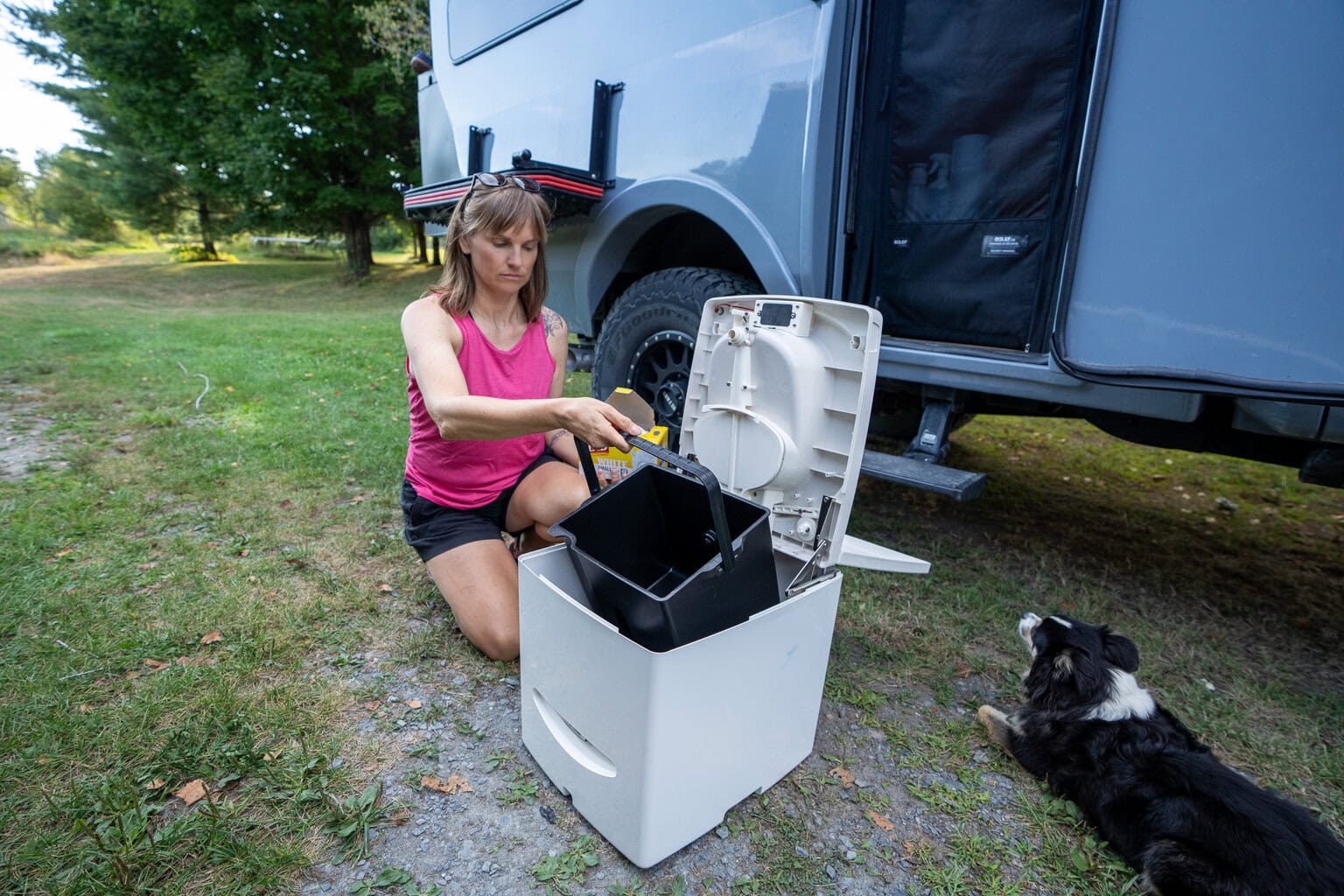
For many travelers, the "bag-and-bin" method of the Lite is actually preferable. It eliminates the need to clean a metal agitator bar and makes the "end-of-trip" deep clean much faster. You simply lift the bag out, tie it off, and you're done.
Odor Control: The Retractable Shield
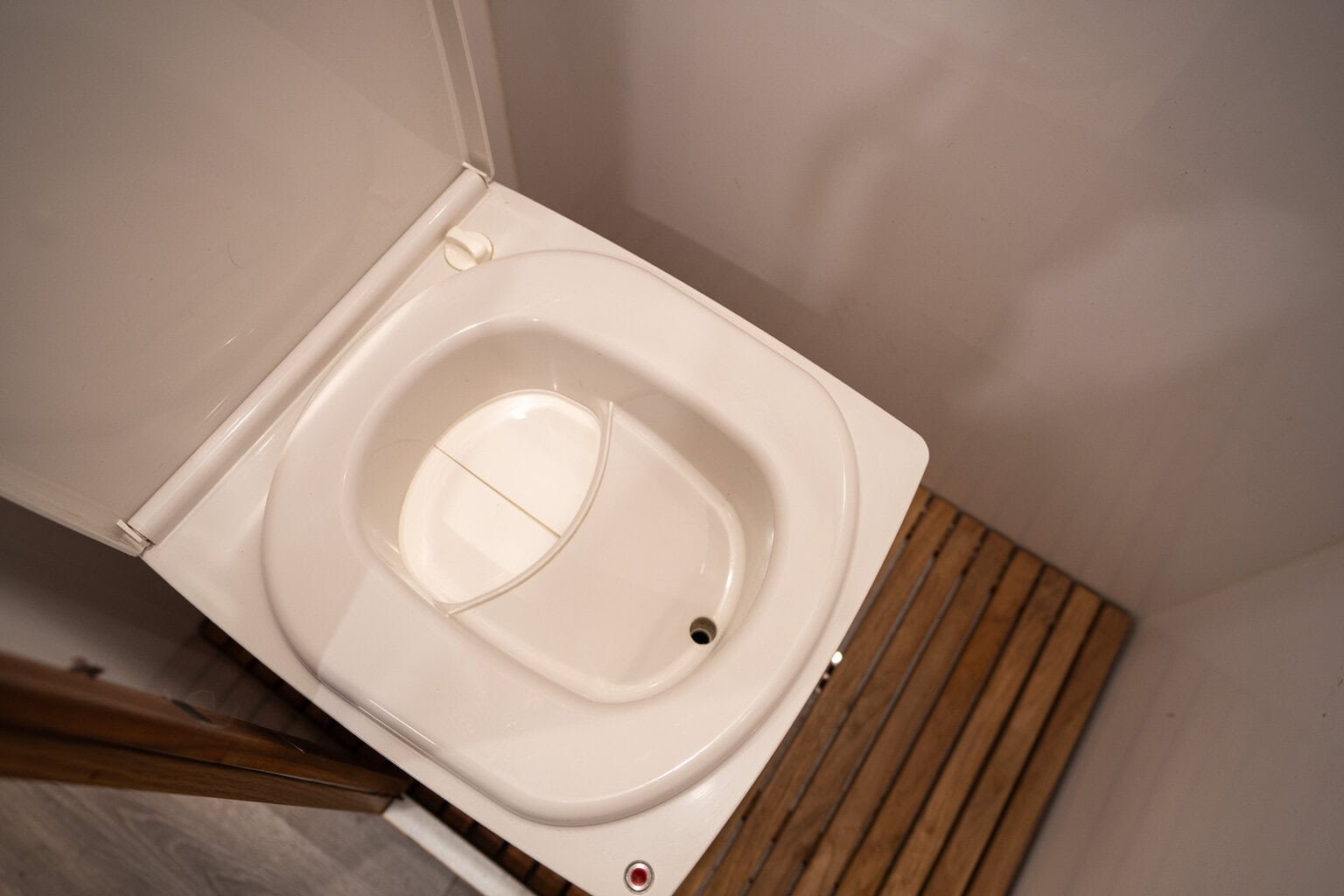
Perhaps the most ingenious part of the Cuddy Lite's design is the retractable solids cover. When you sit down, you move a side lever that slides a cover away from the solids bin. This serves two purposes:
- Aesthetics: You don't have to look at your previous "contributions" every time you use the toilet.
- Odor Barrier: It adds an extra physical layer between the waste and the living space.
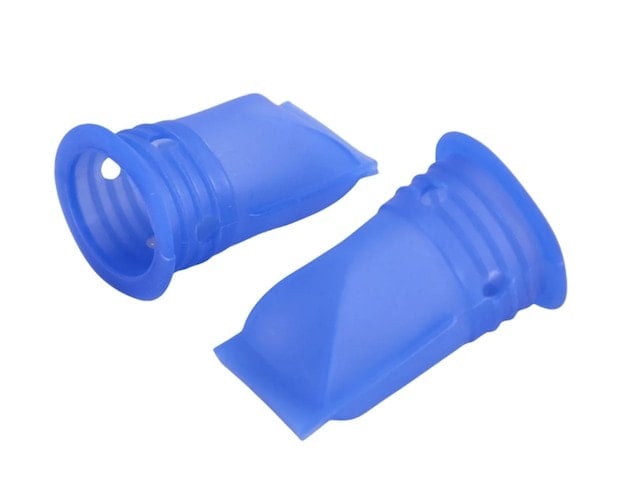
Combined with one-way silicone valves that trap ammonia smells inside the liquids jug, the Cuddy Lite manages to be virtually smell-free, even in the heat of a desert summer.
Portability and Van Integration
Space is the ultimate currency in a van. Whether you’re building out a Mercedes Sprinter or a compact Ford Transit Connect, every inch matters.
Is the CompoCloset Cuddy Lite suitable for small campervans? Absolutely. With a footprint of roughly 16x15 inches, it is one of the most compact professional-grade toilets on the market. Its weight and handles make it easy to move if your bathroom doubles as a shower or if you need to relocate the unit for sleeping arrangements.
Despite its small footprint, the capacity for off-grid autonomy is high. The Cuddy Lite's solids bin offers a 14.7-gallon (3.9-gallon usable) capacity, providing up to 21 days of autonomy for full-time travelers before maintenance is required. This means you can stay in the backcountry for three weeks without worrying about your primary waste bin filling up.
Head-to-Head: Cuddy Lite vs. Trelino Evo
The primary competitor for the Cuddy Lite is the Trelino Evo. While both are excellent, they cater to different philosophies.
| Feature | CompoCloset Cuddy Lite | Trelino Evo (Medium) |
|---|---|---|
| Price | ~$650 | ~$550 - $600 |
| Liquid Capacity | 6.5 Liters | 5 Liters |
| Indicator | LED Sensor (9V Battery) | Visual (Translucent bottle) |
| Odor Control | Carbon Filter + Silicone Valve | Lid Seal |
| Lid Style | Heavy-duty Hinged | Removable (Lift-off) |
The Cuddy Lite wins on durability and tech. The hinged lid is much more convenient than the Trelino’s lift-off lid, which requires you to find a place to put the lid every time you use it. Furthermore, the silicone valve on the Cuddy is far superior at preventing the "sloshing" of liquids and the escape of ammonia smells during transit.
Maintenance and Cleaning Guide
Owning a composting toilet isn't just about the "go"; it's about the "glow-up" (cleaning). To keep the Cuddy Lite performing at its peak, I recommend a few best practices:
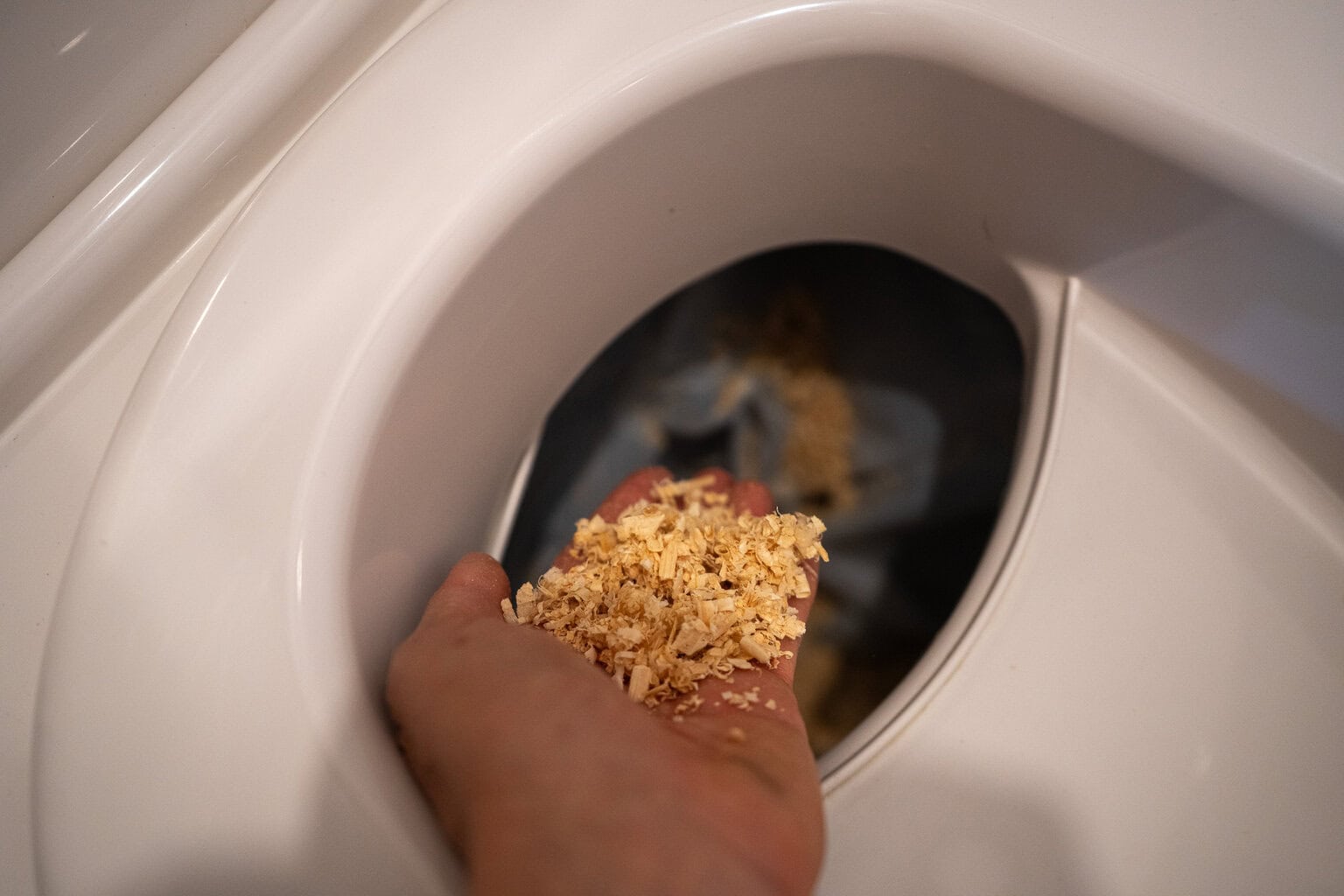
- Substrate Selection: Use high-quality coconut coir or fine wood chips. Coconut coir is superior for moisture absorption and is easier to store in compressed bricks.
- The Spray Bottle: Keep a small spray bottle filled with a 1:1 mixture of water and white vinegar. A quick spritz after each liquid use keeps the diverter clean and neutralizes smells.
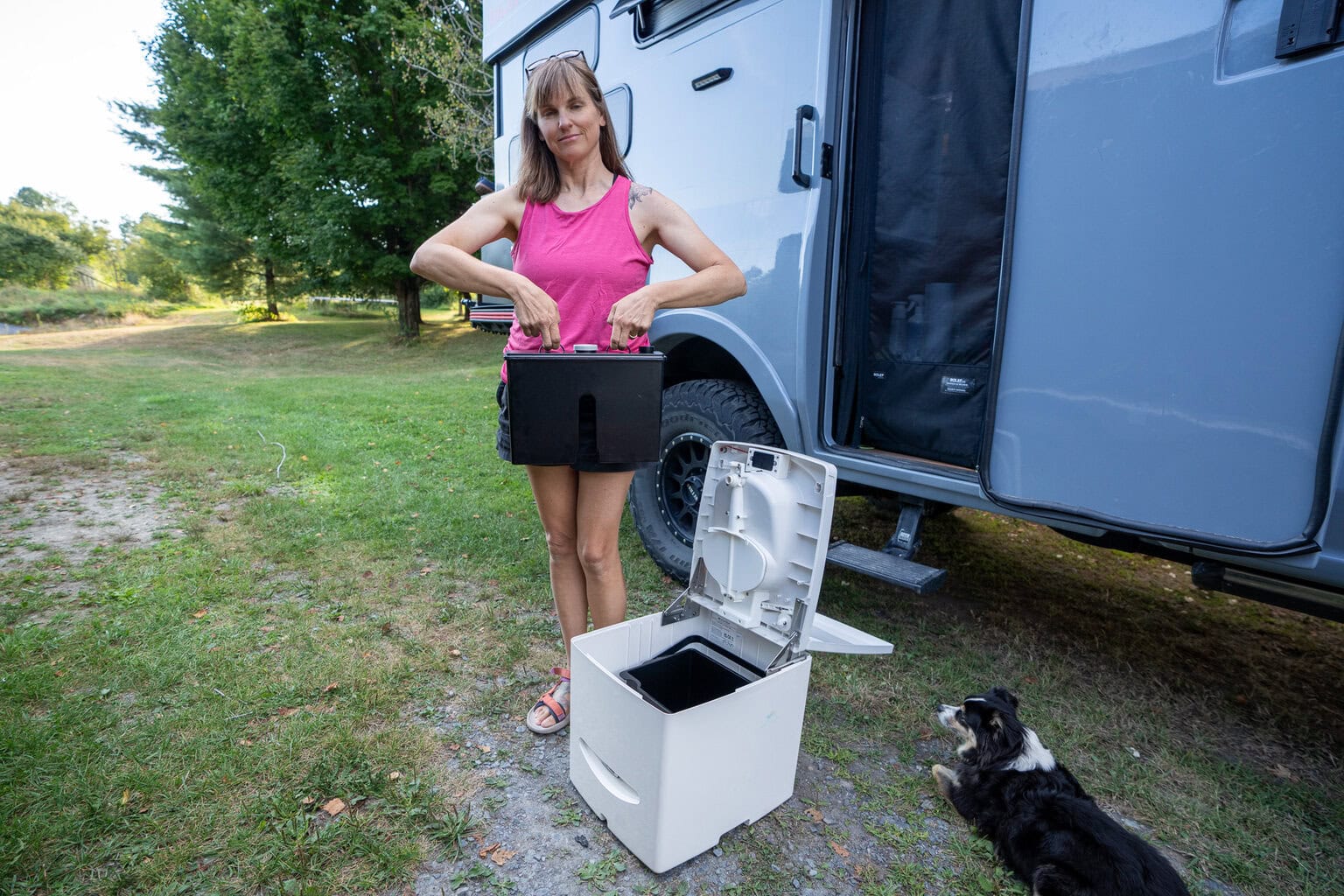
- Discreet Disposal: The opaque black liquids jug is a thoughtful touch. Unlike the clear or white jugs found on cheaper units, the black finish ensures privacy when you're walking across a crowded campground to empty it.
The Future of Cuddy: The S1 Sealing Toilet Upgrade
CompoCloset isn't standing still. During my testing, the buzz in the community has been about the upcoming S1 Sealing Toilet kit. This is a revolutionary upgrade that will be backward compatible with existing Cuddy units.
The S1 mechanism will allow for an auto-sealing heat system that encapsulates solid waste in individual bags, similar to high-end medical or luxury camping toilets. For those who find the idea of handling compostable bags of substrate "too close for comfort," this upgrade path makes the Cuddy Lite a future-proof investment.
FAQ: Common Concerns
Do you need an external vent? While the Cuddy Lite includes a small internal fan and a carbon filter, an external vent is recommended for full-time use in humid climates. However, for weekend warriors or those in dry environments, the internal system is remarkably effective on its own.
Is it waterproof for wet baths? The unit is water-resistant and built for the van environment, but it is not intended to be submerged or used as a shower seat without protection. If installing in a wet bath, ensure the electronics (LED sensor) are shielded from direct spray.
Where do you dump the waste responsibly? Liquids can be disposed of in any flush toilet or at an RV dump station. For solids, follow Leave No Trace principles. In most jurisdictions, bagged solid waste managed with a composting system is treated similarly to pet waste and can be disposed of in trash receptacles, though you should always check local regulations.
Final Verdict: Is it Worth the $650 Investment?
The CompoCloset Cuddy Lite is not a budget option, but it is a premium solution. After four months in the field, here is my breakdown:
The Pros:
- Exceptional Odor Control: Between the silicone valve and the retractable cover, smells are a non-issue.
- Thoughtful Tech: The LED indicator takes the anxiety out of liquid management.
- Compact Strength: It fits in the smallest builds without feeling like a "toy."
The Cons:
- Price: $650 is a significant jump from a bucket or a basic chemical toilet.
- 9V Battery: I would have preferred a USB-C rechargeable internal battery, though the 9V lasts for months.
Who should buy this? If you are a full-time van lifer, a weekend adventurer in a compact vehicle, or an expedition traveler who values engineering over "making do," the Cuddy Lite is the best-in-class choice for 2026. It turns one of the most stressful parts of van life into a simple, background task.
Final Field Test Rating: 9/10