For years, the overlanding industry has been locked in an arms race of "more." More battery capacity, more interior plumbing, more weight, and, inevitably, more cost. We’ve seen midsize trucks burdened with 1,200-pound campers that turn a nimble Toyota Tacoma into a lumbering house on wheels. But as we move into 2026, the pendulum is swinging back toward agility. The "less is more" philosophy isn't just a lifestyle choice; it's a performance necessity for those who actually want to leave the pavement.
Enter the Tune Outdoor M1Lite (M1L). Born from the feedback of solo explorers and weight-conscious adventurers, the M1Lite is a stripped-back, surgically precise evolution of Tune’s flagship M1. It’s a camper designed for those who view their truck bed as a tool, not a living room. By shedding 20% of its predecessor’s weight and volume, the M1Lite asks a provocative question: How little do you actually need to stay out longer?
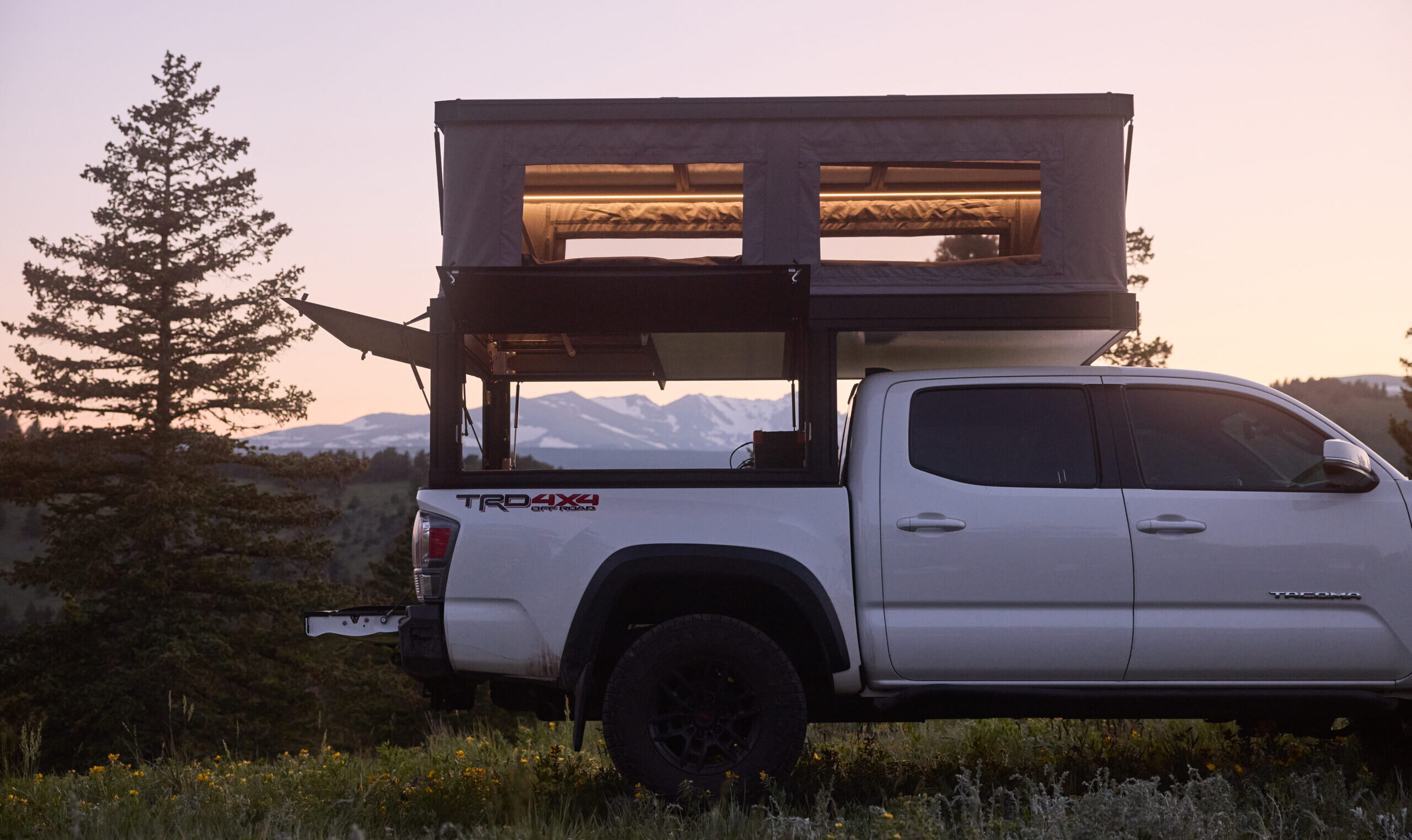
The Headline Stats: Weight, Price, and Dimensions
When we talk about the M1Lite, we have to start with the numbers. In the world of truck campers, weight is the ultimate arbiter of where you can go. Every extra pound is a tax on your suspension, your fuel economy, and your ability to crawl over technical terrain.
Quick Fact: The Weight Standard The Tune M1Lite has a published base weight of 322 pounds, making it one of the lightest hard-sided pop-up truck campers on the market today.
This weight makes the M1Lite accessible to a massive range of vehicles, from the Ford Maverick to the 4th Gen Tacoma. But price is the second half of that equation. Starting at $8,999 for the base configuration, Tune is positioning the M1Lite as an affordable entry point for minimalist overlanders who would rather spend their money on fuel and experiences than on a six-figure mobile hotel.
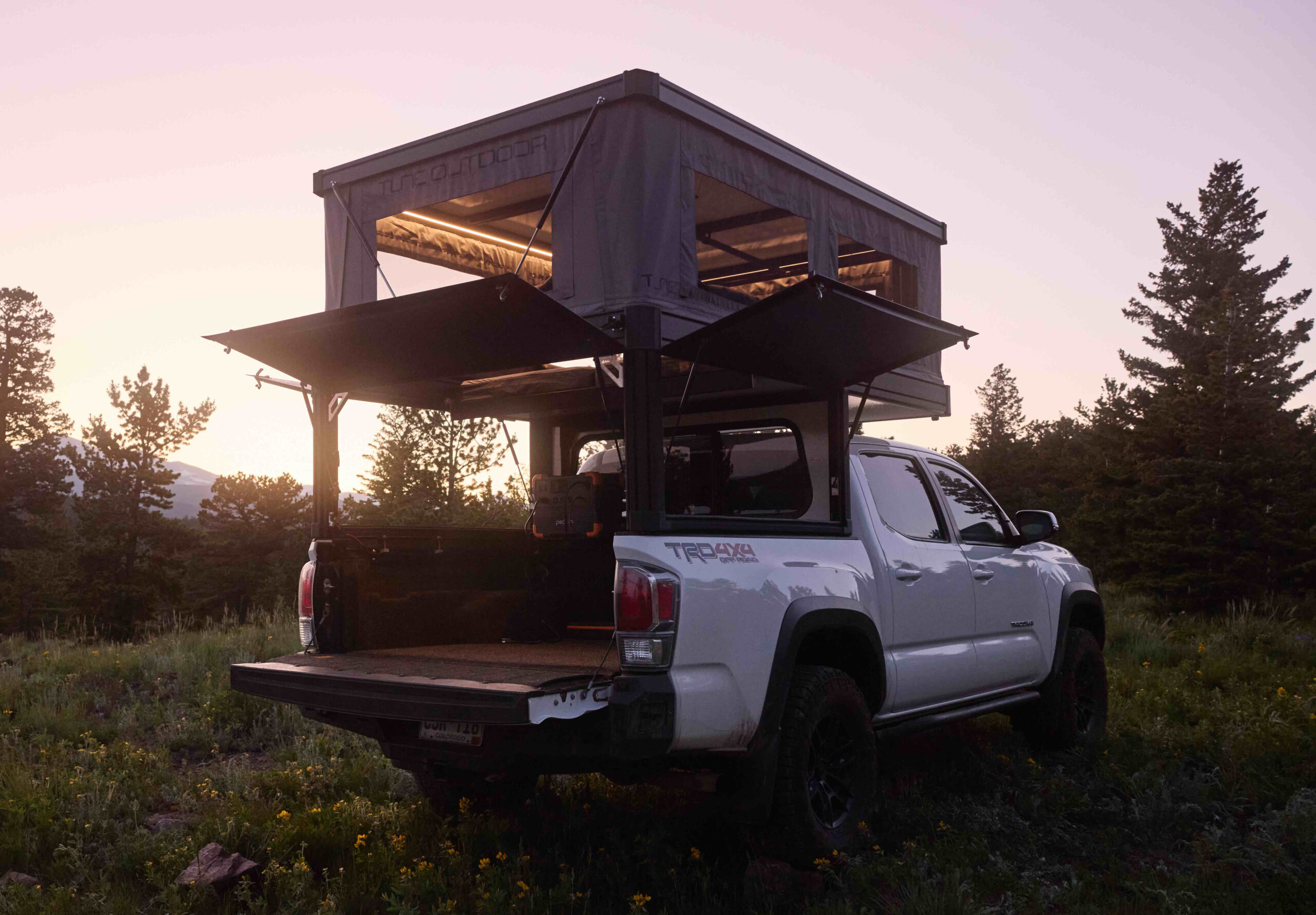
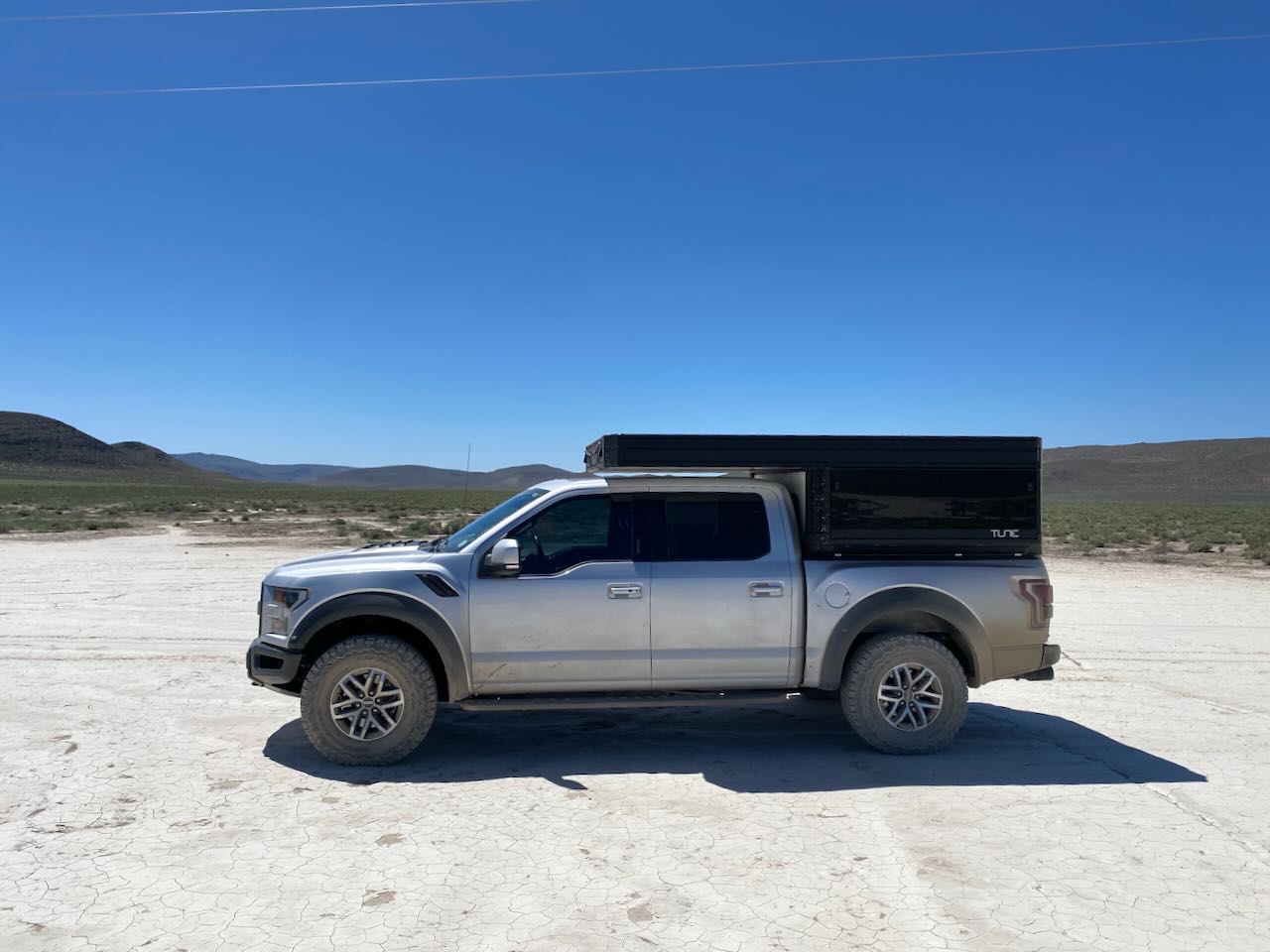
The dimensions are equally focused. Unlike the original M1, which uses a "Wingwall" system to extend width for East-West sleeping, the M1Lite keeps its footprint tight to the truck’s lines. This results in a 20% reduction in interior volume compared to the flagship model, but it pays dividends in trail visibility and aerodynamic efficiency.
Minimalist Engineering: How It’s Built
The M1Lite’s weight savings aren't the result of cutting corners; they are the result of precision engineering. The core construction utilizes lightweight aluminum extrusions and high-strength injected composite corner brackets. This "skeletal" approach provides immense structural integrity while keeping the mass centered and low.
The genius of Tune’s design lies in the integrated T-track system. The M1Lite features over 330 feet of adjustable T-track across its interior, exterior, and roof. For the minimalist, this is the ultimate "choose your own adventure" kit. Rather than being forced into a fixed cabinetry layout, you can bolt in what you need—and nothing you don't.
- Interior Customization: Use the T-tracks to mount soft-sided bags, DIY shelving, or a lighting rig.
- Exterior Utility: Mount recovery boards, shovels, or axes directly to the side of the camper.
- Roof Loading: The roof track supports solar panels or crossbars for kayaks and bikes without requiring specialized brackets.
By removing the "Wingwalls" and the East-West sleeping extension of the flagship M1, Tune has eliminated complexity and mechanical points of failure. The result is a camper that feels like an extension of the truck rather than an appendage.
Interior Living: Sleep & Stow in a Compact Footprint
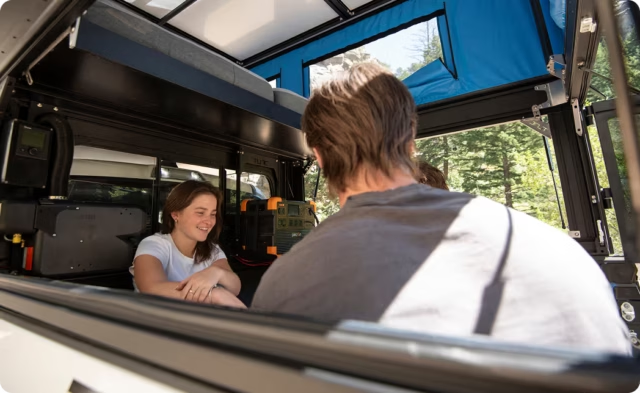
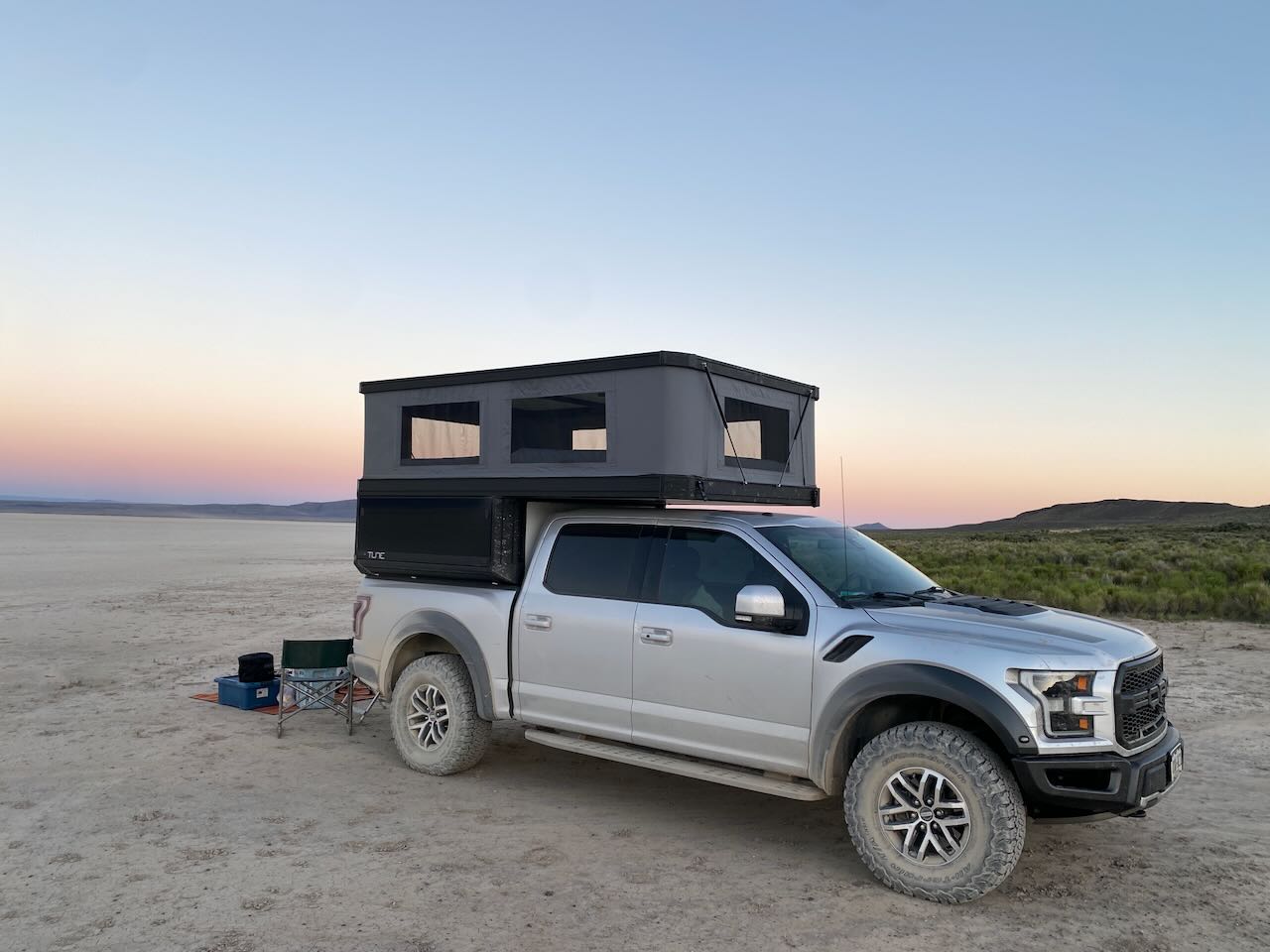
Inside the M1Lite, the experience is defined by the "Sleep & Stow" philosophy. Because the camper is 20% smaller than the M1, every inch is pressurized to perform. The centerpiece is the north-south sleeping platform, which measures 72 by 60 inches.
While the flagship M1 allows for transverse sleeping (side-to-side), the M1Lite’s north-south orientation (front-to-back) is often preferred by solo travelers or couples who don't want to crawl over each other in the middle of the night. It’s a standard queen-width bed in a much more aerodynamic package.
One thing to note for prospective buyers: the base price does not include a mattress. For many, this is a feature, not a bug. It allows you to choose your own sleep system—be it a high-end Exped Megamat, a custom memory foam topper, or a simple backpacking pad—further emphasizing the DIY potential of the unit.
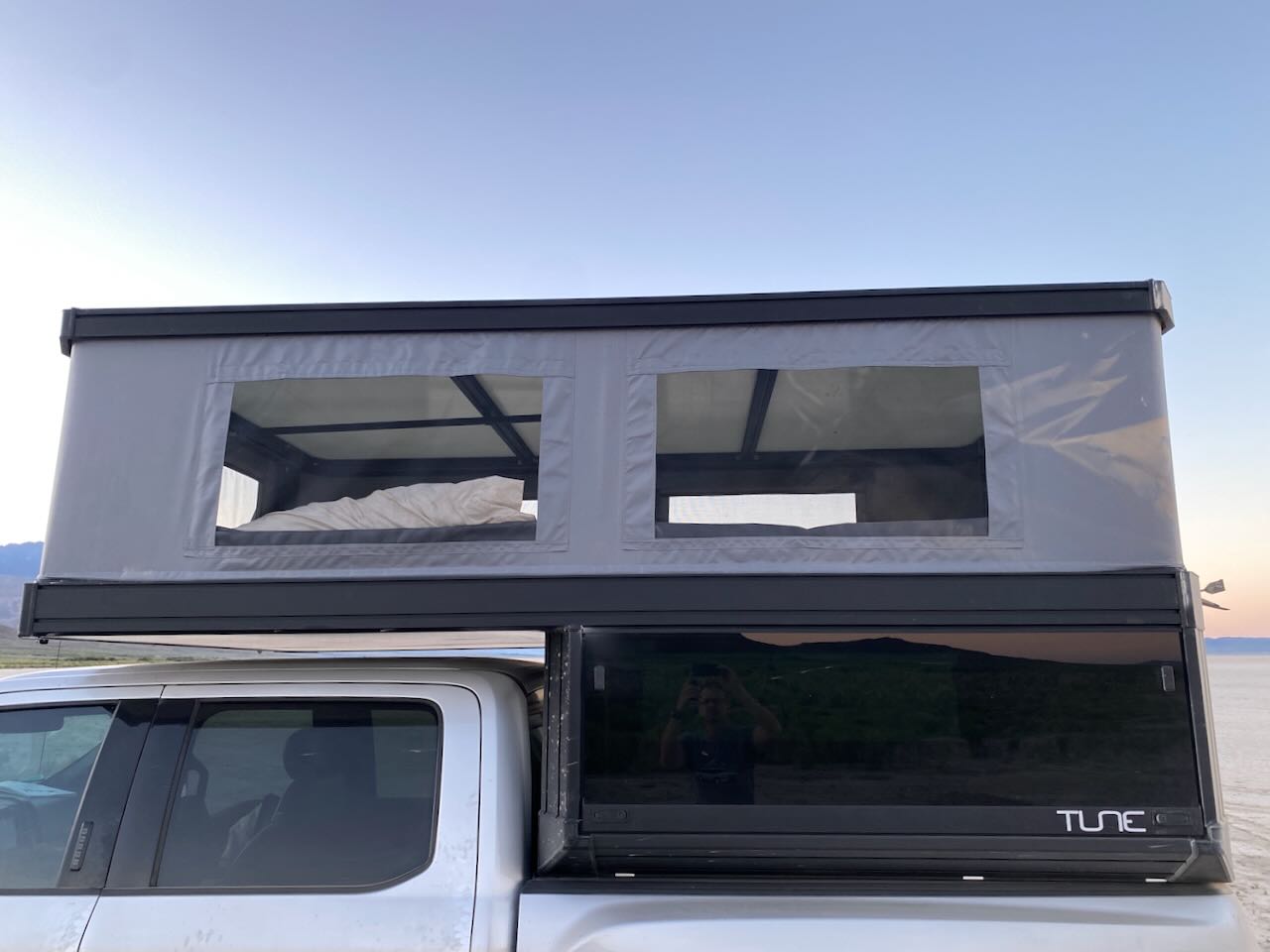
The panoramic window screens are another highlight. Even with the smaller interior volume, the 270-degree views prevent any feelings of claustrophobia. When the pop-up is engaged, the interior feels airy and connected to the environment, a stark contrast to the dark, enclosed feeling of many hard-sided slide-ins.
Comparison: Tune M1Lite vs. Flagship Tune M1
Deciding between the M1Lite and the original M1 comes down to your "payload philosophy." Are you a basecamp builder who wants maximum living space, or a trail-runner who wants to forget the camper is even there?
| Feature | Tune M1 (Flagship) | Tune M1Lite (M1L) |
|---|---|---|
| Published Weight | ~450 lbs (Base) | 322 lbs (Base) |
| Starting Price | $12,999 | $8,999 |
| Sleeping Orientation | East-West (Wingwalls) | North-South |
| Interior Volume | 100% | ~80% |
| Sleeping Dimensions | 80" x 72" (King-plus) | 72" x 60" (Queen) |
| Customization | Full T-track | Full T-track (330+ ft) |
The M1Lite is essentially the "Short-Bed" version of the M1 philosophy. It keeps the same high-quality materials and the same T-track versatility but trims the fat for the sake of efficiency and cost.
Competitive Landscape: How Does it Stack Up?
The lightweight pop-up market is more competitive than ever in 2026. Here is how the M1Lite holds its ground against the heavy hitters:
- M1Lite vs. GoFast Campers (GFC): The GFC is the gold standard for minimalist durability, but the M1Lite offers a bit more "finished" interior feel and more sophisticated T-track integration for those who want a modular build-out rather than a fixed tent-on-truck setup.
- M1Lite vs. Roadloft: Roadloft focuses on modular kits for van-lifers and SUV campers. The M1Lite is a more rugged, permanent solution for those who need off-road protection and weatherproofing.
- M1Lite vs. Hiatus: Hiatus offers hard-sided pop-up walls which provide better insulation. However, the M1Lite wins significantly on weight and price, targeting the "fast and light" crowd rather than the "four-season basecamp" crowd.
Practical Considerations for 2026
If you’re looking at off-road truck campers for 2026, payload capacity is the elephant in the room. Modern trucks are getting more capable, but their payload ratings—the total weight they can carry, including passengers and fuel—often remain stagnant.
A 322-lb camper is a game-changer for midsize trucks like the Tacoma, Frontier, or Ranger. After installing the M1Lite, you still have nearly 1,000 pounds of payload left for water, recovery gear, and a fridge. This keeps your center of gravity low and your suspension from bottoming out on the first washboard road you hit.
Furthermore, the reduced wind profile of the M1Lite (due to the lack of flared wingwalls) means less drag on the highway. In an era where fuel prices and EV range are top of mind, those aerodynamic gains are non-trivial.
Conclusion: Who is the Tune M1Lite For?
The Tune M1Lite isn't for everyone. If you need a built-in shower, a microwave, and a king-sized bed to enjoy the outdoors, you should look elsewhere. But if you view your truck as a mountain bike for the dirt—a tool to get you to remote places as efficiently as possible—the M1Lite might just be the ultimate minimalist camper.
It bridges the gap between a simple topper and a full-blown camper, offering the weather protection of a hard-sided unit with the weight of a heavy-duty bed rack. For the minimalist overlander, the M1Lite provides exactly what is needed: a place to sleep, a place to stow gear, and the freedom to go anywhere.
FAQ
Does the Tune M1Lite fit a Toyota Tacoma? Yes, the M1Lite is designed to fit both midsize and full-size pickups, with specific configurations available for short-bed and long-bed models, including the 4th Generation Toyota Tacoma.
Is the M1Lite insulated for winter camping? While the M1Lite uses injected composite brackets and high-quality fabric, it is a minimalist pop-up. For extreme cold, most users add a diesel heater or a high-R-value sleep system using the integrated T-tracks.
Can I install the M1Lite myself? Tune Outdoor typically handles the initial installation to ensure the camper is perfectly sealed and centered on your truck bed, but the interior customization is designed to be 100% DIY-friendly thanks to the T-track system.